REVIEW · SORRENTO
From Sorrento: Half-Day Tour of Herculaneum
Book on GetYourGuide →Operated by TUI Italia · Bookable on GetYourGuide
One half day can feel like two thousand years. This Sorrento-to-Herculaneum tour turns Vesuvius tragedy into a walkable Roman neighborhood, with headsets and a guided route through preserved homes. I love the chance to see the Villa of the Papyri and the wall art in the Central Thermae public baths. One drawback to plan around: the coach ride can run late if traffic around Naples and the coast gets backed up.
The format is straightforward. You meet in Sorrento in the morning, travel by bus (with headsets issued on board), and then get an on-site guided tour of about an hour after you pay your entrance fee at the entrance. The group runs with live English guidance, and guides such as Eugene, Toni, Cynthia, and Dana have been associated with this experience—each known for keeping the facts clear and tied to what you can actually see.
In This Review
- Key highlights at a glance
- Why Herculaneum feels different than Pompeii
- Getting to Herculaneum from Sorrento: coach, headsets, and real timing
- Entering the site: skipping the fuss and getting your bearings
- Villa of the Papyri: luxury that makes the Roman city feel real
- Central Thermae baths: frescoes and mosaics you can actually picture
- Walking Herculaneum’s streets: timbers, clay pots, and that eerie quiet
- How long you truly have there (and why the heat matters)
- Price and value: what $71 really covers
- Who this tour suits best
- Final call: should you book the Sorrento half-day Herculaneum tour?
- FAQ
- How long is the Half-Day Tour of Herculaneum from Sorrento?
- What does the tour include?
- Is lunch included?
- What sites does the tour highlight inside Herculaneum?
- How much is general admission to Herculaneum?
- Where is the meeting point in Sorrento?
- Is the tour guided in English?
Key highlights at a glance
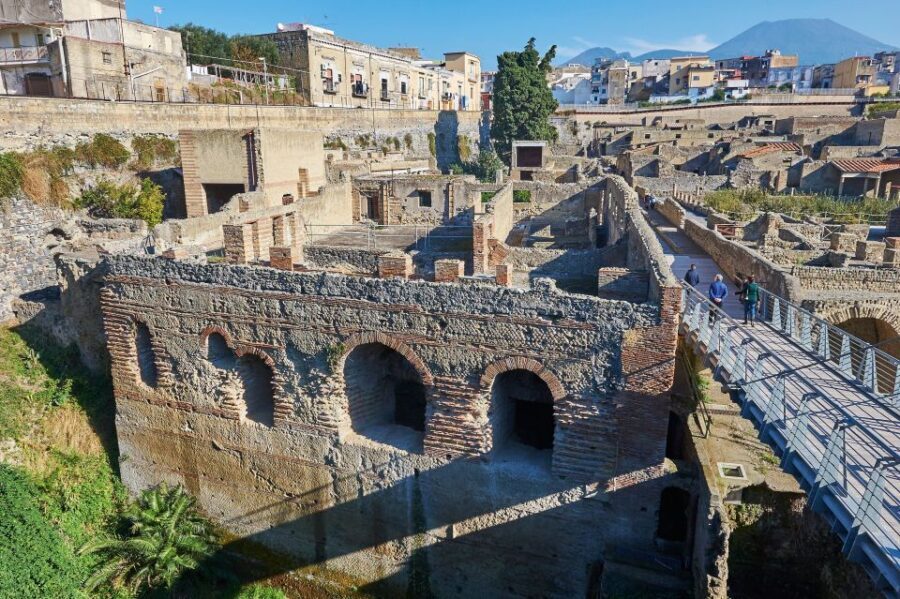
- Half-day Sorrento departure that keeps Herculaneum doable even with limited vacation time
- Villa of the Papyri visit, one of the big-name sights in town
- Central Thermae public baths with frescoes and mosaics that help you picture daily life
- Roman street-level remains so you can walk through preserved lanes and spaces
- Original details still visible such as timbers in buildings and clay pots
- Site admission is included, with general admission €11 and free entry for kids under 18 and adults 65+
Why Herculaneum feels different than Pompeii
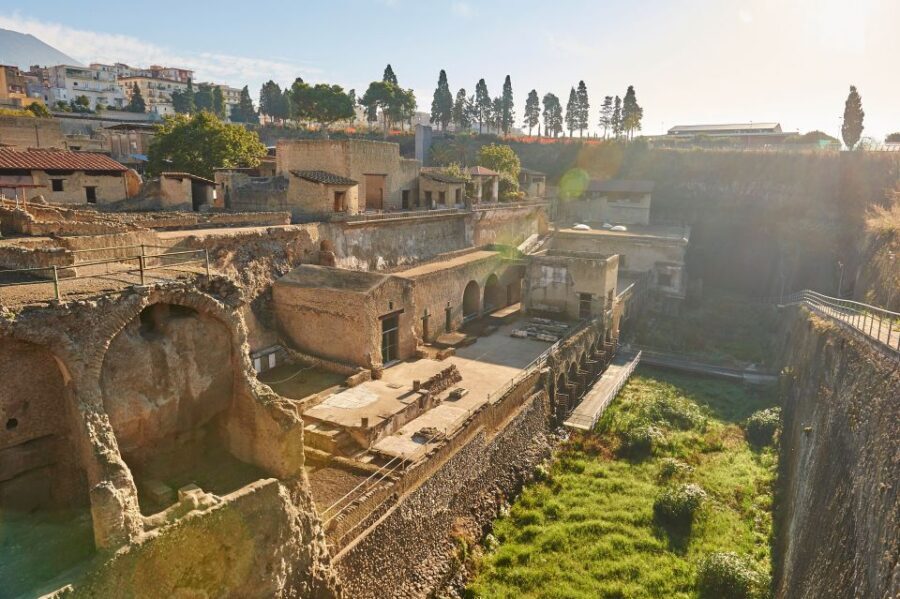
If you’re choosing one Vesuvius site, Herculaneum deserves your attention because it’s a residential town. Pompeii often gets the headlines, but Herculaneum is the place that makes the everyday feel close. Here, you’re not just looking at big monuments. You’re seeing rooms, walkways, baths, and shopfront spaces—places that reflect how people actually lived.
The big “wow” factor is preservation. The eruption covered the town with volcanic mud and ash in 79 A.D. That cover helped protect many buildings for centuries, and even today the site continues to be excavated. The result is that you can see the town’s layout in a way that feels almost physical—like the streets are paused in time.
And yes, there are skeletons still present. That can sound heavy before you go, but on site it adds context and gravity to the story. One side note that matters: unlike the more famous Pompeii narrative, it’s believed that many Herculaneum residents managed to flee before the worst hit. Your guide should connect that historical thread to what you see.
You can also read our reviews of more tours and experiences in Sorrento



Getting to Herculaneum from Sorrento: coach, headsets, and real timing
This is a bus tour, not a train-and-transfer puzzle. You meet at 08:10 at the Achille Lauro parking area, opposite the Europa palace hotel. From there, the trip goes toward Castellammare and joins the motorway toward Naples before arriving at Herculaneum.
Two practical wins here. First, you’re not fighting local transport when you’re on a tight schedule. Second, you get headsets on the coach. That matters because the guide’s narration starts while you’re moving, so you’re not scrambling to catch up once you arrive.
Timing is the one variable to keep in mind. The tour is designed as a half day (about 4 hours total), but the Naples-area roads can slow things down. If you’re the kind of traveler who hates late surprises—build in a little patience and don’t plan a super tight follow-up appointment right after the tour ends.
Entering the site: skipping the fuss and getting your bearings
Once you reach Herculaneum, your guide waits at the entrance so you can handle the entrance fee and start smoothly. General admission is €11, and children under 18 and adults over 65 are free. Since the entrance fee is included in the tour price, it saves you time in the moment.
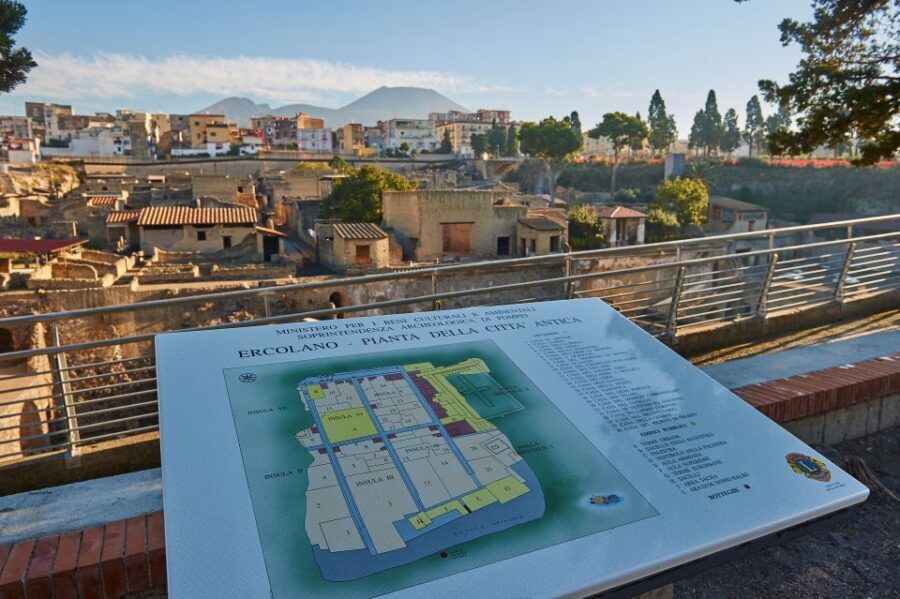
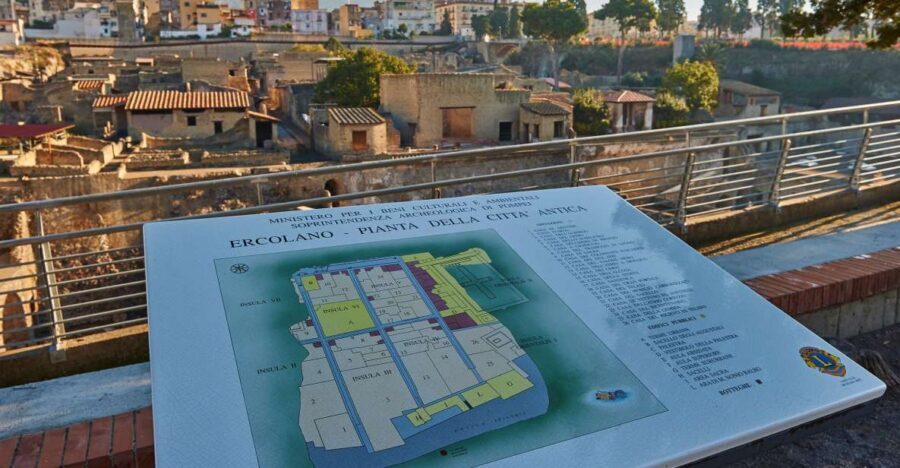
Then comes a useful orientation step: you get a view of the town from above before you head down into the archaeological area. That quick “top-down” moment helps you understand what you’re about to walk through. Roman cities can be confusing if you only see them at ground level, with little sense of how everything connects.
After that, the pace shifts into guided mode. Expect a route that hits the most important preserved spaces, explained in English, with headsets helping you hear comfortably as you walk.
Villa of the Papyri: luxury that makes the Roman city feel real
The highlight stop here is the Villa of the Papyri. Even if you’re not a “big house” person, this is a smart inclusion on a half-day itinerary. It anchors the tour in what’s often missing from Roman ruins: the feel of wealth, private life, and the role of elite residences within a functioning town.
What you’re aiming to notice is contrast. You’re in an excavated site, yet the space is still recognizable as a residence—its scale, layout, and preserved features help you imagine daily routines beyond stone descriptions. A villa like this isn’t just impressive. It gives you a reference point for everything else you’ll see, from baths to smaller structures that reflect public life.
If your brain tends to map things by “where would people live and where would they socialize,” this stop will click. It also helps you understand why archaeologists and local guides keep returning to Herculaneum: it preserves not only walls, but lifestyle.
Central Thermae baths: frescoes and mosaics you can actually picture
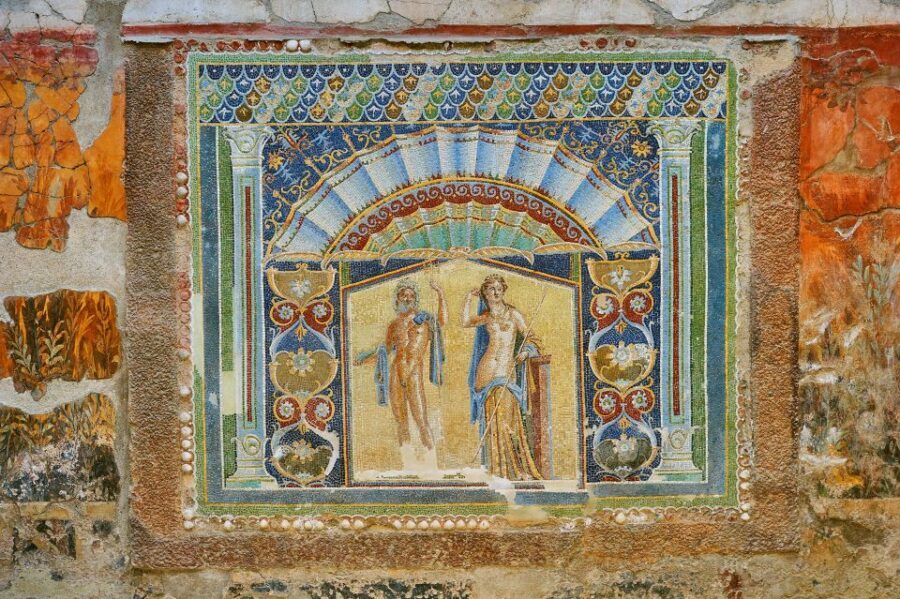
Public baths were core to Roman life, and the tour leans into that with a Central Thermae stop. This is where you see art lining the walls—frescoes and mosaics—and it’s the kind of detail that brings you closer to the human side of the town.
Here’s the practical reason I love bath sites on guided tours: you can connect the artwork to function. Baths weren’t just for washing. They were for gathering, conversation, and status. When you look at the preserved mosaics and painted surfaces, you’re seeing how people turned routine spaces into places of meaning and beauty.
Also, bath complexes tell you something about town planning. They show how communities invested in shared infrastructure. On a half-day schedule, this is a high-value stop because it teaches you without turning the visit into a lecture.
- Sorrento Farm and Food Experience including Olive Oil, Limoncello, Wine tasting
★ 5.0 · 2,524 reviews






Walking Herculaneum’s streets: timbers, clay pots, and that eerie quiet
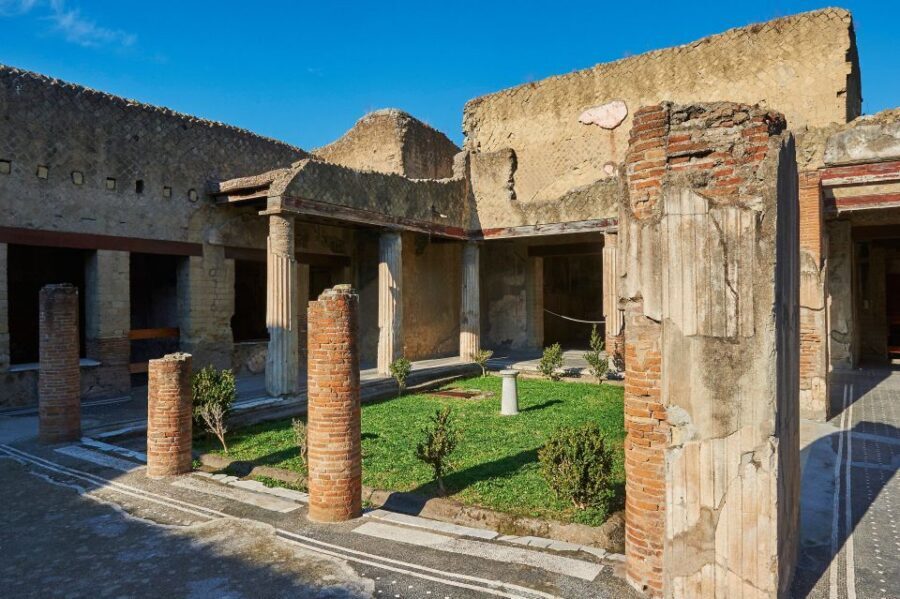
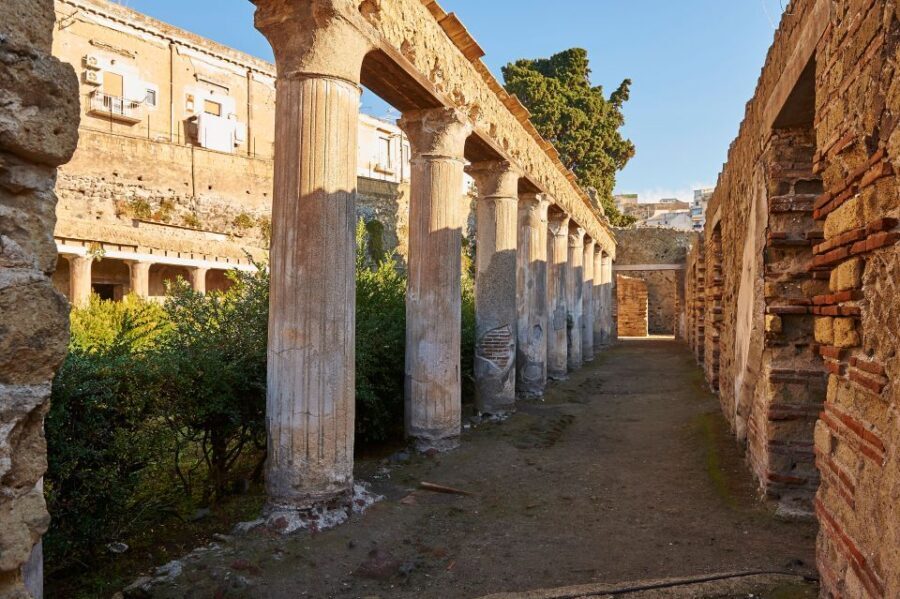
After the key set pieces, you spend time walking the former streets—spaces that were preserved in a state close to how they existed more than 2,000 years ago. This is the heart of why Herculaneum can feel haunting in a quiet way. You’re moving through narrow lanes and building entrances that still look like part of a lived-in neighborhood.
Two specific details help your imagination lock onto reality. You can see original timbers in buildings, and you can spot clay pots stored as they would have been at the time of the eruption. Those aren’t just museum facts. They’re visual proof that daily life was operating in these spaces until the disaster hit.
And then there’s the presence of skeletons. It’s a sobering element, but it’s also a reminder: this isn’t a fantasy ruin. It’s a preserved scene from a real catastrophe. A good guide keeps this respectful and grounded in context, rather than treating it like a shock moment.
One more nuance: Herculaneum is often less crowded than the most famous Roman site nearby. That doesn’t mean it’s empty, but it can feel more walkable, and the site itself is manageable if you’re prepared for uneven ancient ground.
How long you truly have there (and why the heat matters)
The guided portion once you’re in the site lasts about an hour. That’s focused, and it means you’ll hit many highlights without getting lost. The trade-off is time pressure. You’ll likely appreciate the organization, but you may also find yourself wanting longer in a few favorite spots—especially if you love mosaics, baths, or architectural details.
At the end, there’s often a short independent window. In at least one case, that free-exploring time felt closer to half an hour than an hour. If you want extra browsing time, plan to use your guide’s hour like a map: note what you want to revisit if you get the chance.
Weather matters here. On-site walking in the sun can get hot, and the ruins won’t exactly offer shade on demand. Bring water, wear sunscreen, and consider a hat. If you run cold easily, dress in layers anyway—morning travel plus bright midday light can shift how your body feels.
Headset reliability is another small variable. Most of the time it works well, but a few people have reported occasional connection hiccups. If that happens, you’ll still be able to hear generally, but don’t depend on perfect audio at every step.
Price and value: what $71 really covers
At $71 per person for a half-day, this tour is priced for convenience and time. What you’re buying is transport from Sorrento, an English-speaking guide, and entrance coverage. Since the included admission is normally €11 for general entry, the ticket cost isn’t something you’re juggling on top of everything else.
That value gets even clearer when you compare it to what you’d have to solve yourself. Getting to Herculaneum on your own can mean extra timing and routing. The bus format handles the schedule for you, and the headsets help keep the learning piece efficient.
One caution: lunch isn’t included. That’s common on shorter excursions, but it changes how you should plan. I’d treat this like a morning-outing: grab a light breakfast before you go, and consider bringing a snack or buying something before you start if you think you’ll get hungry during travel.
Also note the site’s free admission rules. Children under 18 and adults over 65 are free at the museum level. The tour price itself doesn’t change during the experience, but this can still be relevant if you’re budgeting the total cost of your day in the region.
Who this tour suits best
This is a strong choice if you want a high-impact Roman ruin in a half-day window. You don’t need to be a hardcore archaeologist to enjoy it. The guided hour helps you understand what you’re seeing, and the preserved streets plus bath complex plus villa provide enough variety to keep it interesting.
It also suits you if you want an organized day from Sorrento without dealing with transportation logistics. The coach option takes away some stress and keeps the timing simple, even when traffic slows things down.
If you hate walking on uneven ground, you should think twice. Archaeological sites can be rough underfoot, and this tour is still built around moving through the town and its preserved spaces. If you’re comfortable with that, you’ll get a lot out of it.
Final call: should you book the Sorrento half-day Herculaneum tour?
I’d book it if you want maximum Herculaneum without spending your whole day in transit. The combination of Villa of the Papyri, Central Thermae baths, and Roman street-level remains hits the main emotional and educational beats in about four hours.
Before you go, set expectations. The guided tour is about an hour, so you’ll need to accept that you can’t see everything at leisure. If you’re heat-sensitive, plan for sun and bring water. And if you’re visiting near other tight schedules, give yourself a little buffer for possible late coach timing.
If you want a straightforward way to understand how Romans lived—inside homes, in public baths, and on the streets—it’s a very good use of a half day.
FAQ
How long is the Half-Day Tour of Herculaneum from Sorrento?
The tour lasts about 4 hours total.
What does the tour include?
It includes bus service, an English-speaking live guide, and the entrance fee to Herculaneum. Headsets are provided on the coach.
Is lunch included?
No. Lunch is not included.
What sites does the tour highlight inside Herculaneum?
Key stops include the Villa of the Papyri, the Central Thermae public baths (with frescoes and mosaics), and walking through the preserved former streets. The tour also covers additional important areas such as shops and gymnasium spaces.
How much is general admission to Herculaneum?
General admission is €11. Children under 18 and adults over 65 are free.
Where is the meeting point in Sorrento?
You meet at 08:10 at the Achille Lauro parking area, opposite the Europa palace hotel.
Is the tour guided in English?
Yes. It has an English-speaking live tour guide.

More Half-Day in Sorrento



More Tours in Sorrento



More Tour Reviews in Sorrento
- Sorrento Farm and Food Experience including Olive Oil, Limoncello, Wine tasting
★ 5.0 · 2,524 reviews