REVIEW · SORRENTO
Pompeii, Herculaneum, Naples from Naples, Sorrento, Amalfi Coast
Book on Viator →Operated by Mondo Guide Srl · Bookable on Viator
Pompeii in the morning, Naples by afternoon. This day trip is interesting because you’re not choosing between two famous ruins—you get both, then you finish with a guided look at Naples so the whole region feels connected. I like how the timing lets you pack serious ancient detail into an 8-hour day without doing the self-guided chaos dance.
Two things I really like: you travel in an air-conditioned vehicle (summer heat can be brutal), and you get English-speaking guidance at the sites so you’re not just walking through stones. Pompeii and Herculaneum are already unforgettable, but the guide turns what you see into context you can actually remember.
One possible drawback: entrance tickets and lunch are not included, and Pompeii plus Herculaneum is a lot of walking in a short window. If you’re hoping for a super slow, cafe-heavy day, you may feel a bit time-pressed.
In This Review
- Key Things to Know Before You Go
- Why Combine Pompeii, Herculaneum, and Naples in One 8-Hour Day
- Pompeii Archaeological Park: Your 2 Hours of Fossilized Daily Life
- Herculaneum’s Patrician Villas: Perfectly Preserved and Uncomfortably Real
- Naples Sightseeing: Getting the City’s Rhythm Beyond the Food
- Tour Timing, Group Size, and the Air-Conditioned Reality Check
- Tickets, Lunch, and What $224.31 Per Person Really Buys
- The Value of Guides: How You Get More From Every Square Meter
- Who This Tour Suits Best (And Who Might Want Something Else)
- Should You Book This Pompeii–Herculaneum–Naples Day Trip?
- FAQ
- How long is the tour?
- Where does the tour operate from?
- Are entrance tickets included for Pompeii and Herculaneum?
- Is the Naples part included without an admission charge?
- Will there be English-speaking guidance?
- Is lunch included?
- What group size should I expect?
- Is there an air-conditioned vehicle?
- Do children get reduced or free entry?
- What if I need to cancel?
Key Things to Know Before You Go
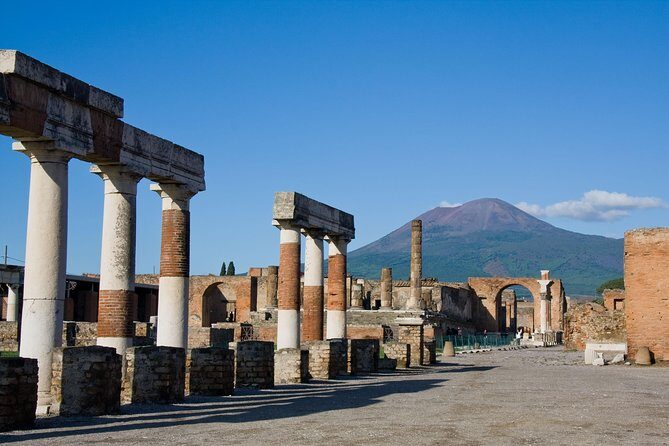
- Two ruins, one day: You’ll get about 2 hours each at Pompeii and Herculaneum.
- Air-conditioned transport: The minivan/minibus ride is included, and it matters in warm months.
- Naples city sights included: You’ll also spend about 2 hours in Naples on a guided overview.
- Small-ish group size: Shared tours run up to 19 travelers (and typically require a minimum of 6 for shared departures).
- Comfort tip from real-world visits: Bring shoes for cobbled, uneven walking—especially at Pompeii.
Why Combine Pompeii, Herculaneum, and Naples in One 8-Hour Day
This tour works because it solves the biggest problem on the Amalfi Coast side of life: time. You’re starting around 8:00 am and ending back near your meeting point, with transport handled for you. Instead of spending half a day on logistics, you get a structured route that goes from the preserved streets of Pompeii to the astonishing preservation of Herculaneum, then into Naples for city context.
You’ll also appreciate how the day is paced. Pompeii and Herculaneum are both major targets, but they’re different experiences. Pompeii is the bigger, open-air “wow” stop. Herculaneum is smaller, quieter-feeling, and often hits harder because of how intact many details remain. Then Naples gives you a break from ancient disaster—sort of. It’s still intense, just in a different way: noise, views, food culture, and street energy.
The guided Naples portion is a smart add. Even if you only have a couple hours, a local guide helps you understand what you’re seeing and why the city developed the way it did.
You can also read our reviews of more tours and experiences in Sorrento.
- Sorrento Farm and Food Experience including Olive Oil, Limoncello, Wine tasting
★ 5.0 · 2,524 reviews


Pompeii Archaeological Park: Your 2 Hours of Fossilized Daily Life
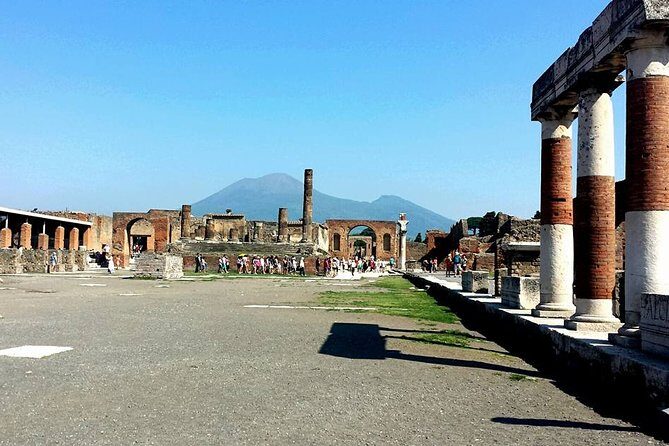
At Pompeii, you’re walking through what feels like an outdoor museum where daily life got frozen. The ruins cover a city that was buried under ash after the eruption—and Pompeii wasn’t brought back into the public eye until 1748. That timeline matters, because it explains why the layout still reads like a town: streets, homes, and public areas are still there to interpret.
You’ll have about two hours here, and that’s enough if you focus. Pompeii can tempt you into a “photo-binge and hope” approach. Better strategy: let your guide point out the key textures of daily life—how people lived, how spaces were used, and what disasters looked like on the ground.
A practical note: Pompeii involves uneven surfaces and cobblestones. I’d treat this stop like a hiking day. Wear supportive shoes. Bring sunglasses and water. If you go in expecting flat, smooth sidewalks, Pompeii will correct you quickly.
One more reason I like this setup: a good guide helps you avoid the common trap of thinking you’re seeing everything at once. With only two hours, you want the high-impact highlights explained clearly, not everything rushed past you.
Herculaneum’s Patrician Villas: Perfectly Preserved and Uncomfortably Real
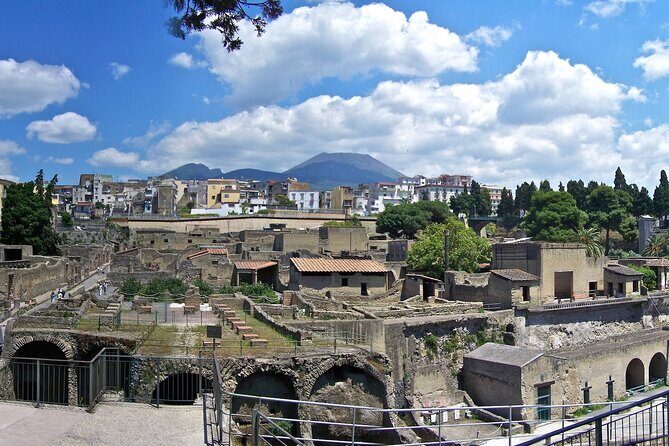
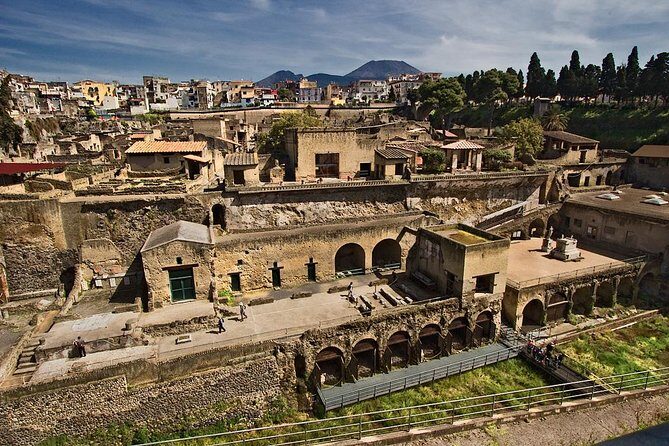
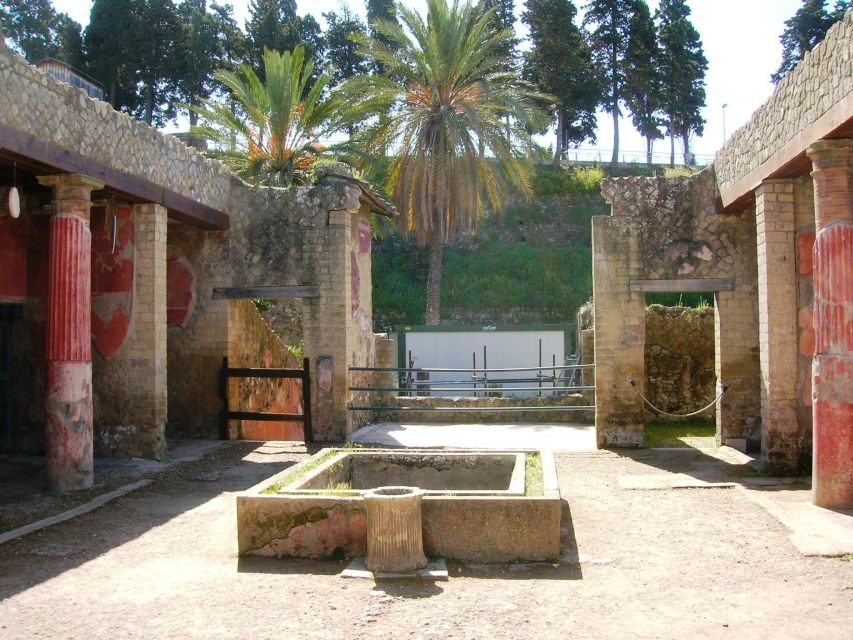
If Pompeii is the big stage, Herculaneum is the intimate one. This site is known as the “smaller sister” of Pompeii, and in practice it often feels more manageable. You’ll have about two hours here too, but the pace can feel steadier because the scale is different and many visitors spend their energy on the details that made Herculaneum so famous.
What makes Herculaneum special is preservation. Many major features are unusually intact, including patrician villas—the homes of the well-off. And it’s not just walls and mosaics. There’s mention of how even wood and ropes from the ancient city are on display, along with brickwork, mosaics, and frescoes. That level of detail is rare in archaeology, and it’s exactly why people leave Herculaneum with a stronger sense of what daily life might have been like.
You’ll also hear the science side: the city was ravaged by volcanic flows described as about 500°C, which makes the preservation feel even more unusual. The eruption didn’t just erase everything—it helped “freeze” parts of the city in conditions that allow modern visitors to observe fine materials.
I’ll be honest: Herculaneum can feel emotionally heavier than Pompeii because the intactness makes the past feel closer. It’s not always about size. It’s about impact.
Naples Sightseeing: Getting the City’s Rhythm Beyond the Food
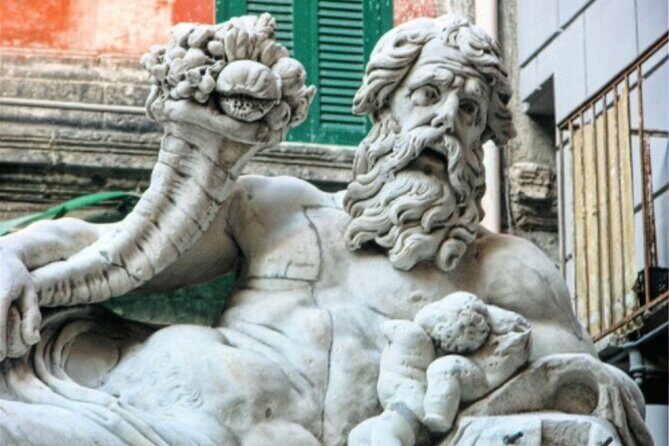
After the ruins, you’ll shift into Naples with about two hours of guided sightseeing. The city is famous for its energy and contradictions—loud, cinematic, and full of life. You’ll get a sense of the place through a route that connects neighborhoods and sights, and you’ll hear how the city’s culture and cuisine play into daily life.
Lunch is not included, and that’s actually useful. Naples is a city where food is a major part of the experience, and having free time for your own meal can help you follow your tastes. If you’re into pizza, you’ll find plenty of options nearby. If you prefer something lighter, you can also choose that without feeling boxed into a group menu.
One thing I like here is the guided framing. Without guidance, it’s easy to treat Naples as a stopover between ruins. With a guide, you can understand why the city feels the way it does—why it attracts people and why it keeps them.
Also, the Naples portion is listed as admission free, which helps you avoid surprise costs. Your “ticket anxiety” mostly lives at Pompeii and Herculaneum, not at the Naples stop.
Tour Timing, Group Size, and the Air-Conditioned Reality Check
This day runs for about 8 hours, starting at 8:00 am, and you’ll return to your meeting point at the end. That structure matters. You’re seeing a lot, and early departure helps you beat some of the worst crowds and heat.
The group size is capped at 19 travelers, which usually makes it easier to move without long waits. There’s also a shared-tour minimum of 6 people, so if a shared departure doesn’t meet that number you may be offered an alternative or a full refund. In practice, that keeps the experience from turning into a frustrating “almost happens” situation.
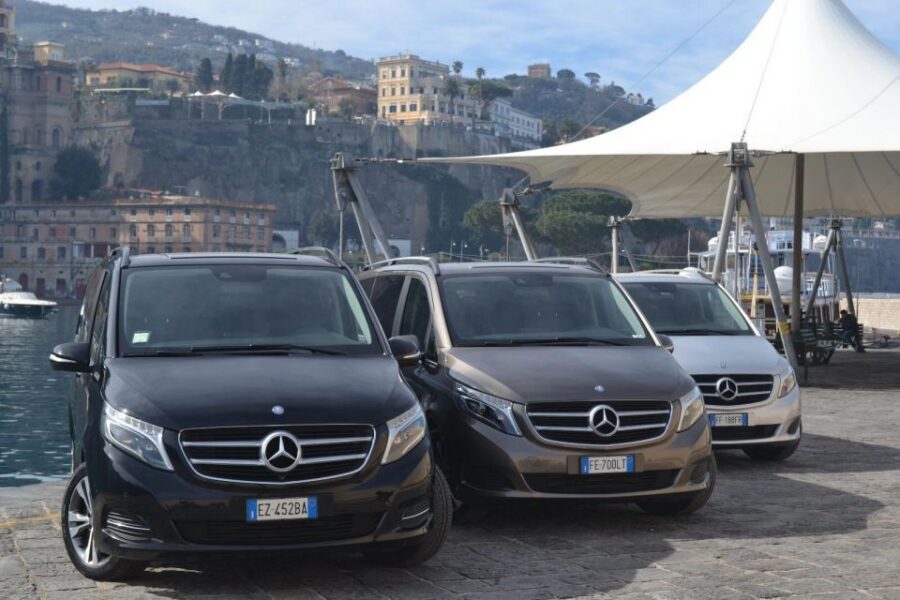
Transport is the other big deal. You’re not squeezed into public transit. You’re in an air-conditioned minivan/minibus, with a driver throughout. For summer days, that alone can make the difference between feeling energized and feeling cooked.
Who’s this best for? People who want a lot of value from one day and don’t want to coordinate trains, buses, and ticket lines on their own. If you love ancient Rome, you’ll like how tightly the schedule connects two different archaeological experiences.





Tickets, Lunch, and What $224.31 Per Person Really Buys
At $224.31 per person, the price looks reasonable when you break it down. You’re paying for the whole “arranged day” package: air-conditioned transport, a driver, and English-speaking guidance at the stops. That’s not small. Between Naples-side pickup, the travel time, and getting you through major sights, the cost isn’t just for entry tickets.
But you should plan for the add-ons:
- Entrance tickets are not included at Pompeii and Herculaneum.
- Lunch is not included.
So the smart move is to budget separately for those items. If you’re doing a family day, you’ll also want to remember that children under 18 enter for free at Pompeii and Herculaneum with a valid ID. That can change the real math for families.
One more practical point: with tickets not included, you’ll want to stay flexible on timing. Sites often have their own rhythms, and your guide’s job is to keep you on track without turning it into a sprint.
The Value of Guides: How You Get More From Every Square Meter
This kind of tour lives and dies by interpretation. The best guides don’t just tell you facts. They help you notice the right things fast, then connect those details into a story that makes sense.
In the best-case scenarios, you’ll hear from guides who are praised for being engaging and energetic. Names that come up in past groups include Andrea for Pompeii, Manuela for Herculaneum, and Luca (plus drivers like Vincenzo, Michele, and Domenico in various experiences). The common thread is that you’re guided through the ruins in a way that makes questions easy and the pace feel manageable.
That also matters for families. There are mentions of guides working well with kids and keeping the day relaxed. With Pompeii and Herculaneum, that’s not trivia—it’s comfort. If you’re traveling with teens, this tour can work well because the sites are huge, but your guide helps keep everyone oriented.
Who This Tour Suits Best (And Who Might Want Something Else)
This fits best if:
- You want Pompeii + Herculaneum without trying to arrange everything yourself.
- You like structure and hate ticket-line guesswork.
- You’re comfortable with a full day that includes walking on uneven ground.
- You’re traveling as a group and want a smoother day from Sorrento/Naples side with round-trip transport.
It might be less ideal if:
- You want a long, slow museum-style visit at each site.
- You prefer to control every moment with stops and rest times.
- You’re sensitive to long days or heavy midday walking (heat planning matters).
Still, if your goal is to see the highlights and understand what you’re looking at, this is a strong format. You’re not choosing one ruin and losing the other. You’re stacking two very different “ancient worlds” into a single day, then ending in Naples with a sense of place.
Should You Book This Pompeii–Herculaneum–Naples Day Trip?
I’d book it if you’re staying in Naples, Sorrento, or along the Amalfi Coast and you want one day that meaningfully covers the region: Pompeii for scale, Herculaneum for preservation, and Naples for the city context that makes everything feel less random.
I wouldn’t book it blindly if you hate paying separate entrance fees, or if you want a leisurely day with lots of downtime. This tour is designed for efficient sightseeing, not for hanging around until the light is perfect and you’re still not done looking.
If you’re on the fence, think about your priorities. If Pompeii is a must and Herculaneum is a must too, this combo is the simplest way to do both. And the air-conditioned vehicle is a big quality-of-life bonus.
FAQ
How long is the tour?
It runs for about 8 hours, starting at 8:00 am.
Where does the tour operate from?
It includes hassle-free round-trip transportation from Naples, Sorrento, or the Amalfi Coast (with the tour ending back at the meeting point).
Are entrance tickets included for Pompeii and Herculaneum?
No. Entrance tickets are not included for Pompeii Archaeological Park or Herculaneum.
Is the Naples part included without an admission charge?
Yes. The Naples stop is listed as admission free.
Will there be English-speaking guidance?
Yes. The tour includes an English-speaking guide for Pompeii, Herculaneum, and Naples.
Is lunch included?
No. Lunch is not included.
What group size should I expect?
Shared tours follow a minimum of 6 people, and the maximum is 19 travelers.
Is there an air-conditioned vehicle?
Yes. You travel by air-conditioned minivan/minibus.
Do children get reduced or free entry?
Children under 18 enter for free at Pompeii and Herculaneum with valid ID.
What if I need to cancel?
Free cancellation is available up to 24 hours in advance of the experience start time for a full refund.
More Tour Reviews in Sorrento
- Sorrento Farm and Food Experience including Olive Oil, Limoncello, Wine tasting
★ 5.0 · 2,524 reviews