REVIEW · SORRENTO
Private Pompeii Tour with Archaeologist & Winery on Mt Vesuvius
Book on Viator →Operated by Fabrizio Belleni - Leisure Italy Private Guide · Bookable on Viator
Pompeii feels personal when you have the right guide. This private outing is built around a Forum-focused Pompeii walk with archaeologist Fabrizio, then finishes with a Mt Vesuvius winery lunch and a tasting that’s timed to keep the day easy and scenic. I especially like the flexibility built into the route, with the tour described as tuned to your will and physical attitude, so you are not stuck moving at someone else’s pace.
My second favorite part is the stress-reducing logistics: A/C Mercedes van transfers and skip-the-hassle Pompeii entry via Pompeii Express. The one thing to consider is that the winery lunch is not included in the base price; you’ll pay on-site for the wine tasting option you choose.
In This Review
- Key things to know before you go
- Private Pompeii With Fabrizio Belleni: a guide who shapes the pace
- Mercedes van transfers from Naples and Sorrento: saving your energy for the ruins
- Pompeii’s spine: Porta Marina and the Forum area you’ll remember
- Enter through Porta Marina, Pompeii’s dramatic sea-gate
- Walk the civic anchor: Basilica Pompeiana
- Temple of Apollo: architecture plus views toward Vesuvius
- The Forum itself: where markets, ceremonies, and power met
- Food, baths, and everyday tech: Macellum and Forum Baths
- Macellum: Pompeii’s covered food market
- Forum Baths: the eruption preserved real social life
- Pompeii’s luxury homes: House of the Faun and House of the Vettii
- House of the Faun: scale and elite design
- House of the Vettii: the Fourth Style fresco “Sistine” effect
- Newer access and Roman entertainment: Casti Amanti and Teatro Grande
- Insula dei Casti Amanti: a modern elevated walk over active excavation
- Teatro Grande: test the acoustics, read the seating hierarchy
- Antiquarium di Pompei: the museum stop that makes the ruins hit harder
- Mt Vesuvius winery lunch: views, five wines, and the pay-on-site plan
- What you eat
- What you pay for (and how to choose)
- How to plan your day: timing, walking pace, and comfort
- Price and value: what the $434.46 includes and what to budget extra
- Who this Pompeii and Vesuvius combo suits best
- Should you book it? My take
- FAQ
- How long is the Private Pompeii Tour with Archaeologist & Winery?
- Does the tour include entry tickets for Pompeii?
- Does the tour reach the top of Mount Vesuvius?
- What is included with the winery visit, and what costs extra?
- Is this a private tour?
- Can I cancel for a full refund?
Key things to know before you go
- Private means your group only: You’ll walk with a guide made for your questions and pace.
- Forum-centered Pompeii route: You’ll hit the city’s main civic and religious anchor points, not just random ruins.
- Skip-the-line Pompeii entry: Pompeii Express tickets are handled for you.
- No summit on Vesuvius: The day includes views and winery time, but it does not reach the top of the volcano.
- Winery lunch is pay-on-site: Budget for the Classic or Superior tasting upgrade.
Private Pompeii With Fabrizio Belleni: a guide who shapes the pace

You’re not just getting a list of sights. The tone here is practical: Fabrizio’s Pompeii tour is set up so the walking route can be adjusted based on what you want to focus on and how you feel physically. That matters in Pompeii, where uneven stone, crowding in key areas, and heat can turn a “short visit” into a scramble.
The tour is also designed for first-time visitors and repeaters. Even if you’ve read about Pompeii already, having an archaeologist guide you through what you’re seeing in the Forum area helps the city click into place fast. You’ll also get enough structure to avoid wasting time drifting.
You can also read our reviews of more private tours in Sorrento

Mercedes van transfers from Naples and Sorrento: saving your energy for the ruins
This is a full-day feeling trip without turning your whole day into travel fatigue. The tour includes private pickup and drop-off by A/C Mercedes minivan, with the Pompeii portion followed by the Mt Vesuvius winery time.
A/C transport sounds basic until you hit Italy in peak warm weather. If you’d rather spend your legs on ruins and your brain on history instead of waiting, negotiating, or figuring out public transit, this format is a good fit.
Pompeii’s spine: Porta Marina and the Forum area you’ll remember
The day’s Pompeii route is built around a logical sequence. You start at the Archaeological Park of Pompeii, then the walking plan funnels toward the heart of the city around the Forum and the public buildings that shaped daily life.
Enter through Porta Marina, Pompeii’s dramatic sea-gate
Starting at Piazza Porta Marina gives you an instant sense of Pompeii as a working city. Porta Marina was a main access point toward the sea, with a dual-arched gate built for both pedestrians and cart traffic. From there, the gentle slope of Via Marina nudges you toward the civic and religious core.
This is a smart beginning because it frames the ruins as a connected place. You don’t just see buildings in isolation; you see how people would have moved through Pompeii’s main “gateway” and into the center of activity.
Walk the civic anchor: Basilica Pompeiana
In the Basilica Pompeiana, you see how Roman public life ran on law and commerce rather than only religion. This huge three-aisled structure dates back to the 2nd century BC and served as a courthouse and a center for business transactions.
If you’ve ever wondered why Roman towns look so administratively serious, this is your answer. You can walk the grand central nave and stand with a view toward the raised tribunal platform where magistrates presided over legal matters.
You can also read our reviews of more wine tours in Sorrento
- Sorrento Farm and Food Experience including Olive Oil, Limoncello, Wine tasting
★ 5.0 · 2,524 reviews






Temple of Apollo: architecture plus views toward Vesuvius
The Temple of Apollo sits on the western side of the Forum and dates to the 6th century BC. It’s known for a blend of Greek and Italic design ideas, with a portico of 48 columns and an elevated podium where the cella once stood.
The practical payoff here is both visual and emotional. You also get an iconic view toward Mount Vesuvius, and that helps you understand how the city’s everyday beauty and drama sit right beside its real risk.
The Forum itself: where markets, ceremonies, and power met
You’ll spend time on the Forum of Pompeii, the bustling civic hub intersecting key streets. This plaza was car-free and acted as the political, commercial, and religious heart, with major surrounding public buildings like the Basilica.
One reason the Forum is so satisfying on a guided visit is that you can picture daily rhythms. With markets at the adjacent Macellum, legal proceedings, and religious ceremonies all orbiting this space, the Forum feels like the city’s “center of gravity.”
Food, baths, and everyday tech: Macellum and Forum Baths
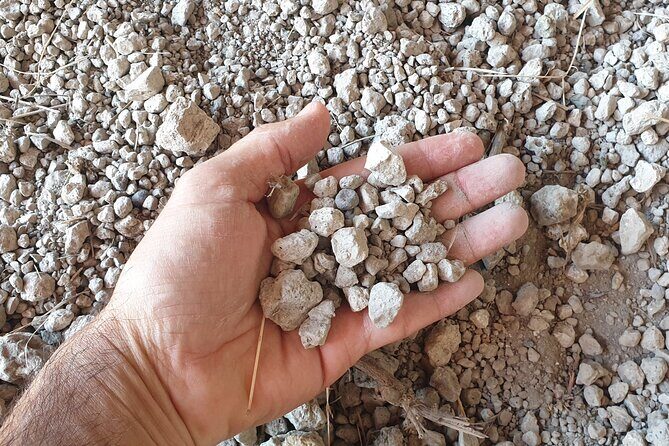
Pompeii isn’t only temples and statues. The best guided tours show you the daily systems that made city life run.
Macellum: Pompeii’s covered food market
At the Macellum, you step into Pompeii’s primary covered food market. It’s rectangular, with a central courtyard and a circular tholos pavilion area tied to seafood handling. Drainage evidence like fish scales and bones points to how the market worked in real life.
You also see small-shop activity along the perimeter and a shrine honoring the imperial family. It’s a great stop for anyone who likes the intersection of commerce, religion, and everyday routine in one place.
Forum Baths: the eruption preserved real social life
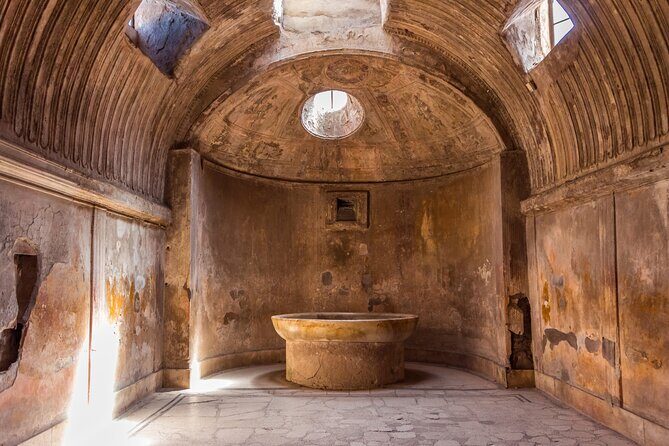
The Forum Baths (Terme del Foro) are one of Pompeii’s most human-feeling sites because the complex was still fully operational during the 79 AD eruption. The layout shows Roman bathing sequences: apodyterium (changing), frigidarium (cold), tepidarium (warm), and calidarium (hot).
What I like about this stop is that it isn’t just architecture bragging rights. You get a sense of routines and social mixing, including restoration work that has opened women’s areas so you can read the space as communal, not just technical.
You’ll also spot Roman engineering details such as the hollow-wall and floor hypocaust system for hot air, plus original elements connected to heating.
Pompeii’s luxury homes: House of the Faun and House of the Vettii
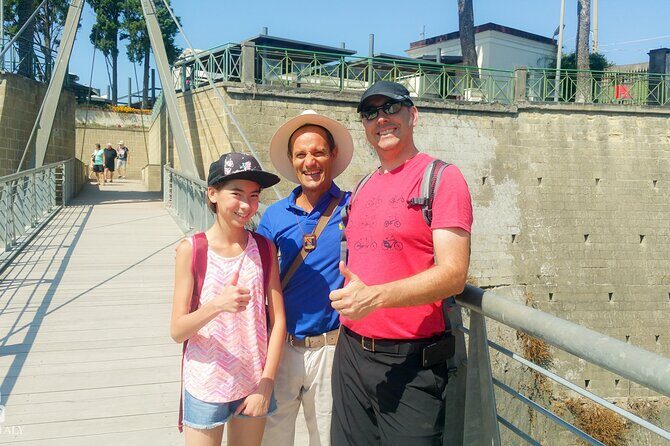
After the public world, you move into private wealth and taste. This is where Pompeii can feel like a window into how status worked.
House of the Faun: scale and elite design
The House of the Faun is one of the largest and most luxurious residences in Pompeii, spread across an entire insula. It includes peristyle gardens and atriums, and it’s famous for the bronze statue known as the Dancing Faun (now primarily as a replica, with originals in Naples) plus the Alexander Mosaic, also mainly represented by replicas.
Even without standing in front of the original masterpiece, you get the key lesson: elite life here was about space, spectacle, and carefully planned movement through gardens and rooms.
House of the Vettii: the Fourth Style fresco “Sistine” effect
The Casa dei Vettii is framed as Pompeii’s Fourth Style fresco showcase. The story here is also compelling: two brothers who rose from slavery to become wealthy merchants owned the home, and their status shows up in the art program and the polished peristyle garden.
A stand-out detail is the entry painting of Priapus, tied to prosperity symbolism. You also get the Room of the Cupids and the famous set of fresco-rich dining spaces, with the garden replanted in patterns meant to echo ancient layouts.
Newer access and Roman entertainment: Casti Amanti and Teatro Grande
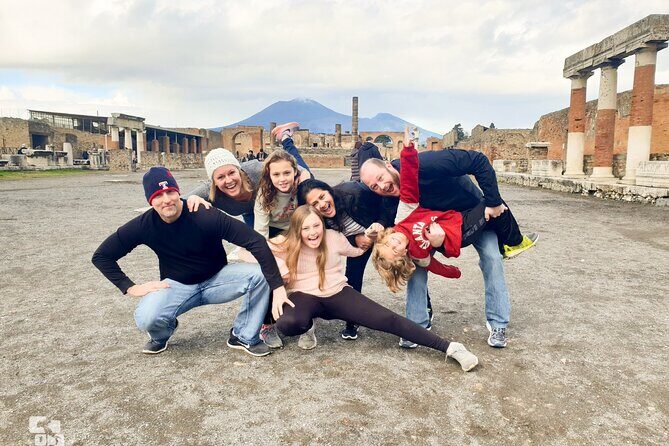
This part of the itinerary adds variety. You go from homes back to streets and then up into spaces where people gathered.
Insula dei Casti Amanti: a modern elevated walk over active excavation
The Insula dei Casti Amanti is along Via dell’Abbondanza and includes homes and even a bakery. The big reason it’s worth your time is the “from above” perspective and the elevated walkway that lets you look at architecture and active archaeology at the same time.
This stop also connects you to the ongoing reality that Pompeii is still being studied, not just displayed.
Teatro Grande: test the acoustics, read the seating hierarchy
At the Teatro Grande, you see Roman entertainment built into the landscape. The horseshoe-shaped theater carved into a hillside could seat around 5,000 people, and tiered seating helps you understand social hierarchy—local elites in the ima cavea and general populace higher up.
It’s also known for excellent acoustics, and the layout still invites you to test sound from the center of the orchestra area. If you like learning through your own senses rather than through photos, this is a fun stop.
Antiquarium di Pompei: the museum stop that makes the ruins hit harder
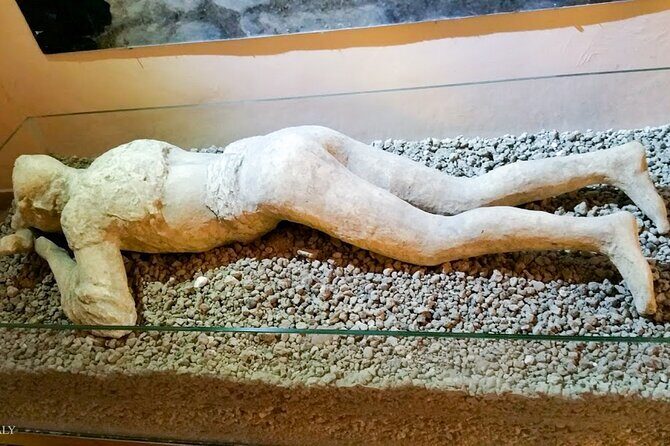
Right near the Porta Marina entrance is the Antiquarium di Pompei, a modern, climate-controlled museum that holds Pompeii’s fragile treasures. I like doing this kind of museum stop after a few outdoor sights because your brain starts connecting artifacts to rooms and streets.
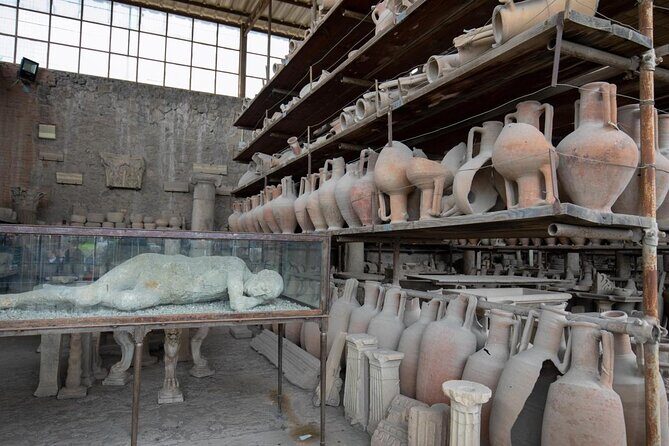
Expect the story of Pompeii from pre-Roman roots through the eruption of 79 AD. You’ll see famous items and themes, plus world-known plaster casts that show victims frozen in their final moments, including the Dog of Pompeii cast.
The museum experience is also described as enhanced with multimedia projections and digital assistants, which can help if you want a clearer “why this matters” layer before you continue.
Mt Vesuvius winery lunch: views, five wines, and the pay-on-site plan
After Pompeii, you move into the Cantina del Vesuvio winery area on the slopes of the Vesuvius region inside Mt Vesuvius National Park. This isn’t a summit climb. The plan is a scenic change of pace, including views over the Bay of Naples and the volcano’s crater area.
The winery visit starts with a guided 15-minute stroll through vineyards. The highlight is a set menu lunch paired with five separate local wines, with the experience centered on Lacryma Christi wines.
What you eat
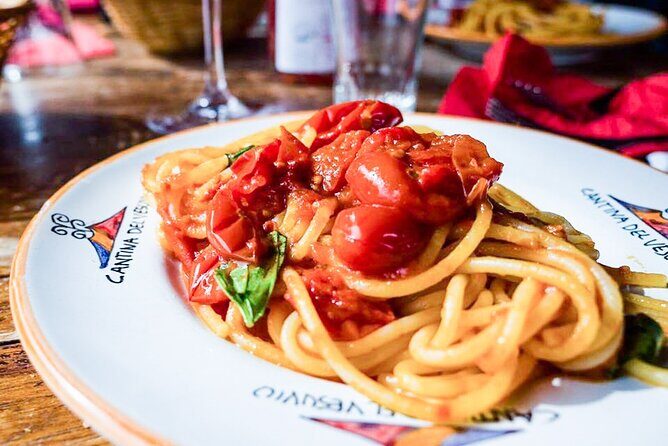
The menu is simple and classic. You’re looking at bruschetta and cheese with cured meats for starter, then spaghetti with vesuvian cherry tomatoes and meatballs. Dessert is Neapolitan pastiera, with vegetarian and gluten-free options noted.
What you pay for (and how to choose)
The base tour price covers the reservation setup, but not the lunch tasting cost. On-site pricing for the winery experience is listed as:
- Classic tasting: €55 per person
- Superior wine upgrade: €65 per person
I recommend choosing based on how much you care about wine tasting depth versus keeping your budget tight. If you’re mostly there for a great lunch and one solid tasting experience, Classic is a reasonable match.
How to plan your day: timing, walking pace, and comfort
The tour runs about 4 to 7 hours depending on your pace and the exact flow. Since Pompeii walking involves uneven surfaces and short indoor/outdoor transitions, I treat this as a real walking day, not a casual stroll.
The tour provider notes moderate physical fitness is expected. That lines up with what you’ll feel: you’ll walk between Forum-area stops and then continue to homes, theater, and a museum.
If you need breaks, say so early. The itinerary is designed to be tuned to your physical attitude, so you’ll get a better day if your guide knows your rhythm from the start.
Price and value: what the $434.46 includes and what to budget extra
At $434.46 per person, the value is strongest when you count what’s being handled for you. Your fee includes:
- Pompeii Express skip-the-line tickets (admission fee handled)
- Transport by A/C Mercedes Minivan
- Private walking tour with an official guide
- Private pickup and drop-off
- A reservation for the winery experience (with lunch to be paid on-site)
What’s not included is the winery lunch and tasting itself. Budget €50–€60 additional depending on tasting option listed (with Classic or superior upgrade costs as provided). In practical terms, your full day cost becomes your base rate plus the tasting selection.
Also worth noting: the itinerary is private, and you can request special focus ahead of time. For many people, that flexibility is what turns a “tour” into a “day that fits.”
Who this Pompeii and Vesuvius combo suits best
This tour makes the most sense if you want three things in one day: structure, comfort, and high-quality time. You’ll like it if:
- Pompeii is your top priority and you want a guide who helps you understand what you’re looking at, especially around the Forum.
- You prefer private pacing rather than being swept along by a larger group.
- You want a winery add-on that feels like a real meal, not just a quick tasting stop.
- You care about logistics (A/C van, pickup/drop-off, tickets handled).
It’s also a good match for couples and small groups who want conversation time. If you’re traveling with kids, the tour data says children must be accompanied by an adult, so plan around that reality.
Should you book it? My take
If you’re choosing between a self-guided Pompeii day and a guided day that ends with wine and lunch, I’d lean toward this one. The combination of private guiding, skip-the-line Pompeii entry, and a Vesuvius winery meal makes the day feel smoother than doing everything separately.
The main reason to hesitate is simple: you still have to pay for the winery tasting on-site, so your final total won’t be only the advertised price. If you’re okay with that and you want your Pompeii time to feel organized and meaningful, this is a strong choice.
FAQ
How long is the Private Pompeii Tour with Archaeologist & Winery?
The duration is listed as approximately 4 to 7 hours.
Does the tour include entry tickets for Pompeii?
Yes. The tour includes Pompeii admission fee through Pompeii Express skip-the-line tickets, and the itinerary indicates admission is included for the Pompeii stops.
Does the tour reach the top of Mount Vesuvius?
No. The tour does not reach the top of Mt Vesuvius.
What is included with the winery visit, and what costs extra?
You get the winery reservation, plus the lunch is paid on the spot. The additional cost for the tasting options is listed as €55 per person for Classic or €65 per person for Superior.
Is this a private tour?
Yes. It’s a private tour/activity, and only your group participates.
Can I cancel for a full refund?
Yes. You can cancel up to 24 hours in advance for a full refund. If you cancel less than 24 hours before the start time, the amount paid is not refunded.

More Private Tours in Sorrento


More Tours in Sorrento



More Tour Reviews in Sorrento
- Sorrento Farm and Food Experience including Olive Oil, Limoncello, Wine tasting
★ 5.0 · 2,524 reviews