REVIEW · SORRENTO
Sorrento grand tour off the beaten track with breathtaking landscapes
Book on Viator →Bookable on Viator
Sorrento’s side streets steal the show. This tour threads together siren mythology, famous writers, and hotel courtyards with jaw-dropping viewpoints from morning into evening light. You’ll also get a story-driven walk that feels more like a local lesson than a checklist.
Two things I really like: first, the guiding is intensely personal. Silvana’s mix of myth, architecture, and food facts makes even ordinary corners feel important. Second, you hit both the postcard spots and the quieter edges, including Marina Grande and the town’s secret-feeling lanes near the Vallone dei Mulini, plus a proper limoncello and granita stop.
One thing to consider: it’s weather-dependent, and there’s also one optional extra ticket you may want to add. If you’re chasing indoor comfort on a rainy day, plan for an alternate moment.
In This Review
- Key highlights to look for
- Why this Sorrento walk feels special (and not just scenic)
- Piazza della Vittoria: Sirens, writers, and the first big view
- Marina Grande and the Antico Borgo Marinaro: fishermen details plus Vesuvius
- Casa di Cornelia Tasso: a palace you mostly see from the outside
- Sedile Dominova and the optional Museo della Tarsia Lignea
- Imperial Hotel Tramontano: Grand Tour glamour, Ibsen to Yourcenar
- Chiostro di San Francesco: quiet cloister energy in the middle of town
- Villa Comunale di Sorrento and the view sweep from Ischia to Vesuvius
- Grand Hotel Excelsior Vittoria: Caruso, Lucio Dalla, and even Nietzsche
- Limoncello and granita: Giardini di Cataldo citrus grove tasting
- Via Aniello Califano and Piazza Giovanni Battista de Curtis: music in the pavement
- Vallone dei Mulini and the Cattedrale nativity: nature + sacred art
- Pace, practicality, and who this tour suits best
- Should you book this Sorrento grand tour off the beaten path?
- FAQ
- How long is the tour?
- Is this a private tour?
- What language is the tour offered in?
- What is included for food during the tour?
- Is there any optional paid admission?
- Where do we meet and where does the tour end?
Key highlights to look for
- Siren legends and the Homer-Virgil connection at Piazza della Vittoria
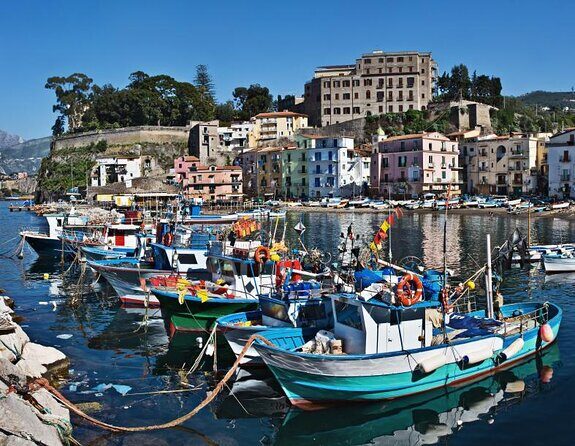
- Marina Grande without rushing: nets, fishermen’s details, and big views to Vesuvius
- Hotel Tramontano and Royal-Grand-Tour stories you don’t usually hear on standard walks
- Chiostro di San Francesco: cloister calm, weeping willow, and nativity-scene traditions
- Limoncello and granita included at a real Sorrento citrus grove stop
- Vallone dei Mulini: mills gone, rare plants and a mysterious sense of quiet
Why this Sorrento walk feels special (and not just scenic)
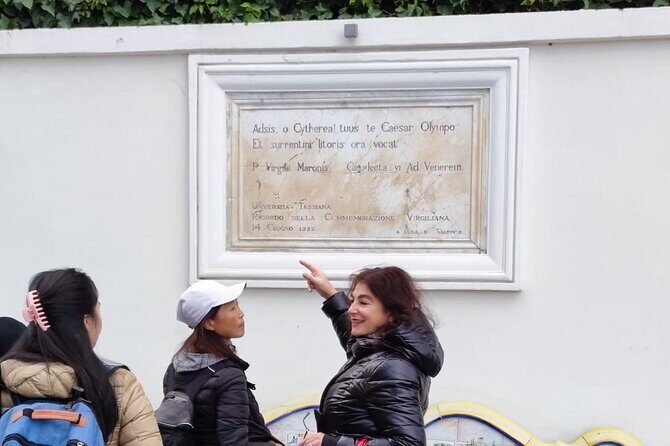
Most Sorrento tours give you a few viewpoints and call it a day. This one works because it treats the town like a living museum, with stories tied to specific streets, hotels, and building details. I like that you move in a logical loop through the historic center while constantly re-framing what you’re looking at.
A huge part of the value is the guide. In the reviews, Silvana shows up again and again as the reason this tour lands so well: strong command of Sorrento’s myths and people, plus a knack for adjusting when timing or access changes. If you care about meaning behind the view, this kind of storytelling is exactly what you want.
Also, you’re not wandering alone in a crowd. It’s described as a private tour/activity, and only your group participates. That matters on a compact town like Sorrento, where big groups can turn a nice walk into a shoulder-to-shoulder shuffle.
You can also read our reviews of more tours and experiences in Sorrento.
- Sorrento Farm and Food Experience including Olive Oil, Limoncello, Wine tasting
★ 5.0 · 2,524 reviews



Piazza della Vittoria: Sirens, writers, and the first big view
The tour starts at Hotel Bellevue Syrene in Piazza della Vittoria. This is a clever opener because it immediately puts you in the mood: the route points straight at the myth of the Land of the Sirens. You’ll also hear name drops that make the area feel connected to European literature in a very tangible way, including Homer, Virgil, Marguerite Yourcenar, Harriet Beecher Stowe, and Torquato Tasso (the Sorrento poet).
From there, you’ll head toward the Belle Vue Sirene hotel for a high vantage. The point isn’t just to see the scenery. It’s to connect that view to what was underneath it, including ruins of a Roman villa linked to Agrippa Postumo and features that relate to two nymphaeums. You’ll even get the kind of mental picture that makes it easier to imagine how Roman water systems might have worked here.
This stop is mostly about atmosphere and orientation. You’ll understand why locals and writers loved this coast long before “Instagram views” became a thing.
Marina Grande and the Antico Borgo Marinaro: fishermen details plus Vesuvius
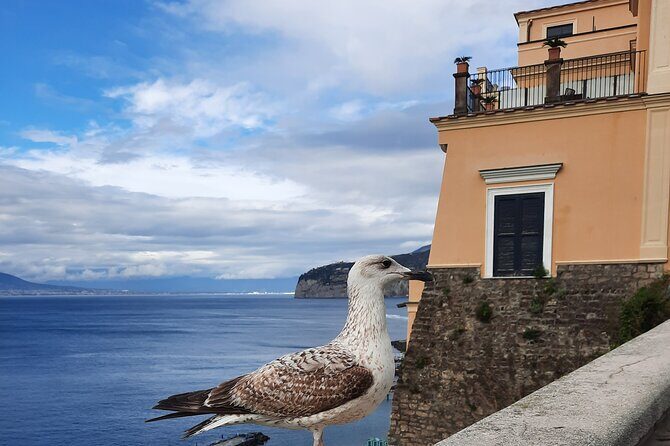
Next comes Marina Grande, the Antico Borgo Marinaro area. This is where Sorrento stops feeling like a terrace town and starts feeling like a working coastline. Expect a walk that includes fishermen’s nets, typical Sorrento character details, and an unhurried look at the harbor life vibe.
There’s also a cinematic pop moment: a balcony spot associated with the film Pane, amore e…, with Sofia Loren leaning out opposite Vittorio De Sica. You don’t need to be a movie buff to enjoy it. The real value is that it gives you a landmark you can point at, then continue your walk with a story in your head instead of just blank curiosity.
Timing-wise, you’ll have a short amount of time here, but it’s enough to get the feel of the neighborhood. And the best part: the pier views open toward Vesuvius and the Gulf of Naples, so you get the postcard payoff without skipping the neighborhood texture.
Casa di Cornelia Tasso: a palace you mostly see from the outside
From Marina Grande, the tour shifts inland toward the Casa Di Cornelia Tasso area. The big takeaway is the connection to Torquato Tasso’s family. You reach a sixteenth-century palace linked to the sister of the great Sorrento writer.
You’ll also pass through the area near the Donna Sofia restaurant, where the guide points out the many photos connected to Sofia Loren. It’s one of those local-to-famous overlaps that keeps the tour feeling grounded in actual Sorrento culture, not just distant legends.
Important detail: parts of the interior are not preserved the way you might hope. The vault fresco inside was destroyed by fire, so you’ll admire key elements from the outside. That’s not a drawback, it’s a reminder that this isn’t a theme park. You’re seeing a real place shaped by time and loss.
Sedile Dominova and the optional Museo della Tarsia Lignea
Then you move into the historic center and reach Sedile Dominova, a quick stop that helps you connect the town’s public life with its artistic traditions. After that, there’s an optional add-on: the Museo della Tarsia Lignea.
This is one of the most practical “choose your own adventure” moments on the tour. The tour notes that entrance is optional and must be indicated at booking. If you add it, the adult ticket cost is €8.00.
Why it’s worth considering: Sorrentine inlays from the 19th century are a signature style here, and the museum also includes a section devoted to Torquato Tasso, with items like works, vases, and paintings tied to the poet. If you enjoy craft details, this museum tends to feel more satisfying than another generic “small museum with a few rooms.”






Imperial Hotel Tramontano: Grand Tour glamour, Ibsen to Yourcenar
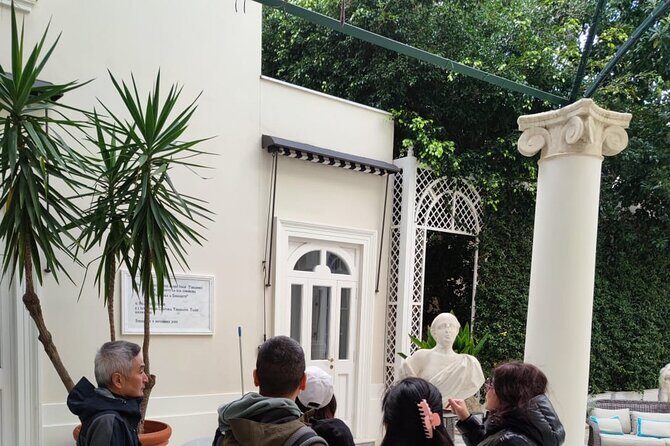
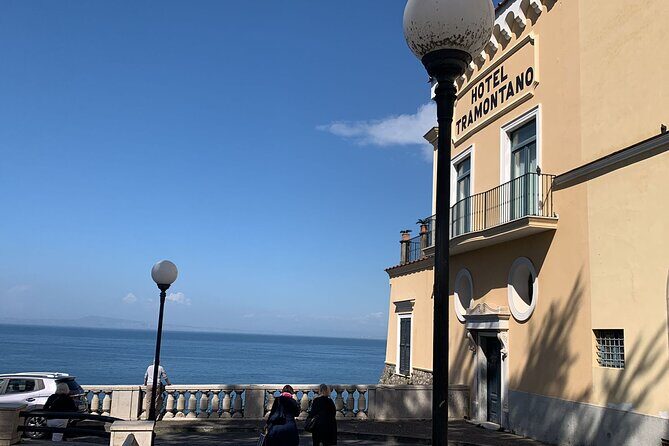
One of the most “how did I not know this was here” stops is at the Imperial Hotel Tramontano. You’ll stop outside first, then also go inside. The tour frames this hotel as a gathering spot for royal-house figures, and for artists and writers associated with the Grand Tour.
The name drops are fun, but the payoff is what the building represents in Sorrento’s story. You’ll hear connections to famous writers including Henrik Ibsen and Marguerite Yourcenar, and you’ll also learn about how the de Curtis brothers tie into Torna a Surriento. Even if you’ve heard the song, you may not have heard its origin story in this setting.
Inside, there’s a particularly fitting literary link: the place connected to Torquato Tasso’s birth, plus his garden with secular trees. This is the moment when the tour stops being just pretty streets and becomes a “why this town mattered” conversation.
Chiostro di San Francesco: quiet cloister energy in the middle of town

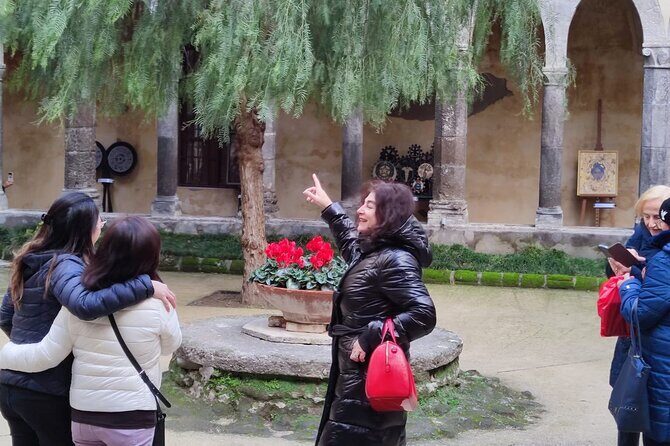
Next is Chiostro di San Francesco, a fourteenth-century cloister. It’s hard to describe until you see it, but cloisters change how you walk. The air feels slower. The design is made for silence and reflection, with a weeping willow that adds that “soft” contrast to the surrounding town bustle.
This stop has a few interesting practical features. The cloister hosts civil weddings and, in summer, classical music concerts. The Franciscan monks live isolated from the worldly rhythm of Sorrento, and the tour also points out their role in creating the Neapolitan nativity scene. So even if you’re not in the mood for architecture, there’s a cultural reason to pay attention.
Villa Comunale di Sorrento and the view sweep from Ischia to Vesuvius

From the cloister, you head toward Villa Comunale di Sorrento, connected to composer Salve d’Esposito and the song Anema e core. This is a “pause and look” stop, and it’s timed well: you get time to photograph and actually study the coast.
The panorama here is big. You can see from Ischia across toward Punta del Capo di Sorrento, plus Vesuvius and the full Gulf of Naples. What makes this stop feel worth it is the context your guide gives you: you’re not just taking a photo, you’re understanding which parts of the bay made this coast so desirable in the first place.
Grand Hotel Excelsior Vittoria: Caruso, Lucio Dalla, and even Nietzsche
Then it’s toward the Grand Hotel Excelsior Vittoria, passing by Piazza S. Antonino along the way. You’ll spot the statue dedicated to Sorrento’s patron saint and learn some history tied to it.
The route also references the Museum Restaurant dedicated to Enrico Caruso, if it’s open. Even when it’s not, the tour uses these hotel connections to explain why Sorrento attracted composers, performers, and famous visitors. You’ll stop in front of suites associated with Caruso and singer Lucio Dalla, and the guide brings in the broader story of Richard Wagner’s stay and the philosopher Friedrich Nietzsche.
This part can feel glamorous, but it still stays grounded. You’ll keep moving through real streets and real landmarks, not a fantasy version of Sorrento.
Limoncello and granita: Giardini di Cataldo citrus grove tasting
Now for the sensory reset: Limoncello and granita. The tour heads to the Giardini di Cataldo, described as a typical Sorrento citrus grove owned by the commander Achille Lauro at the time, later purchased by the current owners who produce limoncello using an old Sorrento tradition.
You’ll taste limoncello and granita, and this part is listed as included in the tour. I like this for two reasons. First, it’s a real food-and-drink break, not a rushed stop at the first souvenir table. Second, it gives you a simple souvenir experience you can remember without carrying a bag of fragile snacks.
If timing allows, the tour notes an alternative stop at Limonoro in the historic center. That tasting includes varieties of biscuits, chocolates, and liqueurs, including limoncello, limoncello cream, pistachio cream, and a little orange. Either way, you walk out tasting Sorrento in a way that feels connected to the place instead of just branded.
Via Aniello Califano and Piazza Giovanni Battista de Curtis: music in the pavement
After the citrus stop, you walk along Via Aniello Califano, described as one of Sorrento’s most beautiful streets, with luxurious hotels and residences lining the route. You also reach the area near the Correale Museum, explained through commemorative plaques.
From there, the walk connects to music and street identity. You’ll arrive in front of a final panorama to the rhythm of the song O Surdato ’Nnammurato, written by the composer the street is dedicated to. It’s a nice touch: the tour keeps linking Sorrento’s physical space to the songs people still sing.
Then you hit Piazza Giovanni Battista de Curtis, where you’ll admire a mural dedicated to Lucio Dalla by street artist Jorit Agoch. The guide also connects Dalla’s story to the city through an honorary citizenship link. It’s brief, but it adds a modern layer to all the older mythology and hotel legends.
Vallone dei Mulini and the Cattedrale nativity: nature + sacred art
The tour ends in the Il Vallone dei Mulini area, described as an enchanting valley once used by mills and now known for rare plants. It’s also described as being highlighted by the magazine Nature, which helps explain why this stop feels distinct even from other scenic corners of Sorrento.
Two key things to know here. First, you’re in a space where nature does a lot of the talking, which is why it’s such a strong closing note after the hotel glamour and citrus tasting. Second, the tour includes time near Sorrento craft and sacred spaces, so you finish with a full emotional range instead of just a final view.
Before you settle into the valley, you also pass through Piazza Tasso to see how Sorrento inlay furniture is worked. Then you visit a shop near the valley where you can admire precious inlaid woodworking products, including a gaming table. If you’re not into crafts, treat it like a visual break. If you are, this is one of the best moments to see the skill behind the look.
Then there’s the Cattedrale di Sorrento, dedicated to Saints Philip and James and dating back to 1400. The tour notes a splendid nativity scene, a Via Crucis inlay in Sorrento style, a chapel with a Chiajese-style floor, and the lid of a Roman tomb. This is included, so you get the “religious-art Sorrento” angle without paying extra.
Pace, practicality, and who this tour suits best
This is a 3-hour walking experience. The route mixes short stops, view time, and a few short walks between clusters of sights. The pacing works best when you’re the kind of traveler who likes stopping for explanations, not only moving from point A to B.
Because it’s a private tour for your group, it tends to suit couples, friends, and small families who want a calmer experience than a big group bus ride approach. The tour is also offered in English, and service animals are allowed.
Price-wise, $84.33 per person can sound high if you only think of walking tours as “cheap and cheerful.” The value comes from access and time: you’re guided through a tight route that includes hotel interiors and meaningful craft and nature stops, plus tastings that are part of the experience. Also, it’s booked about 70 days in advance on average, so that demand usually means people want this exact mix of mythology, history, and real local flavor.
One last practical point: the tour requires good weather. If the forecast looks iffy, keep your expectations flexible. This is an outdoor-friendly route, and you’ll enjoy it more when the coast views are clear.
Should you book this Sorrento grand tour off the beaten path?
If you want Sorrento beyond the main drag, I’d say yes. This tour is a strong match for you if you care about storytelling, specific places, and seeing how hotels, writers, music, and crafts connect to the same coastline you’re standing on.
Book it if you like guided walks that feel personal, especially if you’re hoping for the kind of attention Silvana is praised for: clear, passionate explanations and a route that doesn’t ignore Marina Grande or the quiet valley of the Vallone dei Mulini.
I’d skip it or think twice if you’re not into walking, or if weather is a big question mark on your dates. And if you’re on a strict budget, plan around the one optional museum ticket (the Museo della Tarsia Lignea at €8 for adults).
FAQ
How long is the tour?
The tour duration is about 3 hours.
Is this a private tour?
Yes. It’s listed as a private tour/activity, and only your group will participate.
What language is the tour offered in?
The tour is offered in English.
What is included for food during the tour?
The tour includes the possibility of tasting limoncello and granita at Giardini di Cataldo. An alternative tasting at Limonoro is also offered depending on time available.
Is there any optional paid admission?
Yes. The Museo della Tarsia Lignea is optional. The adult ticket cost is €8.00, and it must be indicated at booking.
Where do we meet and where does the tour end?
You start at Hotel Bellevue Syrene, Piazza della Vittoria, 5, 80067 Sorrento NA, Italy. The tour ends at Vallone dei Mulini, Via Fuorimura, 1, 80067 Sorrento NA, Italy.

More Tours in Sorrento

More Tour Reviews in Sorrento
- Sorrento Farm and Food Experience including Olive Oil, Limoncello, Wine tasting
★ 5.0 · 2,524 reviews