REVIEW · SORRENTO
Pompeii & Amalfi Coast Private Tour: Archaeologist-led, Flexible
Book on Viator →Operated by Fabrizio Belleni - Leisure Italy Private Guide · Bookable on Viator
Pompeii is huge, and this tour keeps it human-sized. You’ll spend the day with private, flexible pacing and pickup from Sorrento or Naples, then get an official Pompeii guide who turns the ruins into real daily life.
Two things I really like: the guide’s archaeology-first explanations (not just dates and photos) and the way the Amalfi Coast stops can be tailored to your group instead of forcing you through a rigid checklist. One consideration: it’s still a long day with real walking in Pompeii, so if you have mobility limits, you’ll want to think hard about shoe comfort and how much time you can stand.
In This Review
- Key highlights worth noting
- A Private Day That Starts With Convenience, Not Stress
- Why Pompeii Works So Well With This Guide Setup
- Entering Pompeii Through Porta Marina: First Impressions Matter
- The Forum Route: Where Roman Civic Life Turns Into a Walkable Story
- Basilica Pompeiana: Civic Power, Not Temple Vibes
- Food, Baths, and Everyday Streets: The Stops That Make Pompeii Feel Personal
- Macellum: The Official Market Where Food Was Part of City Life
- Forum Baths: Roman Hygiene as a Daily Social Schedule
- Houses With Meaning: Casa dei Vettii and What Luxury Looked Like
- Thermopolium: The Ancient Takeout Counter
- The “Discovery Now” Angle: Insula dei Casti Amanti and Elevated Walkways
- Teatro Grande: Social Order You Can Hear
- Antiquarium di Pompei: The Air-Conditioned Reset Button
- The Amalfi Coast Portion: Timing, Town Choices, and the Scenic Drive
- First, the SS 145 Sorrentina Drive: Views as a Warm-Up
- Sorrento: Quick Reset Over the Bay of Naples
- SS 163 Amalfi Drive and Positano: The Classic Amalfi Feeling
- Amalfi: History Where the Town Center Actually Lives
- Ravello and Villa Cimbrone: Quiet Views Above the Crowds
- Optional Town Add-ons: Minori, Maiori, Erchie, and Vietri sul Mare
- Price: What You’re Paying For (and Why It Can Be Worth It)
- Lunch, Food Breaks, and How the Day Stays Enjoyable
- What to Bring and How to Handle the Physical Side
- Who This Tour Fits Best
- Should You Book Pompeii & Amalfi Coast Private Tour With Fabrizio?
- FAQ
- Is Pompeii admission included?
- What tour language is available?
- How long is the tour?
- Where can the guide pick you up?
- Is lunch included?
- Is this a private tour?
Key highlights worth noting
- Archaeologist-led approach to Pompeii, focused on daily routines in homes, shops, and civic spaces
- Official Pompeii guide plus Pompeii’s main galleries and key streets, not just the showpiece monuments
- Flexible Amalfi itinerary, with scenic drives and town stops adjusted to your interests
- Hotel/port-area pickup across Naples, Sorrento, Positano, and Pompeii (with extra charge options for Amalfi/Ravello)
- On-board perks like bottled water and WiFi for a smoother ride
- A guide who’s practical with timing, including pacing for families and mixed ages
A Private Day That Starts With Convenience, Not Stress
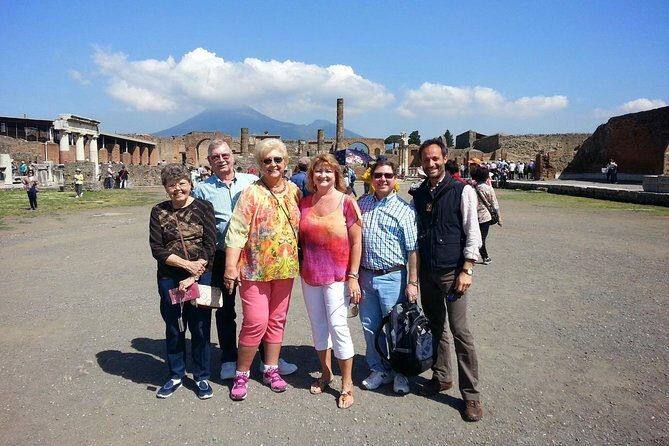
This is built as a true private tour, meaning you’re not squeezed into a tight route with strangers. You’ll meet Fabrizio Belleni (Leisure Italy Private Guide) and then move through Pompeii and the Amalfi Coast with a schedule that can bend. That flexibility matters here because the main variable isn’t the sights. It’s your group—energy, interests, photos, kid questions, heat tolerance, and how quickly you want to see each area.
The other win is the start-to-finish convenience. Pickup is offered from Naples or Sorrento or Positano or Pompeii, and the port/airport/train station is not a problem. For shore excursions, that kind of punctual control is gold. One review even praised how the guide matched the day to limited time off a cruise.
You can also read our reviews of more private tours in Sorrento


Why Pompeii Works So Well With This Guide Setup
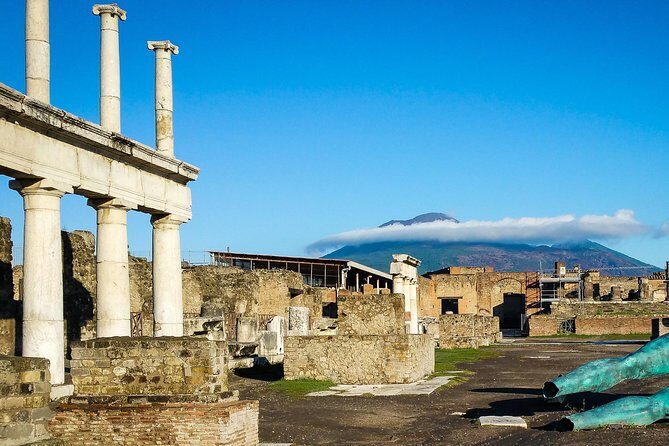
Pompeii is a place where a normal visit can feel overwhelming fast. The city is big. The details are everywhere. Without a map in your head, you can end up sprinting from landmark to landmark.
This is the opposite. The day is anchored around Pompeii’s most meaningful zones, with an official Pompeii guide doing the on-site interpreting while Fabrizio keeps the day connected. The emphasis is on what Pompeii was like before the eruption: homes, streets, and commerce—real people doing real things.
You’ll hear Pompeii described the way it deserves to be understood: preserved by a thick burial layer of soft volcanic debris. That preservation is why you can still read so much of daily life in the layout. It’s also why Pompeii can surprise you. Many people expect it to be smaller or more ruined. It’s not.
Entering Pompeii Through Porta Marina: First Impressions Matter
Your Pompeii route doesn’t begin at a generic gate experience. It starts through Porta Marina e cinta muraria, a steep ramp up to a dramatic double-arched gateway. It’s a cinematic first step: emerge from the tunnel shadow and suddenly the city’s core opens up.
Here’s why this entrance approach is smart for your day: it gives you a quick hit of key sights early, including the area tied to the Antiquarium museum and the Suburban Baths. You’re not waiting until late in the visit to start feeling like you’re inside the city.
If you care about getting your bearings fast—this is one of the best ways to do it.
The Forum Route: Where Roman Civic Life Turns Into a Walkable Story
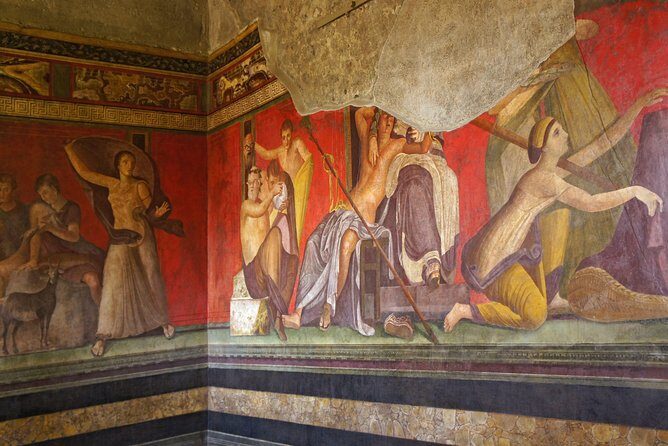
From the Forum of Pompeii, you’ll get the sense of Pompeii as a working city—politics, religion, trade, and public judgment all in one shared space. The paving stones matter here. Walking across the original travertine makes the forum feel less like a movie set and more like the pedestrian hub it once was.
You’ll also see the surrounding anchor buildings, with Mount Vesuvius framing the scene like a constant reminder of what happened next. The Forum is described as the high-impact place, and it earns the label. Even with short stop times, it’s the spot where the whole city starts to make sense in one line of sight.
Basilica Pompeiana: Civic Power, Not Temple Vibes
The Basilica is the big civic structure—courthouse and commercial exchange—rather than a worship stop. Walking into that massive interior helps you picture the legal and financial rhythm of Roman life, including the raised podium area used by magistrates.
Even if you’re not into architecture, this stop helps you understand something important: Roman power wasn’t only about temples or emperors. It was also about courts, contracts, and daily commerce.
- Sorrento Farm and Food Experience including Olive Oil, Limoncello, Wine tasting
★ 5.0 · 2,524 reviews




Food, Baths, and Everyday Streets: The Stops That Make Pompeii Feel Personal
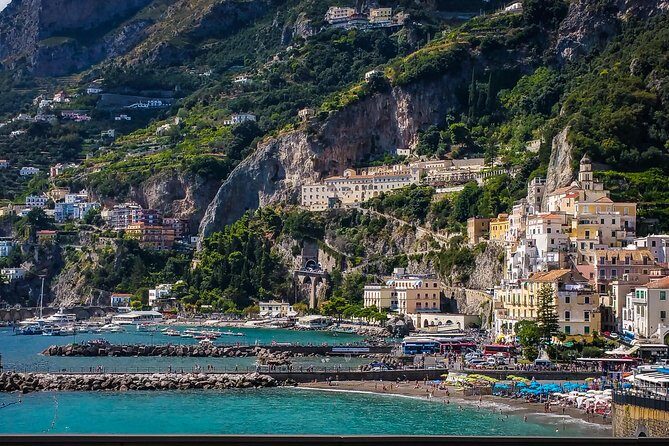
Pompeii isn’t just big monuments. The best parts are the ordinary places that explain how people lived. This tour does a lot of that.
Macellum: The Official Market Where Food Was Part of City Life
The Macellum is Pompeii’s food market, positioned by the Forum. You can trace how shoppers and sellers moved through the area, from smaller shops (tabernae) to the central pavilion space used for fish cleaning and sale.
What I like about this stop is the way it links archaeology to practical details: a market wasn’t abstract. It was a system. You’ll also see references to frescoed food imagery and the stone mensa ponderaria used for fair weights and measures.
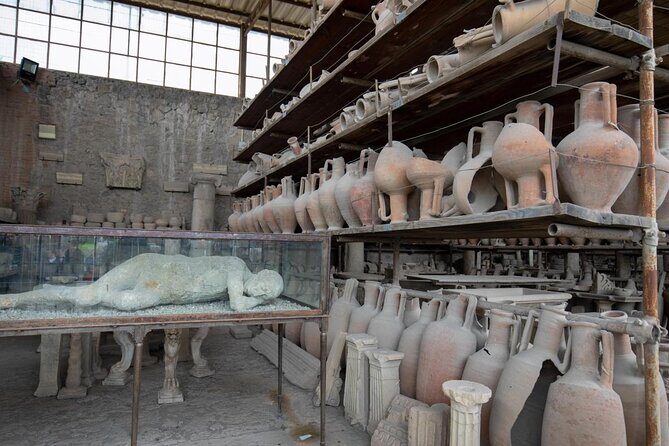
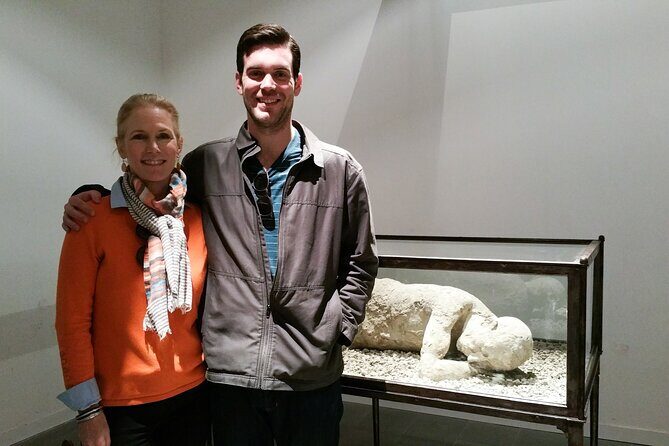
One very human touch mentioned in the material is that there are plaster casts connected to victims found in the eruption. That gives this stop an emotional weight that you can’t get from a textbook.
Forum Baths: Roman Hygiene as a Daily Social Schedule
Then comes Forum Baths (Terme del Foro), which is one of the best-preserved bath complexes still operating in 79 AD. Instead of just pointing at walls, the experience is set up like a circuit: changing room, cold bath, warm room, and hot room.
This is one of those “your brain clicks” stops. Roman baths weren’t only about cleanliness. They were social spaces, engineering projects, and a daily routine. If you’ve ever wondered why the Romans cared so much about public infrastructure, the bath complex gives you a clear answer.
Houses With Meaning: Casa dei Vettii and What Luxury Looked Like
Casa dei Vettii is often treated like Pompeii’s star attraction. Here it’s framed as the “Sistine Chapel” of Pompeii because of the vivid frescoes and the quality of restoration work.
You’ll see scenes tied to wealth and daily leisure, including the iconic entrance painting and a room connected to miniature cupids and trades. The peristyle garden adds a second layer: you get private outdoor space, not just indoor rooms.
If you want Pompeii to feel less like ruins and more like a lived-in neighborhood, this is the payoff stop.
Thermopolium: The Ancient Takeout Counter
Next is Thermopolium, Pompeii’s famous “fast-food” counter. The preserved layout is the point: a counter where food was prepared and sold with bright frescoes acting like a visual menu.
You can look into deep storage jars where archaeologists found remains tied to different ingredients, described like a Mediterranean mix. It’s a surprisingly fun stop because it feels like the city’s version of lunch on the go.
The “Discovery Now” Angle: Insula dei Casti Amanti and Elevated Walkways
Insula dei Casti Amanti adds a modern feeling to a very old place. The walkways let you see an active excavation from above, so you’re not just viewing finished history. You’re watching archaeology happen.
This area is also tied to the name fresco of a gentle kiss during a banquet, plus sketches linked to Roman childhood found on walls. It’s a reminder that Pompeii isn’t sealed off from the present. The city keeps yielding new information.
Teatro Grande: Social Order You Can Hear
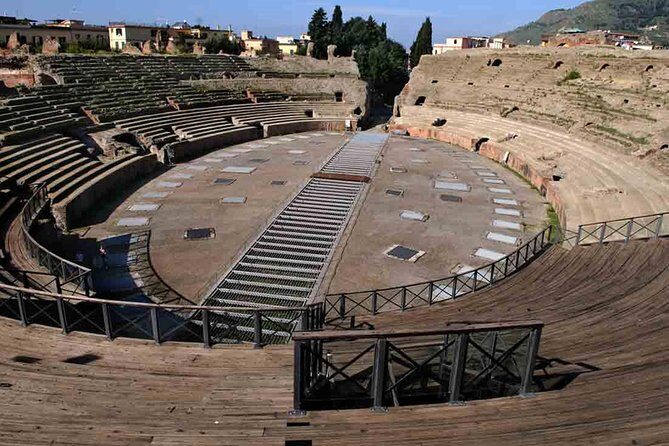
The Teatro Grande turns Pompeii into a cultural setting. You’ll explore the horseshoe shape, seating tiers linked to social hierarchy, and the theatre’s reputation for acoustics. Even if you don’t test the sound yourself, the layout makes sense of why this was entertainment built for crowds.
The backdrop—Vesuvius and the surrounding hills—also helps you see the town’s setting. It’s one of those stops where the view isn’t just scenery. It’s part of the story.
Antiquarium di Pompei: The Air-Conditioned Reset Button
Before you leave the ruins area, the Antiquarium di Pompei is a smart pivot. It’s modern and air-conditioned, which matters in hot months. It also provides context that can make the street-level ruins hit harder.
This museum focuses on fragile objects and includes items like silver hoards, amulets, and frescoes that you might not otherwise understand in situ. It’s also where you can see plaster casts connected to the tragedy—often an important emotional anchor before you shift from Pompeii to scenic coastal driving.
The Amalfi Coast Portion: Timing, Town Choices, and the Scenic Drive
After Pompeii, you’re not immediately thrown into another intense walking day. The coast segment shifts gears to road views and town time.
First, the SS 145 Sorrentina Drive: Views as a Warm-Up
The route uses SS 145 Sorrentina, described as one of Italy’s most spectacular coastal drives. The key detail here is that it’s not just a transfer. It’s the show: sweeping bends, tunnels and bridges, lemon groves, and watchtowers with Vesuvius in the distance.
If you’ve only seen photos of the Amalfi Coast, this drive helps you understand why people get obsessed with this coastline.
Sorrento: Quick Reset Over the Bay of Naples
You’ll get a stop in Sorrento with time for the centro storico vibe. You’ll likely pass through narrow alleys and viewpoints from places like Villa Comunale, plus the energy around Piazza Tasso.
This stop also makes practical sense. It gives you time to breathe and snack before the more famous coastal cliff towns.
SS 163 Amalfi Drive and Positano: The Classic Amalfi Feeling
Then it’s the legendary SS163 Amalfi Drive, the winding cliff road that’s basically designed for photo stops. From there you head toward Positano, known as the vertical jewel of the coast.
This part of the day tends to work best when you keep expectations realistic. Positano is gorgeous, but streets are tight and your time is limited. That’s why a private guide matters: you can stop where your group wants—viewpoints, a quick church visit (Santa Maria Assunta), or a short stroll—without wasting time.
Amalfi: History Where the Town Center Actually Lives
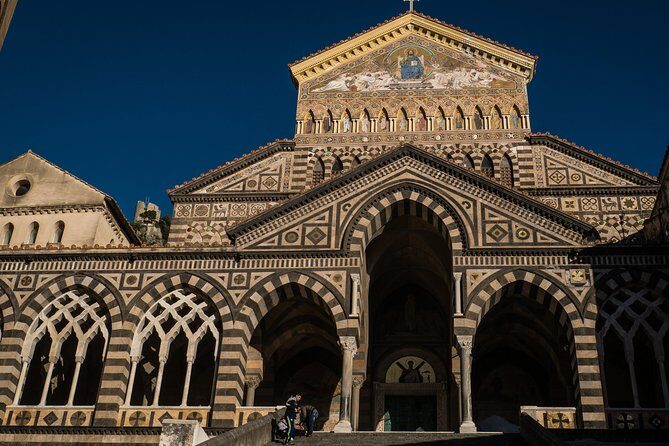
Amalfi is next, with focus on the main sights: the Duomo di Sant’Andrea and the town’s narrow lanes. The cathedral is described with striped Arab-Norman influences, the 11th-century bronze door from Constantinople, and a famous staircase.
Then you get time to wander through vicoletti and areas tied to Amalfi’s maritime past, plus a Paper Museum option. If your group loves history mixed with shopping and food, Amalfi is the best match among the big names.
Ravello and Villa Cimbrone: Quiet Views Above the Crowds
Ravello changes the mood. You’re higher up, calmer, and the big idea is gardens and panoramas. If you’ve ever wanted the Amalfi Coast feeling without the hectic street pressure, Ravello is where you get it.
The star stop is Villa Cimbrone Gardens, including the Terrace of Infinity viewpoint. It’s the kind of belvedere moment that usually makes people stop talking for a minute. The gardens and themed paths also give you something to do with your hands besides holding a phone.
Optional Town Add-ons: Minori, Maiori, Erchie, and Vietri sul Mare
The itinerary information includes additional towns that can fit your interests:
- Minori for a slower pace and food focus, including Sal De Riso and the Villa Romana Marittima.
- Maiori for beach time and an easier town layout, plus options like the Path of the Lemons.
- Erchie for a secluded, beach-focused break away from heavy crowds.
- Vietri sul Mare for ceramic crafts and the majolica-covered Church of San Giovanni Battista.
These work best if you want variety instead of repeating the same cliff-village formula.
Price: What You’re Paying For (and Why It Can Be Worth It)

At $540.66 per person for roughly 8 to 9 hours, you’re paying for a few things that add up fast in Italy:
- Private pickup and round-trip transportation
- A Pompeii setup that includes an official Pompeii guide
- A guide who can adapt the plan to your group’s interests
- Comfort extras like bottled water and WiFi on board
- A mobile ticket approach
If you’ve tried to DIY Pompeii + Amalfi before, you know the hidden cost: logistics time. Getting everyone from one place to another, picking the right entrance, coordinating ticket timing, and then building a coherent route inside Pompeii is work. When you’re on a short visit, that work is often what kills the day.
And based on the supplied feedback, Fabrizio’s flexibility isn’t theoretical. It shows up in things like adjusting pacing for mixed-age groups, planning around limited shore time, and helping with lunch choices. One example: he helped with gluten-free lunch needs by finding freshly made gluten-free pasta at a restaurant near the Pompeii entrance—exactly the kind of detail that matters when you’re traveling with dietary limits.
Lunch, Food Breaks, and How the Day Stays Enjoyable
Lunch is not included, but you do get support. The plan explicitly leaves room for “many different choices” based on your request, and the guide’s role is to set you up nearby and on time.
In practice, that means you’re less likely to lose an hour searching for a place that fits your group. Several accounts credit Fabrizio with lining up lunch options that worked well—one even described a cliffside family-run pizzeria as a highlight, and another mentioned gluten-free pasta.
A practical tip: since you’ll be walking in Pompeii and then touring towns, pick a lunch plan that’s filling but not slow. Think quick service plus scenic seating, not a long formal meal.
What to Bring and How to Handle the Physical Side
The tour calls for moderate physical fitness. Pompeii is walk-heavy, with uneven ground and lots of stairs or ramps depending on the route. The material also notes that Pompeii isn’t recommended for walking issues.
So I’d plan like this:
- Comfortable shoes you trust on stone and slopes
- Sun protection if you’re going in warmer months
- A small bottle of water is still smart, even though bottled water is provided on board
Also, if you’re traveling with kids or multiple age groups, this tour is designed to allow pacing changes. One review specifically praised educational games for kids, which can really help keep questions flowing without turning into chaos.
Who This Tour Fits Best
This is a strong fit if you want:
- An archaeologist-led Pompeii day that focuses on how people lived
- Amalfi Coast time that mixes the big-name sights with flexibility
- A private guide who takes timing seriously and helps reduce stress
- A tour format that works for families (including kids who ask lots of questions)
It might be less ideal if your priority is a fast hit of only the most famous Pompeii monuments. This route is built to connect the city’s everyday spaces, not just check top photos.
Should You Book Pompeii & Amalfi Coast Private Tour With Fabrizio?
Yes, if you value two things: Pompeii that makes sense, and a coast day that doesn’t feel like you’re trapped in someone else’s schedule. The biggest selling point is the private pacing plus the combination of an official Pompeii guide and Fabrizio’s flexibility across the whole day.
I’d book this confidently if:
- You’re doing Pompeii for the first time and want it explained through daily life, not a lecture
- You care about route flow inside Pompeii (entrances, forums, houses, baths)
- You want the Amalfi Coast drive and town stops planned around your group’s comfort
I’d think twice if:
- You know you can’t handle Pompeii’s walking and uneven terrain
- You prefer a strictly fixed itinerary with no customization
If you can walk, stand, and spend a full day away from base, this is the kind of private day that pays you back in understanding—and in views.
FAQ
Is Pompeii admission included?
Admission fees for Pompeii are not included unless you select the tickets-included option. If tickets are not selected, Pompeii admission is listed as €19 per person (free for kids).
What tour language is available?
The tour is offered in English.
How long is the tour?
It runs about 8 to 9 hours.
Where can the guide pick you up?
Pickup is offered in Naples or Sorrento or Positano or Pompeii. The port, airport, or railway areas in Naples are also not a problem.
Is lunch included?
No. Lunch is not included, and the guide can help you choose and set up options based on your preferences.
Is this a private tour?
Yes. It’s a private tour/activity with only your group participating.

More Private Tours in Sorrento


More Tours in Sorrento


More Tour Reviews in Sorrento
- Sorrento Farm and Food Experience including Olive Oil, Limoncello, Wine tasting
★ 5.0 · 2,524 reviews