REVIEW · SORRENTO
Phlegraean Fields: Pozzuoli Guided Walking Tour
Book on Viator →Operated by Napoli Official Tour · Bookable on Viator
Ancient Rome, with room to breathe. This guided walking tour in Pozzuoli connects the Campi Flegrei Archaeological Park with everyday Roman life, and it does it at a pace that feels calmer than the big-name crowds. You’ll start near the Pozzuoli metro and work your way from the Flavian Amphitheater to the market area tied to the Temple of Serapis story.
I love how the guide turns stone and labels into a clear picture, especially once you’re inside the scale of the amphitheater and then moving on to how people shopped and gathered in Roman Puteoli. I also love the seafront angles, where the sea views land hard after you’ve been reading the coast’s history.
One consideration: the Campi Flegrei coast can be affected by bradyseism, and some viewpoints or lower areas may be partially inundated, so you might need to look from higher streets at times.
Key highlights worth planning around
- Flavian Amphitheater scale: Rome’s third-largest arena in the Roman world, with games honoring Tiridates King of Armenia
- Temple of Serapis backstory: named for an Egyptian god statue discovery in 1750
- Roman market setting: you’ll connect the Macellum (public market) to what people did there and why it matters to the coast
- Calmer than the headline sites: the area is often less crowded, with parking usually not a headache when you arrive by car
- Coast views with real geology: bradyseism can change what you can see at ground level, shifting how you take in the remains
In This Review
- Pozzuoli and the Campi Flegrei: A different kind of “Roman day”
- Meeting at the Pozzuoli metro and how the timing really works
- Stop 1: Flavian Amphitheater and the thrill of scale without the crush
- Stop 2: Macellum of Pozzuoli and the Temple of Serapis story
- Stop 3: Pozzuoli historic center and Roman Puteoli’s “ancient secrets”
- The seafront finish: when geology changes the view
- Price and value: $289.65 per group up to four
- What I think you’ll like most (and who should book this)
- What to bring and how to set yourself up for success
- Should you book the Phlegraean Fields: Pozzuoli Guided Walking Tour?
- FAQ
- Where is the meeting point and when does the tour start?
- How long is the Pozzuoli guided walking tour?
- Is the admission ticket included for the amphitheater and Temple of Serapis?
- Is this a private tour?
- Do I need a mobile ticket?
- What’s the cancellation policy?
Pozzuoli and the Campi Flegrei: A different kind of “Roman day”
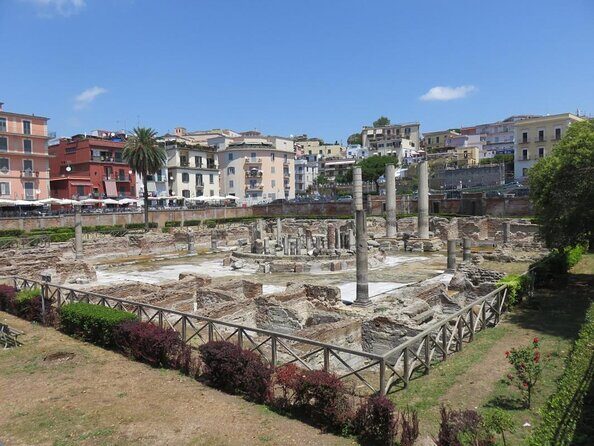
Pozzuoli is Roman history that doesn’t feel staged for mass tourism. It sits in the Campi Flegrei volcanic area, where the ground has slowly risen and fallen over time, and you can feel that story in how the coast and ruins present themselves. This tour is built around that idea: not just seeing ruins, but understanding why the place looks the way it does.
What makes this experience especially worth your time is that it connects big, famous Roman engineering with a more human scene. You go from a huge arena that took a long time to become what it was, to a market zone where people would have gathered for everyday business. Then you finish with sea views that make the location feel alive, even when the stones are quiet.
And since it’s a private group (up to four people), you’re not packed shoulder-to-shoulder. That matters here because the best moments are the ones where you can actually pause, look, and absorb what the guide is pointing out.
Meeting at the Pozzuoli metro and how the timing really works
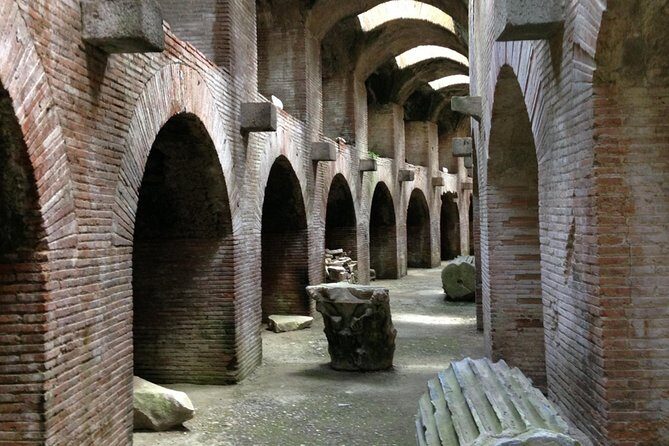
The tour meets at the exit of the Pozzuoli metro station (Pozzuoli metro station area, 10:00 am start). It’s designed as a walking experience in the Pozzuoli area, and it returns you back to the meeting point at the end.
The listed duration is about 2 hours, and the visit moves in three main segments: roughly 30 minutes at the amphitheater, about 30 minutes at the Macellum/Temple of Serapis area, and around 1 hour exploring Pozzuoli’s historic core. That adds up to a compact tour that still gives you time to read the site instead of just passing through it.
You also get a mobile ticket, which is convenient if you’re traveling light. Bring your phone with the ticket ready, and make sure it has enough battery for photos and messages while you’re out.
One small practical perk for bigger groups: the tour includes whispers rental when the group is 6 participants and up. If you’re hard of hearing or you simply don’t want to strain in outdoor ruins, that headset system can be a real quality-of-life upgrade.
You can also read our reviews of more walking tours in Sorrento



Stop 1: Flavian Amphitheater and the thrill of scale without the crush
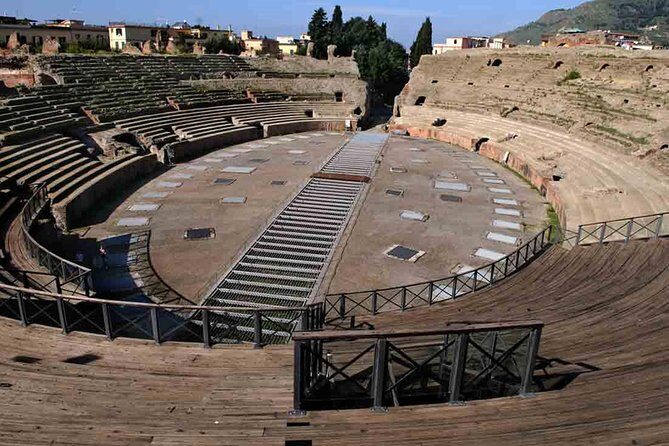
The first anchor is the Flavian Amphitheater, one of the biggest arenas in the Roman world. It’s often compared to Rome’s famous sites, and the key point here is scale: you’ll feel it fast once you’re there. The tour highlights the arena’s connection to the Flavian period and notes it was built by Nero, hosting games in honor of Tiridates King of Armenia.
This is where the guide’s explanations do real work. Instead of treating the amphitheater like a photo stop, you’ll connect its size and construction story to why Rome could do these big public projects and keep investing in them for entertainment and political messaging. Even if you know your Colosseum facts already, the Pozzuoli version makes you recalibrate what “Roman world” meant beyond the capital.
It’s also a smart first stop because it sets the historical tone early. You’ll spend about 30 minutes here, and since admission tickets for the amphitheater aren’t included, plan to handle that cost separately. If you’re trying to control your day’s budget, this is the one part where you’ll want to be ready for an extra ticket.
A bonus from the field: this area often feels less crowded than the headline Roman ruins. That means you can look up, walk the edges slowly, and actually understand the structure rather than rushing through it.
Stop 2: Macellum of Pozzuoli and the Temple of Serapis story
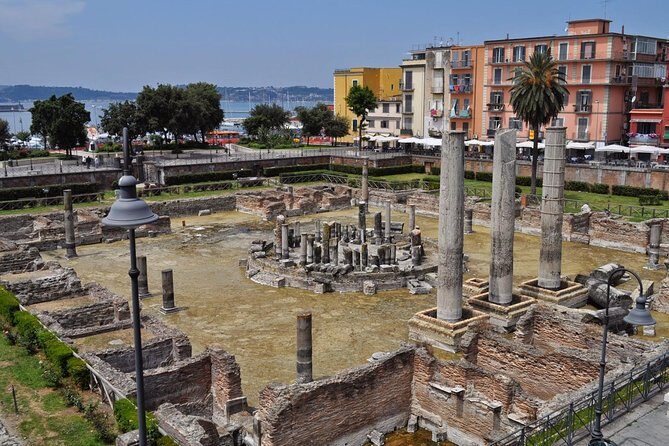
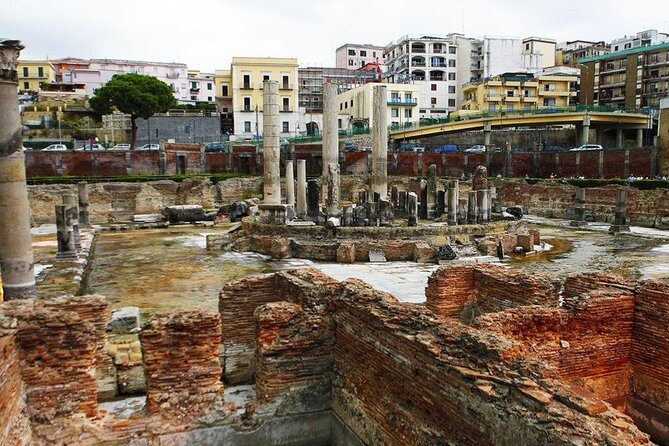
Next you head to the Macellum area—described as the Roman Puteoli public market—and the tour takes you to the Temple of Serapis. This is the part where the history shifts from public spectacle to daily life. The Macellum wasn’t just a building; it was a place with a rhythm: vendors, customers, talk, and the kind of commerce that keeps a city functioning.
The Temple of Serapis name comes from a specific discovery: a statue of the Egyptian god Serapis found in 1750. That detail matters because it links the site to how Roman society absorbed other religions and symbols. You’re not just seeing a ruin; you’re seeing evidence of cultural mixing.
You’ll spend about 30 minutes in this stop, and like the amphitheater, admission tickets where required are not included. Still, the timing is enough to let the guide explain why this market-temple area is tied to the landscape’s changes—especially around the phenomenon of bradyseism.
Here’s the practical payoff for your visit: bradyseism can affect what portion of ruins you can view clearly from where you stand. In some conditions, you might need to look from a higher street angle rather than from the lowest points. The tour helps you make sense of that, so you’re not left guessing why part of the scene looks different than you expected.
Stop 3: Pozzuoli historic center and Roman Puteoli’s “ancient secrets”
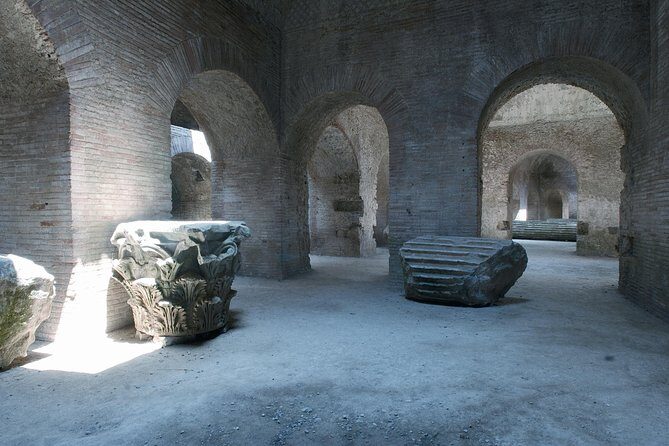
After the two main monument stops, the tour moves into Pozzuoli’s historic center, with about 1 hour focused on the area’s older layers. This is where you start connecting the dots: amphitheater as power and entertainment, market as everyday economy, and the coast as the changing stage that shaped what got preserved, exposed, or moved out of view.
Admission at this part is listed as free, so you’re not paying more to explore the historic center. That’s good value if you want time in the streets without a timed ticket pushing you along.
The guide’s job in this segment is to interpret what you’re seeing and why it fits together. You’ll likely spend more time looking at how the city’s layout relates to the ancient remains, and you’ll get answers to questions the tour frames around daily life and the coastline’s shift over time.
This is also where I’d tell you to go slower than your instincts. Walking tours can tempt you to keep moving. But here, pausing for a second can make a street view feel like a lesson, not a shortcut.
The seafront finish: when geology changes the view
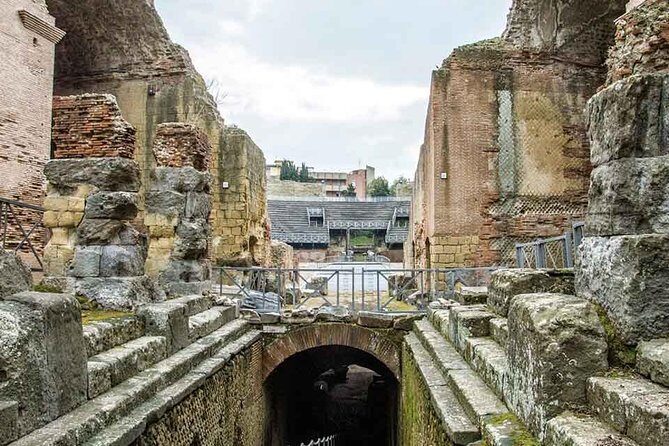
The final part of the walk is the seafront of Pozzuoli, giving you those wide sea views that make the whole story feel real. After you’ve been focused on ruins and Roman structures, the coast is a welcome shift. It turns the tour from a history lesson into a place you can actually picture living in.
The big caution is that bradyseism can mean occasional partial flooding in certain lower areas. When that happens, the remains and viewpoints can look different, and some spots may be harder to access from ground level. One of the best pieces of guidance for you is to stay flexible with your expectations: if you see water affecting parts of the scene, that’s not a failure of the tour. It’s part of the site’s working reality.
If you’re arriving earlier on your own, you may find that some areas are closed off or that the most comfortable viewpoint is reached by getting to higher roads. And if you’re coming from Naples using public transit, one practical route tip is the Cumana; it can get you to the area near Piazza del Tempio, where sea influence from bradyseism can sometimes be visible.
When conditions are good, the sea-front angles are genuinely memorable because you see the ruins with their modern coastline context. That contrast is often what makes Pozzuoli feel different from sites that sit far from the water.
You can also read our reviews of more guided tours in Sorrento




Price and value: $289.65 per group up to four
The price is $289.65 per group for up to four people. On a per-person basis, that’s roughly $72 if you’re a full group of four, less if fewer people join. For a private guided walk that includes a professional guide and a compact, site-focused route, that can be good value—especially if you’re trying to avoid the stress of larger tour crowds.
The cost feels most “worth it” if you care about interpretation. The amphitheater and Temple of Serapis aren’t just random stones; they’re tied to specific historical narratives and to how the ground has changed over time. A guide helps you connect those facts to what you can see in front of you, which is where you usually get the best return on paying for a tour.
Budget note: admission tickets are not included where required (amphitheater and Temple of Serapis area). Pozzuoli historic center is free in the provided plan. So think of this as a guide-and-site structure with a couple of ticket add-ons, not a fully bundled day.
What I think you’ll like most (and who should book this)
This is a strong match if you:
- want big Roman scale without Rome-style crowd levels
- like tours that explain why a place looks the way it does, not just what it is
- want a calmer pace than the marathon days at the most famous sites
It can also make sense if you’ve already visited Pompeii or Herculaneum. You’ll still get Roman grandeur, but the emphasis shifts toward Pozzuoli’s market life and coastal geology. That change of focus can feel refreshing—just keep in mind that if you’re expecting the same kind of nonstop spectacle as those mega sites, you may need to adjust your mindset and enjoy the quieter, interpretive style here.
What to bring and how to set yourself up for success
Wear shoes you trust on uneven ground. Even on a short tour, you’ll be moving through historic areas where the surface can vary.
If you’re concerned about the bradyseism effect, dress for quick weather changes and bring a light layer. Coastal conditions can shift fast, and partial inundation scenarios are part of the area’s story, so you’ll want to feel comfortable standing in place for viewpoints.
Also keep your phone ready for the mobile ticket, and give yourself time to locate the meeting point near the metro exit so you’re not rushing when the guide arrives.
If you’re driving, don’t panic: parking is often reported as manageable in this area. Still, plan your arrival so you can access the upper roads if lower viewpoints are affected or closed.
Should you book the Phlegraean Fields: Pozzuoli Guided Walking Tour?
Book it if you want a private, history-and-coast walk that links Roman structures to the Campi Flegrei’s changing reality. The best reason is the combination: Flavian Amphitheater scale, the Temple of Serapis discovery story, and then seafront views where geology shows up in real time.
Skip it (or at least lower your expectations) if you’re only chasing the most famous kinds of ruin drama and you hate uncertainty. Partial inundation can affect lower viewpoints, and if you expect everything to be equally accessible no matter the conditions, you might find the experience more variable than you want.
If you’re flexible, curious, and happy to let a guide connect the dots, this tour is one of those days that stays with you longer than a simple checklist of monuments.
FAQ
Where is the meeting point and when does the tour start?
The tour meets at 80078 Pozzuoli, Metropolitan City of Naples, Italy at 10:00 am. It ends back at the meeting point.
How long is the Pozzuoli guided walking tour?
The duration is listed as approximately 2 hours.
Is the admission ticket included for the amphitheater and Temple of Serapis?
No. Admission tickets where required are not included. The Pozzuoli historic center stop is listed as free.
Is this a private tour?
Yes. It’s private, and only your group participates. The group size is up to 4.
Do I need a mobile ticket?
Yes. The tour includes a mobile ticket. Confirmation is received at booking.
What’s the cancellation policy?
You can cancel for free up to 24 hours in advance for a full refund. If you cancel less than 24 hours before the start time, the amount paid is not refunded. Cancellation timing is based on local time.




More Walking Tours in Sorrento



More Tours in Sorrento






More Tour Reviews in Sorrento
- Sorrento Farm and Food Experience including Olive Oil, Limoncello, Wine tasting
★ 5.0 · 2,524 reviews