REVIEW · SORRENTO
Pompeii, Herculaneum and Winery on Vesuvius with an Archaeologist
Book on Viator →Operated by Fabrizio Belleni - Leisure Italy Private Guide · Bookable on Viator
Roman ruins, plus lunch on Vesuvius, in one day. This private outing is built around an archaeologist guide (Fabrizio Bellini) who helps you make sense of Pompeii and Herculaneum without the usual confusion, and it ends with vineyard lunch and tastings at Cantina del Vesuvio inside Vesuvius National Park. My only real caution: it’s a long 8 to 9 hours, and you’ll walk on uneven ancient stone, so comfortable shoes and moderate fitness matter.
The payoff is that you’re not stuck with a generic checklist. It’s a private group up to 7, with an itinerary that can flex to your pace and interests, plus a family-friendly upgrade designed to keep kids engaged when energy drops.
In This Review
- Key things that make this Pompeii-Herculaneum-Vesuvius day work
- Pompeii and Herculaneum: two ruins, two very different vibes
- Fabrizio Bellini: the guide factor that changes everything
- Pompeii’s Porta Marina start: getting your bearings fast
- Temple of Apollo and the Forum: politics meets religion (with Vesuvius watching)
- Casa dei Vettii and Insula dei Casti Amanti: the fresco lovers’ combo
- Teatro Grande and Antiquarium di Pompei: art you can hear and casts you can’t forget
- Winery lunch at Cantina del Vesuvio: the day’s best reset
- Herculaneum in the morning/afternoon: the quieter city with the louder impact
- Antiquarium di Ercolano and the Boat Pavilion: organic leftovers from 79 AD
- The ancient beach and House of the Cervi: sea escape attempts and seaside luxury
- House of Neptune and Amphitrite: mosaics, an outdoor triclinium, and a preserved shop
- Women’s Baths and the Palestra: Roman private life and civic pride
- Price and value: what $861.07 really buys you
- What to pack and how to enjoy a long day in the sun
- Should you book this Pompeii, Herculaneum and Vesuvius winery day?
- FAQ
- How long is the Pompeii, Herculaneum and Vesuvius winery tour?
- What is included in the tour price?
- Are Pompeii and Herculaneum admission tickets included?
- Is lunch included?
- Do we go to the top of Mount Vesuvius?
- Where does pickup happen?
- Is this a private tour?
- What’s the group size?
- Is it suitable for families with kids?
- Is cancellation free?
Key things that make this Pompeii-Herculaneum-Vesuvius day work
- Private pacing with an archaeologist-led approach so you spend time looking at the right details, not just wandering.
- Crowd-smart route options (and the flexibility to adjust) so you see more with less stress.
- Pompeii stops with big visual payoff like Casa dei Vettii frescoes and Teatro Grande acoustics.
- Herculaneum’s preservation takes your breath away with carbonized wood, textiles, and shoreline artifacts.
- Winery lunch inside Vesuvius National Park with a vineyard walk and wine pairing.
- Family-friendly handling that targets kids’ attention without turning the day into a theme park.
Pompeii and Herculaneum: two ruins, two very different vibes
If Pompeii and Herculaneum were just “two Roman cities,” this would be an easy sell. But they feel like different stories. Pompeii is broad, theatrical, and public-facing. You’re moving through temples, markets, theaters, baths, and homes where bright wall paint still surprises you.
Herculaneum feels tighter and more intimate. The big theme is preservation—especially materials that normally rot away. When you see organic remains, it hits differently because you’re not only looking at stone. You’re seeing parts of everyday life that survived for reasons nature decided to be dramatic.
Doing both on one day is intense. That’s the point, though. By the time you finish, you start understanding what the eruption changed, and how each city’s location shaped what you can still find.
You can also read our reviews of more wine tours in Sorrento
- Sorrento Farm and Food Experience including Olive Oil, Limoncello, Wine tasting
★ 5.0 · 2,524 reviews



Fabrizio Bellini: the guide factor that changes everything
This tour is private, but the real value is the person leading it. Fabrizio Bellini—an archaeologist guide with 27 years of Pompeii experience—brings two things that matter on day trips: clarity and control.
Clarity means you don’t need to decode the ruins on your own. You’ll get the “what you’re looking at and why it mattered” context at the spots where it counts: the Forum layout, how religious spaces connect to civic life, why certain houses were designed the way they were.
Control means timing and pacing. The day is long, and ruins are uneven. Fabrizio builds in time to walk at your pace and adjust to your group—whether you want more time in fresco-heavy rooms or you need to move faster to beat crowds.
He also runs the day like a grown-up operation: pickup in the Naples or Sorrento area, air-conditioned vehicle, water and Wi‑Fi onboard, and a winery booking handled in advance.
Pompeii’s Porta Marina start: getting your bearings fast
Pompeii can feel like a maze at first. The tour starts with a logical entry sequence at Piazza Porta Marina, where the modern gate meets the ancient Porta Marina structure built into the city walls. It’s a smart way to get your bearings fast, because you immediately transition from today’s world into the city’s street rhythm.
From there, you move toward a set of anchor sites that tell the story of daily life and public power:
- You’ll see sacred spaces like the Temple of Apollo, one of the oldest religious sites in the city.
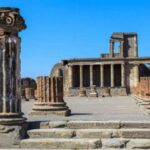
- You’ll hit the Forum, the political and commercial center where speeches, commerce, and ceremony overlapped.
- You’ll also stop at points that reveal what “private” meant, including high-status homes like the House of the Vettii.
You’re not just checking boxes. The route helps you build a mental map so each stop connects to the next.
Temple of Apollo and the Forum: politics meets religion (with Vesuvius watching)
The Temple of Apollo sits right at the edge of the Forum area, which makes it an easy win for first-timers. You get architecture and symbolism in one view: you can trace how religious practice evolved from Greek roots into Roman form.
What I like about this stop is the drama in the details. You can stand on the podium for a view where Mount Vesuvius becomes part of the scene, and you’ll see bronze replicas tied to Apollo and Diana plus an original sundial column. It’s not just pretty. It teaches you how the Romans designed religious life to connect to civic identity and the landscape.
Then you step into the Forum itself. The tour walks you across original travertine paving stones, in the epicenter of Roman public life. This is where you understand why Pompeii wasn’t quiet. You’re surrounded by major architectural elements like the Temple of Jupiter and the Basilica, and you can picture market energy in spaces such as the Macellum market and the mensa ponderaria weighing table.
If you’ve ever wondered how Romans managed crowds before modern streets existed, this is where the answer starts.
Casa dei Vettii and Insula dei Casti Amanti: the fresco lovers’ combo
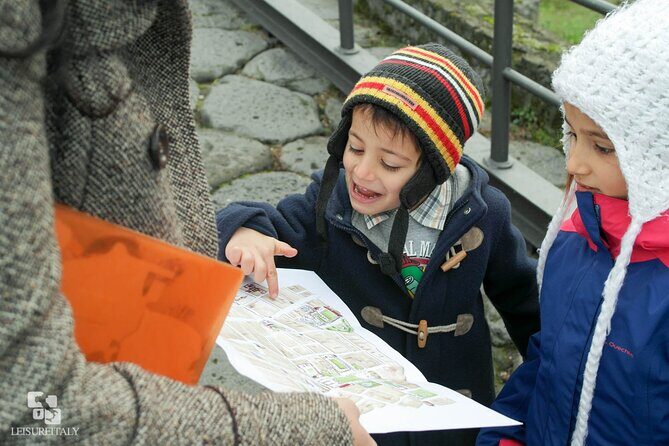
Pompeii’s most famous houses can be a blur if you only have a self-guided map. With a guide, the specific “look here” details land harder.
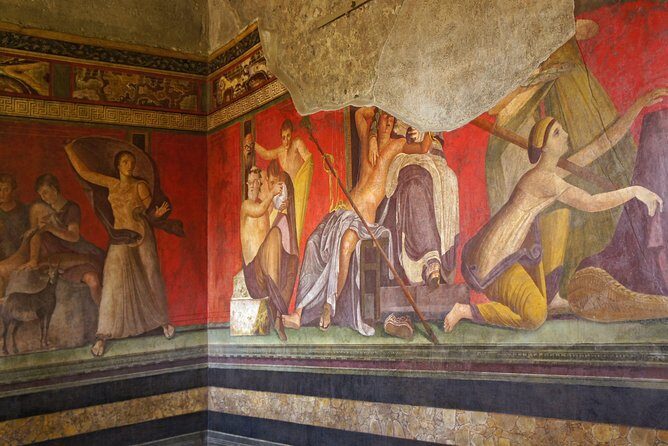
Casa dei Vettii is a major highlight for 2026, especially because it’s positioned as a showcase of the Fourth Style fresco tradition and because of a recent restoration focus. You’ll see the opulence of a residence owned by two wealthy former slaves, including standout fresco rooms such as the Room of the Cupids and an entrance with a protective painting connected to Priapus.
Then you move to Insula dei Casti Amanti, described as reopened for 2026 with elevated walkways. The value here is not just the art. It’s the excavation view. You can look down into an entire block—including homes and a bakery—so you understand the city as something still being uncovered, not only something frozen in time.
This pair works well because it gives you both sides of Pompeii: the preserved “finished” beauty of houses and the ongoing work of archaeology.



Teatro Grande and Antiquarium di Pompei: art you can hear and casts you can’t forget
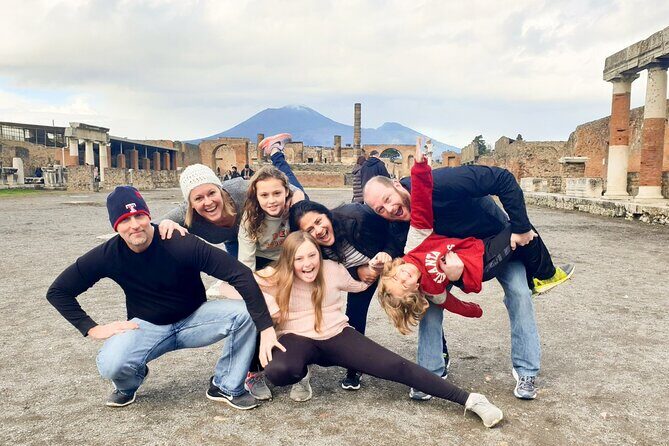
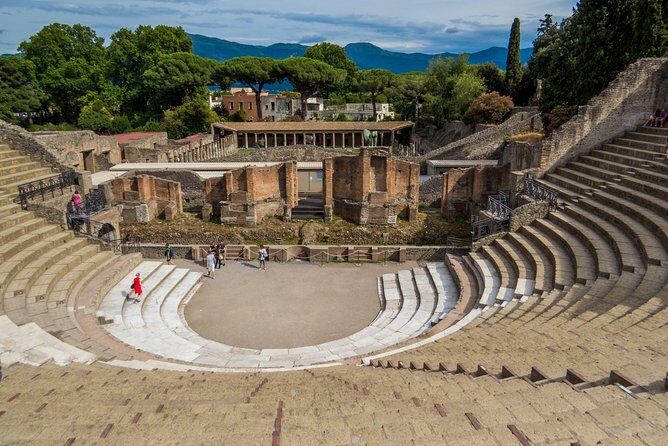
Pompeii ends up feeling like a movie set—until you hit Teatro Grande. This theater dates back to the 2nd century BC, and it’s one of the earliest stone theaters. The seating tiers reveal social hierarchy in a very physical way, and the horseshoe shape makes it easy to imagine how performances worked.
The acoustics are a real point. The site is famous for how sound carries, letting you understand why theater mattered as public culture.
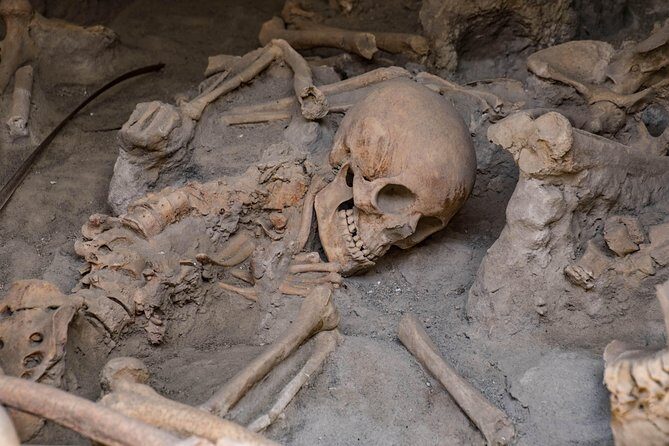
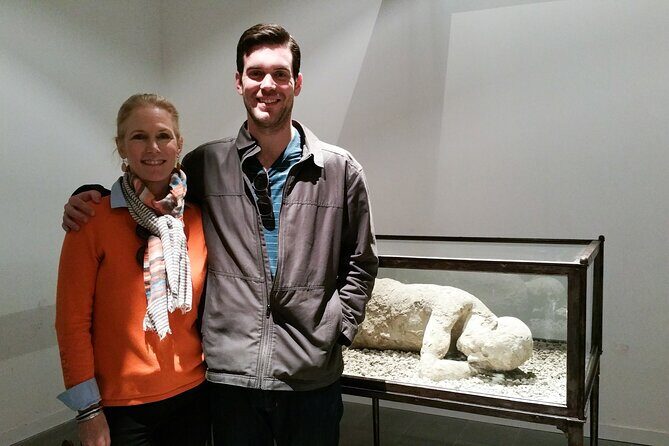
After that, Antiquarium di Pompei adds the emotional context that ruins alone can miss. This museum at the Porta Marina entrance houses plaster casts of victims from the eruption—sometimes described as painfully lifelike—plus artifacts like a faithful guard dog. It also uses digital tools and displays that help you connect what you see outdoors to what happened in those final moments.
This stop is the hinge. After it, the stones don’t feel neutral anymore.
Winery lunch at Cantina del Vesuvio: the day’s best reset
Between the Roman cities and the later stops, you need a real break. That’s what the Vesuvius winery portion does well.
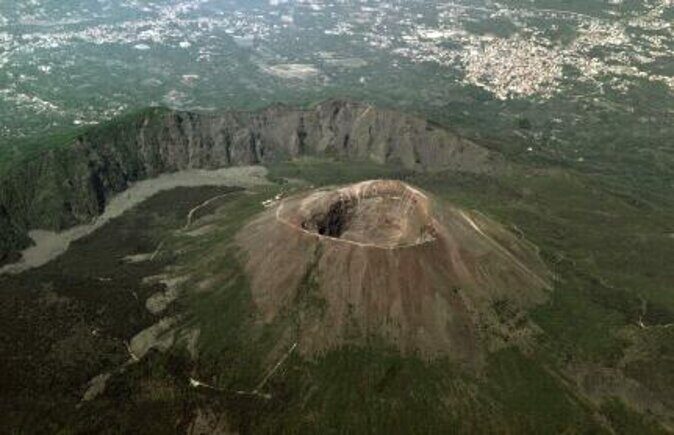
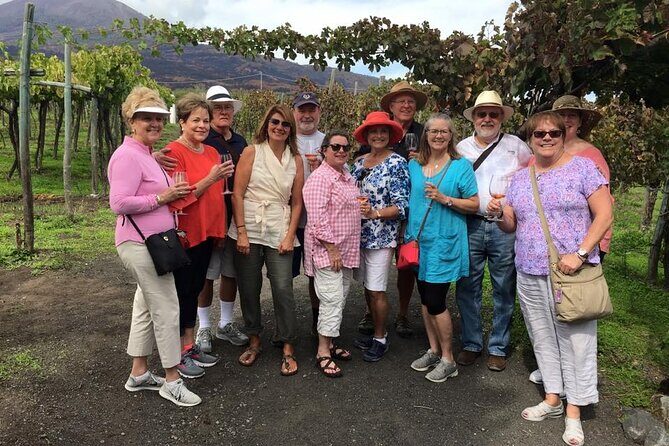
Cantina del Vesuvio (Russo family since 1930) sits inside Vesuvius National Park with views over the bay and toward the volcano crater. Your visit typically begins with a guided 15-minute stroll through sunlit vineyards to learn about Lacryma Christi wines.
Then comes the part people remember: lunch plus wine tasting. You’ll have a set menu paired with five local wines. The menu includes appetizers like bruschetta, cheeses, and cured meats, plus spaghetti with Vesuvius cherry tomatoes and meatballs. Dessert is traditional Neapolitan Pastiera, with vegetarian and gluten-free options available.
Pricing is straightforward: the all-inclusive lunch and experience is around €50 per person, with an upgrade option to around €60 for superior wine. Payment is handled onsite by card or cash, and there’s even mention of shipping wines and olive oils home.
One more practical note: this tour does not reach the top of Mount Vesuvius. You still get the winery setting and the volcano views, without the extra time crunch that can make a long day feel even longer.
Herculaneum in the morning/afternoon: the quieter city with the louder impact
Herculaneum is where preservation changes your whole attitude. It’s more compact than Pompeii, but the stops are dense with meaning.
You’ll spend time at the archaeological park and then complement it with museum areas that explain what you’re seeing—especially materials that didn’t survive in most Roman sites.
The guide’s approach is important here too. Herculaneum has a reputation for being moving, but without context it’s easy to stare at details without connecting them to daily life. Fabrizio’s job is to keep the story straight as you move from villas to baths to shoreline exhibits.
Antiquarium di Ercolano and the Boat Pavilion: organic leftovers from 79 AD
Antiquarium di Ercolano is one of those places that makes you slow down. It’s modern, easy to navigate, and it’s built to hold the city’s delicate finds.
The standout theme is organic preservation—carbonized wooden furniture and textiles—things you rarely see preserved in the Roman world. You’ll also encounter the famous Herculaneum Treasure, a collection found with victims at the ancient shoreline, plus rescued frescoes and statues recovered from volcanic mud.
Then the Boat Pavilion hits with physical power. You can see the carbonized keel of a long boat (around 9 meters), found upturned where pyroclastic flows stopped it. The exhibit also includes smaller maritime tools like fishing weights, nets, and a carbonized rope. It’s not just a story about tragedy. It’s a story about how people lived near the sea.
The ancient beach and House of the Cervi: sea escape attempts and seaside luxury
The ancient beach area (Antica spiaggia di Herculaneum) reopened in 2024 after major restoration, and it’s exactly what it sounds like: a walk along the shoreline where the eruption’s endgame unfolded. You stand on original volcanic sand and look up at fornici—boat sheds—where skeletal remains of over 300 residents were found huddled together.
Seeing the shoreline layers helps you understand how the landscape changed. The beach sits several meters below today’s ground level, so you feel how completely the eruption reshaped the area.
Then you shift gears to leisure and status with Casa dei Cervi (House of the Stags). The layout is notable for being inverted: the villa works with a panoramic terrace and open garden meant for sea breezes and views. The house gets its name from marble stags attacked by hounds found in the garden—sculpture that signals elite taste and Roman artistry.
House of Neptune and Amphitrite: mosaics, an outdoor triclinium, and a preserved shop
Casa di Nettuno e Anfitrite is a favorite type of stop because it’s visually stunning and practical at the same time. The wall mosaic of Neptune and Amphitrite uses shimmering gold and blue glass paste. There’s also a preserved outdoor summer triclinium decorated with shells and lava stone, giving you a feel for how meals happened when the weather allowed it.
Next door is where the everyday story becomes real: the attached shop is considered one of the best-preserved grocery stores from antiquity. You can still see wooden shelves and carbonized storage bins that once held legumes and grain. It’s one of those moments where your brain goes from wow art to wow logistics.
Women’s Baths and the Palestra: Roman private life and civic pride
Roman cities had public culture, but they also had spaces built around social rules. Women’s Baths (Terme Femminili) are preserved well and feel unusually complete. You enter through an original vaulted doorway and land in the apodyterium, where a black-and-white mosaic shows Triton surrounded by dolphins.
You’ll also see evidence of everyday routines and privacy, including original wooden shelves that women used to store clothing, plus intact barrel-vaulted ceilings with stucco decoration. The tour moves through spaces like the tepidarium (with a labyrinth-pattern mosaic) and then the caldarium with a hollow-wall heating system. Even if you don’t care about plumbing, it makes the baths feel less like a concept and more like a lived system.
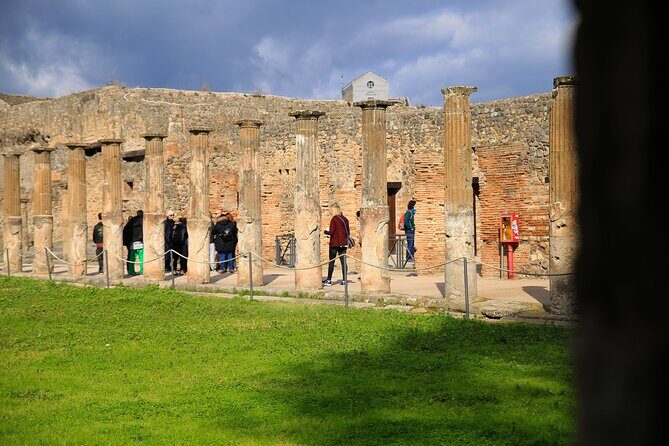
Then comes the Palestra, the gymnasium complex. This is Roman civic pride in stone: a massive courtyard with a cross-shaped swimming pool (natatio) and a fountain shaped like a five-headed hydra. You can also see the scale of the courtyard and columns, along with a carbonized wooden statue of a local benefactor. The whole place feels like an empty stage where you can imagine youth groups and athletes practicing under the Mediterranean sun.
Price and value: what $861.07 really buys you
The tour price is listed as $861.07 per group, up to 7 people. That’s the big reason this works: you’re paying for private transport and a private archaeologist-led guiding experience, not just entry tickets and a bus ride.
Now add what you’ll likely pay on top:
- Admission fees for both sites are around €40 per adult, with free admission for under-18 visitors showing valid ID.
- The winery lunch experience is about €50 per person all inclusive, with a superior wine upgrade around €60.
So for an adult, you’re typically looking at the group fee split across your number of people, plus about €40 in admissions and about €50 for lunch and tasting. If you’re a family or a small group filling the van, it’s often easier to justify than doing it piecemeal with separate guides and multiple transports.
Also: you get air-conditioned vehicle time, water and Wi‑Fi onboard, plus a plan that tries hard to avoid the worst crowd bottlenecks.
What to pack and how to enjoy a long day in the sun
This is a day trip with serious walking. Even if you take plenty of breaks, the ground at these sites is uneven and historic. Bring:
- Comfortable shoes with grip for cobbles and stone
- Sun protection and a light layer
- Water bottle refill habit (you get water onboard, but you’ll want more outside too)
Heat can be a factor. The guide’s family-friendly approach includes paying attention to kids’ stamina, and you can expect pacing that responds to your group’s energy level.
Should you book this Pompeii, Herculaneum and Vesuvius winery day?
Book it if you want a guided day that connects dots—the kind where you leave understanding what you saw, not just where you stood. Pompeii and Herculaneum are both huge, and a private archaeologist-led route saves you from the most frustrating parts of self-guided ruins.
Skip it or consider something shorter if you know you struggle with long outdoor days, uneven surfaces, and heat. Also note the day does not include the top of Mount Vesuvius; you’re there for the winery setting and views, not a summit hike.
FAQ
How long is the Pompeii, Herculaneum and Vesuvius winery tour?
It runs about 8 to 9 hours.
What is included in the tour price?
You get air-conditioned vehicle transportation, water and Wi‑Fi onboard, and private guided tours in Pompeii and Herculaneum.
Are Pompeii and Herculaneum admission tickets included?
No. Admission fees are not included and are listed at about €40 per adult for both sites. Under 18 visitors can be free with valid ID.
Is lunch included?
Yes, lunch is included as part of the winery experience at Cantina del Vesuvio. It’s around €50 per person all inclusive, or about €60 with a superior wine upgrade.
Do we go to the top of Mount Vesuvius?
No. The tour does not reach the top of Mt. Vesuvius.
Where does pickup happen?
Pickup is offered anywhere in the Naples or Sorrento area. If you’re staying on the Amalfi Coast, you’re asked to contact them.
Is this a private tour?
Yes. It’s private, and only your group participates.
What’s the group size?
The tour is up to 7 people per group.
Is it suitable for families with kids?
There is an upgrade for a family-friendly experience designed to entertain children.
Is cancellation free?
Yes, free cancellation is available up to 24 hours before the experience starts for a full refund.

More Wine Tours in Sorrento
- Sorrento Farm and Food Experience including Olive Oil, Limoncello, Wine tasting
★ 5.0 · 2,524 reviews


More Tour Reviews in Sorrento
- Sorrento Farm and Food Experience including Olive Oil, Limoncello, Wine tasting
★ 5.0 · 2,524 reviews