REVIEW · SORRENTO
Sorrento: Guided Walking Tour & Limoncello Tasting
Book on GetYourGuide →Operated by M.a.UrbanTrekking&More · Bookable on GetYourGuide
Two hours, one big lemon lesson.
This Sorrento guided walk mixes historic sights with a real limoncello tasting, so you get your bearings fast and leave with flavors to remember. It’s paced with stops for stories, viewpoints, and a look at how locals connect lemons to their signature liqueur.
I especially love two things: Mario’s Sorrento-born stories (he really brings the old center to life), and the lemon-and-limoncello segment, from the garden explanation to the tasting of organic limoncello and creamy variations.
One thing to think about first: the route includes steps and hills, so it may be tough if you have mobility limits.
In This Review
- Key highlights to look for
- Walking the old center with Mario: what makes this tour work
- Meeting at Piccadilly Pub and finding your guide fast
- Vallone dei Mulini: mills, geography, and a valley with a story
- Via San Cesareo: Sorrento’s oldest street and the feel of local life
- Sant’Antonino Square: a patron saint story you can feel
- Chiostro di San Francesco: a 13th-century pause in your timeline
- Sedil Dominova: the ancient parliament of Sorrento
- Villa Comunale viewpoint: Bay of Naples photos on your terms
- The Sorrento inlay craft: how local art becomes city identity
- Lemon garden lessons: from fruit to limoncello logic
- Limoncello tasting: organic, plus creamy add-ons
- How much walking is really involved
- Price and value: is $41 a good use of your time?
- Who should book this tour (and who should skip it)
- Should you book the Sorrento Guided Walking Tour & Limoncello Tasting?
- FAQ
- How long is the Sorrento guided walking tour with limoncello tasting?
- Where is the meeting point?
- Do I need to bring a map?
- What is the walking like?
- What do you get to taste during the tour?
- Is hotel pickup included?
- What should I bring if weather changes?
Key highlights to look for
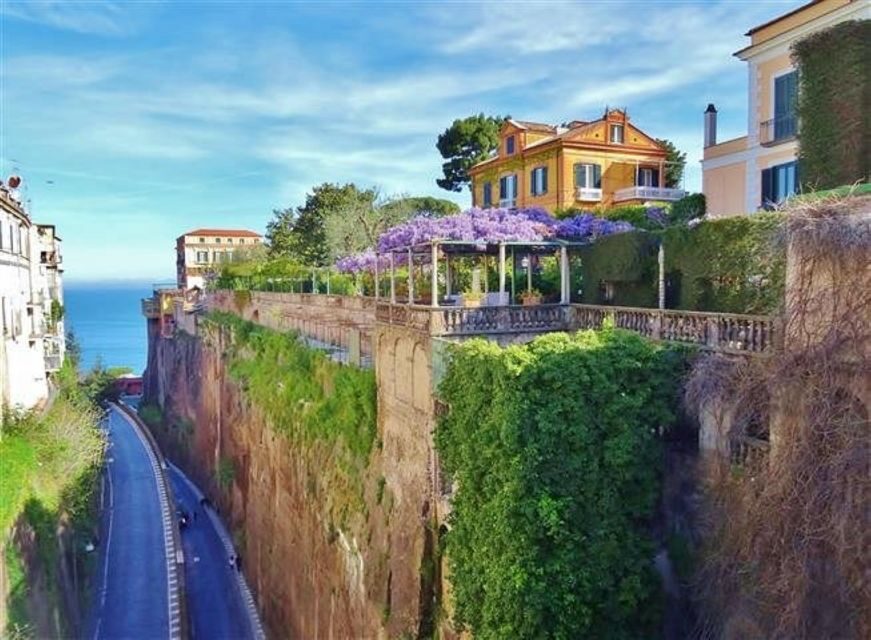
- Vallone dei Mulini valley views with the mill history tied to Sorrento’s setting
- Via San Cesareo and Sant’Antonino Square for old streets, patron-saint stories, and photo moments
- Chiostro di San Francesco plus Sedil Dominova to connect faith and civic life in stone
- Villa Comunale viewpoint over the Bay of Naples for that classic postcard angle
- Sorrento inlay lesson to understand the city’s signature craft
- Limoncello tasting with extras like limoncello cream, pistachio cream, and cantaloupe cream
Walking the old center with Mario: what makes this tour work

If this is your first trip to Sorrento, you’ll be glad you did a walking orientation instead of trying to wing it with a phone map and a stomach full of gelato. This tour is built for getting context: why these streets exist, why certain buildings matter, and how the city’s identity shows up in art and food.
You’ll also like the pace. The walk is planned to be slow enough for pauses and questions, not a sprint through doorways. There are viewpoints where you can stop, look, and take photos without feeling like you’re holding up the group.
And then there’s the finale: a limoncello tasting that feels like a reward, not a hard sell. You learn what you’re tasting before you drink it.
You can also read our reviews of more walking tours in Sorrento



Meeting at Piccadilly Pub and finding your guide fast
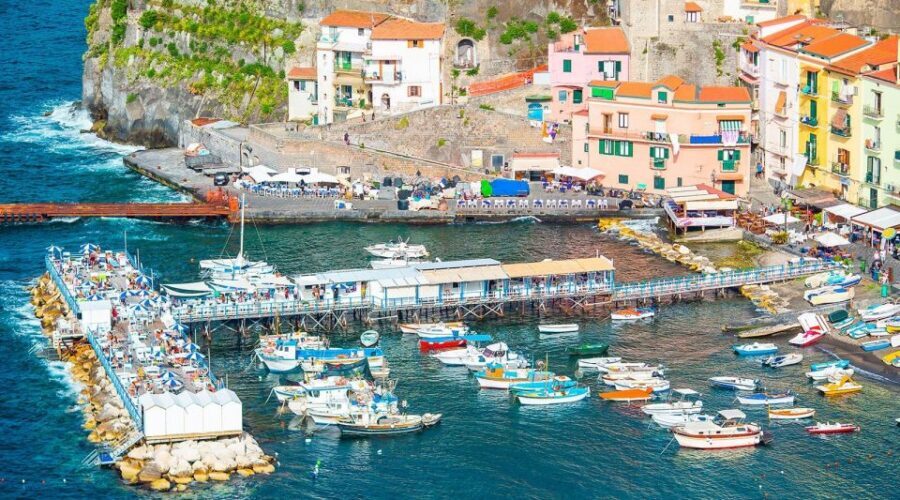
You meet at Piccadilly Pub, Via Fuorimura n°1, right in front of the entrance. The guide stands facing the street in a red sports cap, and they’re there exactly at the scheduled start time.
That timing matters. If you arrive late by more than about 10 minutes, you can miss participation because the group moves on to other parts of the city. So I’d plan to arrive a few minutes early, even if your day is going smoothly.
No hotel pickup is included. This is strictly a walk-from-here kind of tour, which keeps it simple and usually more efficient once you’re in the historic core.
Vallone dei Mulini: mills, geography, and a valley with a story

One of the first standouts is Vallone dei Mulini. This is the kind of place where Sorrento’s setting explains the town’s past. The valley gives you a panoramic outlook, and your guide connects the geography to the ancient mills that worked here.
Even if you’ve seen photos of Sorrento, it’s different when you’re standing in the actual valley. You can read the terrain like a map of how people lived: where work happened, how water and movement shaped daily life, and why the views are so prominent.
This stop also sets the tone for the rest of the tour: you’re not just collecting landmarks. You’re learning the logic behind them.
Via San Cesareo: Sorrento’s oldest street and the feel of local life
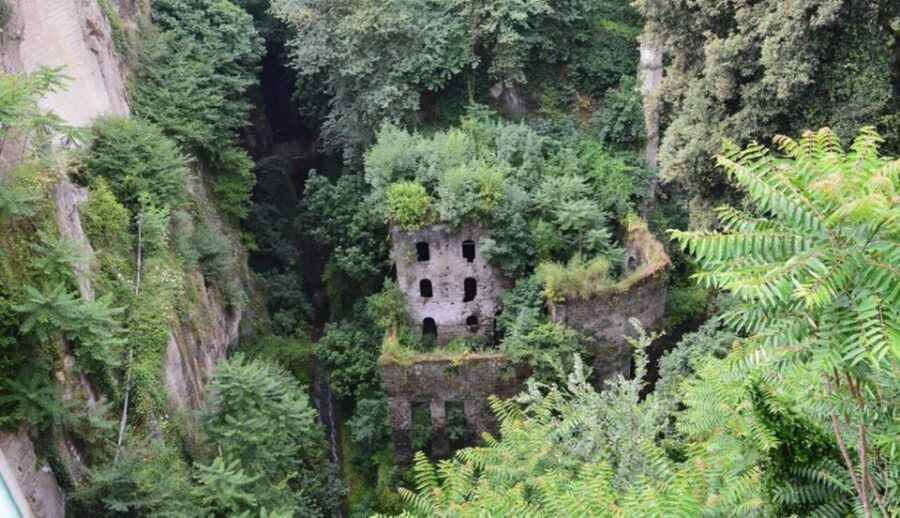
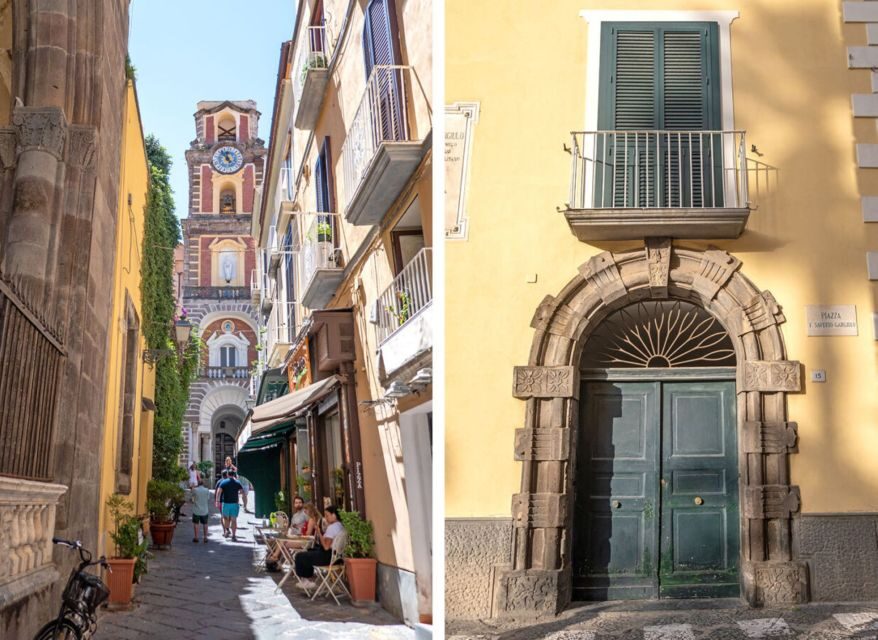
Next comes Via San Cesareo, described as the city’s oldest street. Expect narrow passages and an older-town texture: small artisan shops, tight corners, and streets that feel like they’ve been used for centuries.
This is where the tour becomes practical. Once you know how this street connects to the rest of the center, it’s easier to wander afterward on your own. You’ll recognize the routes instead of feeling like every turn is a surprise.
If you love street-level details—craft shops, textures, the way people move through alleys—this is one of the best segments.
Sant’Antonino Square: a patron saint story you can feel

At Sant’Antonino Square, you get the background on the patron saint of Sorrento, including stories of his life and miracles. It’s not just a quick pass by a pretty square; the point is to understand why this location has such a strong identity for locals.
Squares are often where religion, community, and everyday rhythms mix. Here, you’ll see how faith shaped the city’s public spaces—and why locals care about this spot even long after the original context.
Photo-wise, it’s a good pause. It also breaks up the walking so you can reset.
You can also read our reviews of more food & drink experiences in Sorrento
- Sorrento Farm and Food Experience including Olive Oil, Limoncello, Wine tasting
★ 5.0 · 2,524 reviews






Chiostro di San Francesco: a 13th-century pause in your timeline
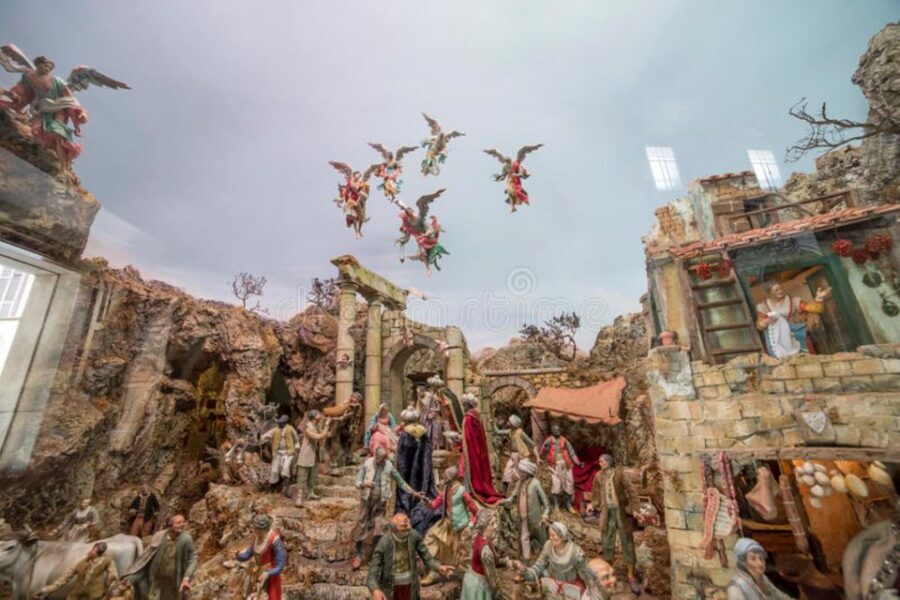
Then you reach Chiostro di San Francesco, the 13th-century convent of the Franciscan Friars. This is an architectural and historical stop that does more than look good in pictures. You’ll be guided through what makes it meaningful, including its place among the oldest, most beautiful buildings in Sorrento.
Convents like this often feel calmer than the streets around them—more like stepping into a slower chapter of the city’s story. If you’re into old stone, aged details, and places that survived centuries of change, you’ll enjoy this one.
One thing to note: you’ll be walking on a route that includes some hills and steps overall. This isn’t a flat stroll through a museum courtyard.
Sedil Dominova: the ancient parliament of Sorrento

Sedil Dominova is another iconic stop and a strong “wow, that’s old” moment. This building is tied to Sorrento’s ancient parliament, so the lesson here is civic life: how power, community decisions, and public gatherings worked over time.
Even if you’re not a political history person, the structure helps you visualize how locals organized their world. And it gives you context for why the city’s central areas feel so important.
Villa Comunale viewpoint: Bay of Naples photos on your terms

By the time you get to Villa Comunale, you’re in full view mode. This public park sits overlooking the sea, and it’s highlighted as the best spot for stunning photos of the Gulf of Naples.
This is a key reason to do the tour early in your trip. You’ll be able to return to the viewpoint later and understand exactly what you’re looking at, instead of guessing.
Also, it’s a great place to take a breather. The tour includes pauses so explanations don’t feel rushed, but viewpoints are where your feet finally get a break.
The Sorrento inlay craft: how local art becomes city identity
One of the more interesting parts is learning the secrets of the famous Sorrento inlay, a typical artistic work of the city. This isn’t just a “look at this cool craft” stop. You’ll hear the history and the production method, which helps you understand what you’re seeing if you spot it later in shops.
Why this matters: Sorrento isn’t only scenery and lemons. It’s also a place with skilled making—traditions that show up in objects people take home.
If you like crafts, design, or anything handmade, this section is worth paying attention to. It turns a souvenir category into something with meaning.
Lemon garden lessons: from fruit to limoncello logic
Before tasting, there’s a visit to a small lemon garden. The guide explains the history of Sorrento lemons and the production technique of limoncello, connecting the drink to local ingredients and tradition.
You’re told that the limoncello is made with certified organic lemons from the Amalfi Coast. That doesn’t turn into a lab class, but it gives you enough background to taste with your brain switched on.
The best part here is that it makes the tasting feel like the finish of a lesson. Instead of randomly trying a drink, you understand why the aroma, sweetness, and smoothness come out the way they do.
Limoncello tasting: organic, plus creamy add-ons
The tasting takes place at a partner shop, and it’s designed to help you understand organoleptic quality—basically, how it tastes and smells, not only how strong it is.
You’ll sample limoncello made from the real certified organic lemons of the Amalfi Coast. The tour notes that the serving is roughly about half of a normal bar amount, because limoncello is high alcohol and because there are multiple liqueurs to try.
Along with the main limoncello, you can also taste:
- limoncello cream
- pistachio cream
- cantaloupe melon cream
This is a pleasant break after the walking. Just keep your expectations aligned: this isn’t a full food-and-drink festival. The tasting is the finale, meant to be enjoyable, not to replace a meal.
A small consideration: if you came mainly for a long sit-down tasting, you might find it short. The tour itself stays focused on the historic center first.
How much walking is really involved
You’ll cover about 3 km on an easy route that’s rather slow, with pauses for explanations. Still, easy does not mean flat. There are hills and steps, and the tour isn’t suited for people with mobility impairments.
This also isn’t recommended if you have heart problems, and it’s not suitable for hearing-impaired people based on the way live guide tours work.
What to bring is straightforward:
- comfortable shoes
- umbrella
- water
- rain gear
If rain hits, you should expect the guide to adapt. The tour mentions route variations in case of closures or weather, with the overall duration and quality staying consistent.
Price and value: is $41 a good use of your time?
At $41 per person for a 2-hour walk with guide-led storytelling and a limoncello tasting, the value is strongest if you want context fast. This isn’t only about consuming a drink at the end. You get a guided tour of the historic center, plus craft history (Sorrento inlay) and a lemon-to-liqueur explanation before you taste.
You’re also paying for local expertise and timing. A local guide helps you connect stops so the town doesn’t feel like disconnected photos. And your tasting includes several different liqueurs, not just one tiny sip.
If you’re on a strict budget and plan to self-tour the streets, it might feel like a splurge. But if you want a clean first-day orientation—then you can roam and come back to places later—this price tends to make sense.
Who should book this tour (and who should skip it)
I think this fits best if you:
- want an easy-to-manage way to see Sorrento’s historic highlights in a short time
- care about local traditions—especially lemons, limoncello, and inlay craft
- enjoy photo stops with viewpoint context, not just selfies at random corners
- want an English guide who can answer questions as you walk
I’d skip it if:
- stairs and steps are a problem for you
- you need a more accessible route
- you’re only in town for the view and don’t care about history or craft details
Should you book the Sorrento Guided Walking Tour & Limoncello Tasting?
Yes, if you’re planning your first day in Sorrento and you want your bearings plus a lemon-based souvenir in liquid form. The pairing works: history during the walk, flavor at the end, with the tasting explained instead of thrown at you cold.
Book it earlier rather than later in your trip if you want to use the viewpoint knowledge after the tour. And if you’re sensitive to crowds, consider choosing a time when the old center isn’t slammed, since Sorrento can get busy around the times cruise traffic brings extra footpower.
If you want a relaxed orientation with a genuinely local guide (Mario is consistently praised), good pacing, and a tasting that’s more interesting than just sweet alcohol, this is a strong choice.
FAQ
How long is the Sorrento guided walking tour with limoncello tasting?
It lasts about 2 hours.
Where is the meeting point?
Meet at Piccadilly Pub on Via Fuorimura n°1, in front of the entrance. The guide will be standing there in a red sports cap.
Do I need to bring a map?
No. The tour is designed so you can explore the historic center without maps, with a local guide.
What is the walking like?
The route is about 3 km and described as easy and rather slow, but there are hills and steps.
What do you get to taste during the tour?
You taste limoncello, plus you can also try limoncello cream, pistachio cream, and cantaloupe melon cream. Food and olive oil tasting may be included if you select that option.
Is hotel pickup included?
No. There is no hotel pickup or drop-off.
What should I bring if weather changes?
Bring comfortable shoes and an umbrella. It’s also recommended to bring water and rain gear.


More Walking Tours in Sorrento



More Tours in Sorrento






More Tour Reviews in Sorrento
- Sorrento Farm and Food Experience including Olive Oil, Limoncello, Wine tasting
★ 5.0 · 2,524 reviews