REVIEW · POSITANO
Transfer from Naples to Positano with 2 hours Private Tour in Herculaneum
Book on Viator →Operated by Askos Tours · Bookable on Viator
Two cities. One smooth ride. This private Naples-to-Positano transfer bundles a guided walk through Herculaneum, so you spend less time figuring out buses and more time seeing a Roman town that still feels startlingly real. It’s also built for convenience: you’re picked up in Naples, dropped off at your place in Positano, and your driver handles the practical stuff.
I love the door-to-door private transfer piece because you avoid the usual delays and searching around. I also love the guide time at Herculaneum—one guide named Laura stands out for Roman context and clear explanations that make the ruins easier to read as you move from stop to stop.
The main catch is tight timing. You get a two-hour guided tour with many short stops, so it’s a highlights circuit rather than a slow, choose-your-own pace kind of visit (and there are no meals included).
In This Review
- Quick hits: what makes this transfer worth it
- Why combine Naples to Positano with Herculaneum
- Private minivan logistics that actually reduce stress
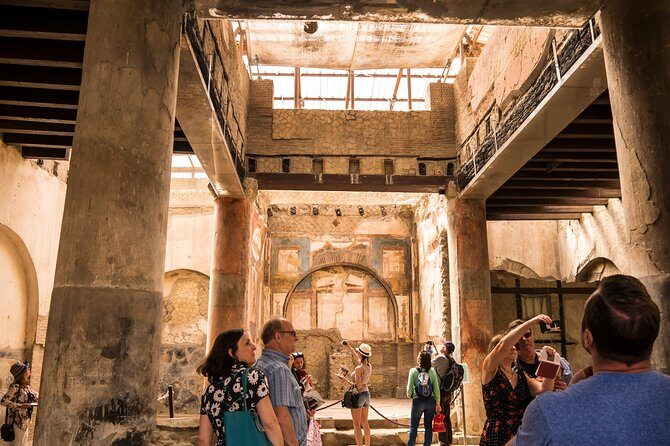
- Herculaneum in 2 hours: a guided “read the ruins” experience
- Stop-by-stop route: what you’ll see (and why it’s interesting)
- Parco Acheologico di Ercolano: your orientation base
- Casa dei Cervi (House of the Stags/Deer): statues with a name
- La Terrazza di M. Nonio Balbo: a benefactor’s footprint
- College of the Augustales: religion, politics, and power
- Casa del Rilievo di Telefo: a house with its own access
- Partem Domus lignea: the wooden partition you can’t fake
- House of the Skeleton: how a discovery becomes a name
- Central Thermae: men and women, separate entrances
- Casa del Salone Nero (House of the Black Hall): luxury with carbonized traces
- Casa Sannitica: an atrium with Ionic columns and frescoes
- Casa del Bel Cortile: a courtyard with a stair and balcony
- House of the Grand Portal: the center of the archaeological area
- Returning to Positano: why this format works for arrival day
- Price and value: $456.70 per person and what you’re really paying for
- Who should book this Naples to Positano + Herculaneum plan
- Small tips that make a big difference
- Should you book Askos Tours for this transfer + Herculaneum visit?
- FAQ
- How long is the Naples to Positano transfer with the Herculaneum tour?
- Do I get a guided tour at Herculaneum?
- Are Herculaneum admission tickets included?
- Where are pickup and drop-off in this experience?
- Is transportation air-conditioned and private?
- Are car seats available?
- Is a mobile ticket provided?
- What is the cancellation policy?
Quick hits: what makes this transfer worth it
- Air-conditioned private minivan with a professional driver and luggage transport
- Door-to-door pickup and hotel drop-off from Naples to Positano
- 2-hour guided Herculaneum visit with admission included
- A packed but manageable route through houses, baths, and public spaces
- Many short stops (about 15 minutes each after your orientation) to cover key sights fast
- Mobile ticket and group discounts, plus free cancellation up to 24 hours
Why combine Naples to Positano with Herculaneum

If you’re heading to the Amalfi Coast, the hardest part is often not the sightseeing—it’s the logistics. This experience turns that problem into a plan. You travel privately in an air-conditioned vehicle from Naples to Positano, and along the way you add a guided visit to Herculaneum, one of the best ways to understand what life looked like under Roman rule.
I like that it’s not trying to do everything. The goal is simple: get you to Positano comfortably, then use the “in-between time” to see something many people rush past or skip entirely. And since Herculaneum tends to feel less crowded than the bigger-ticket sites, you can actually pay attention to details as your guide talks you through them.
One more plus: your driver stays with the car. That means you don’t have the awkward shuffle of managing transport between stops while you’re trying to enjoy the ruins.
You can also read our reviews of more private tours in Positano



Private minivan logistics that actually reduce stress
This is a one-way private transfer from Naples to Positano, with pickup at the time and location you choose in Naples. That matters because Naples can be a maze. With a professional driver, you’re not working out where to meet, where to park, or which bus line will work “if everything goes smoothly.”
Expect:
- Air-conditioned private minivan
- Professional driver
- Luggage transport, so you’re not dragging bags through transfers
- Hotel drop-off in Positano
The tour also offers car seats on request and allows service animals, which is helpful when you’re traveling with kids or needing accommodations.
Time-wise, the full experience is listed at about 4 hours total. That makes it a good fit if you want a real Amalfi Coast arrival day, not a day that turns into a travel headache.
Herculaneum in 2 hours: a guided “read the ruins” experience
You meet your guide at the ticket office of Parco Acheologico di Ercolano. From there, your tour is guided by a professional who helps you connect the dots—what you’re looking at, who might have used it, and why it matters in the bigger Roman picture.
You’re also not stuck outside waiting around for a group. Because this is private (only your group participates), you get the benefit of a smoother flow at the ruins.
Also, note the structure: you’ll have one main entry orientation stop, then a sequence of short house-and-space visits. The benefit is focus. The drawback is obvious: you can’t wander for hours. You’ll cover a lot, but it’s designed for momentum.
Stop-by-stop route: what you’ll see (and why it’s interesting)
After the initial entry and orientation, the itinerary moves through a series of recognizable themes: wealthy homes, public buildings, and everyday life—especially water and heat in the baths. Each stop runs about 15 minutes, so your guide’s explanations are built for quick understanding.
Parco Acheologico di Ercolano: your orientation base
This first stop is the archaeological park entrance where you meet the guide and start with context. Admission here is included, and it’s the moment where the ruins stop looking like scattered stone and start looking like a town layout.
Why it matters: good orientation saves you time later. Instead of guessing what you’re seeing, you learn what to look for as the tour moves into homes and specific public spaces.
You can also read our reviews of more tours and experiences in Positano



Casa dei Cervi (House of the Stags/Deer): statues with a name
Next is Casa dei Cervi, named for marble statues of deer/stags found in the peristyle area. In other words, the house’s identity is tied to a visual clue—something tangible you can connect to “what kind of place this was” and the tastes of the people who lived there.
What to watch for: your guide’s explanation should make the peristyle concept click, so you understand why the statues mattered enough to become part of the house’s name.
La Terrazza di M. Nonio Balbo: a benefactor’s footprint
At the La Terrazza di M. Nonio Balbo, the highlight is less about one room and more about the story of a major benefactor. M. Nonius Balbus restored and built public buildings, and on his death he was honored—details explained in the long inscription on his funeral altar.
Why it’s worth it: this stop helps you see that Roman life wasn’t only about private houses. Community funding and public works shaped what people could see and use.
College of the Augustales: religion, politics, and power
The College of the Augustales is thought to be a center connected to the cult of the Emperor Augustus, with links to the Collegium Augustalium and possibly even local civic structures.
Practical takeaway: if Roman names make your eyes glaze over, this is the stop that turns names into functions—what the building likely meant in daily civic life.
Casa del Rilievo di Telefo: a house with its own access
Casa del Rilievo di Telefo is noted as unusual because it has its own private access to adjoining Suburban Thermae to the south.
Why that’s cool: it’s a reminder that “home” and “public life” weren’t always separate worlds. Wealth could translate into access—sometimes right next door.
Partem Domus lignea: the wooden partition you can’t fake
This is one of the more striking stops because it centers on surviving evidence: Partem Domus lignea focuses on an elegant wooden partition that remained. Even if you’re not a materials nerd, the idea matters. It shows how preserved fragments can change what we can understand about Roman interiors.
Watch for: your guide’s explanation on why wood is rare in archaeology will make this stop feel more “real” than the stone-only sites.
House of the Skeleton: how a discovery becomes a name
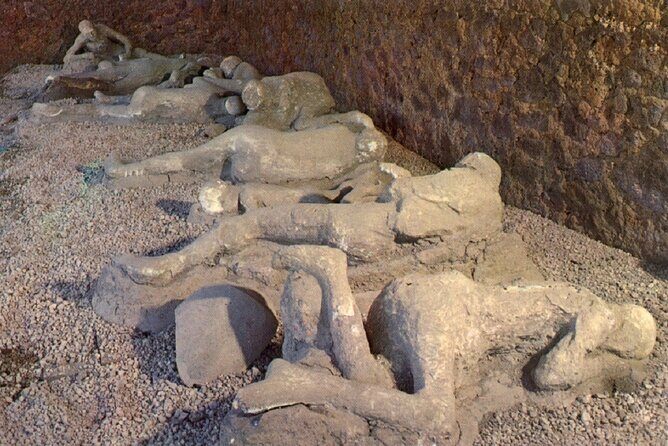
The House of the Skeleton takes its name from the discovery of human remains found in a second-floor room in 1831.
A quick reality check: this isn’t meant to be spooky. It’s a reminder that the disaster wasn’t abstract, and that the ruins can carry human consequences into modern descriptions. Your guide should help keep this stop respectful and clear.
Central Thermae: men and women, separate entrances
The Central Thermae were built around the beginning of the 1st century AD and are divided, in the traditional pattern, into men’s and women’s baths—each with separate entrances.
Why it’s valuable: this is the stop that turns the word thermae into something you can picture. Baths weren’t just for hygiene; they were social space and routine.
Casa del Salone Nero (House of the Black Hall): luxury with carbonized traces
At Casa del Salone Nero, you’re in a more luxurious mansion. One of the most vivid details is that the monumental entrance still retains carbonised remains of doorposts and lintel.
Why you’ll remember it: that kind of preserved trace gives you a before-and-after feeling. It’s not just an empty room—it’s a record of materials and movement.
Casa Sannitica: an atrium with Ionic columns and frescoes
Casa Sannitica has an arrangement typical of the Samnites, a group from the mountainous central Italy region. The atrium is skirted by a gallery with Ionic columns, and rooms are decorated with frescoes.
What to look for: if you pay attention here, you’ll start recognizing “style” as architecture language, not just decoration. The atrium layout helps you understand how space guided daily living.
Casa del Bel Cortile: a courtyard with a stair and balcony
This stop is Casa del Bel Cortile, known for having a courtyard with a stairway and a stone balcony instead of an atrium.
Why it matters: it shows you variety. Roman houses weren’t one template. Even when people share cultural roots, design choices can differ a lot.
House of the Grand Portal: the center of the archaeological area
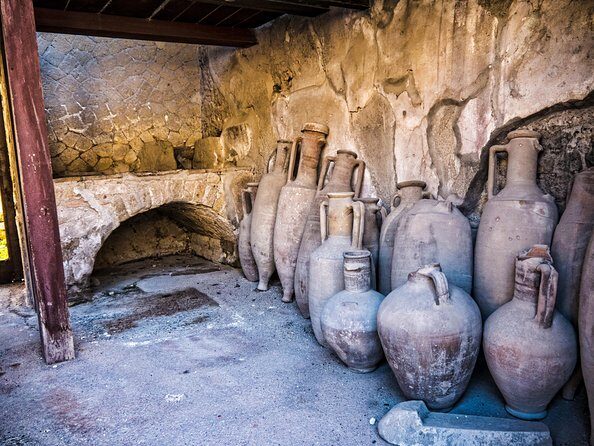
The House of the Grand Portal is described as a domus in the center of the archaeological area, with multiple environments and collonnati, plus frescoes and charred remains of wooden parts.
The value of the last stop: by the time you reach this one, you’ve already seen enough homes and public spaces that “grand portal” likely sounds less like a label and more like a clue about how the house welcomed visitors.
Returning to Positano: why this format works for arrival day
After your guided Herculaneum visit, you’re back on the private transfer to Positano. The design is meant for travelers who want an Amalfi Coast arrival day that doesn’t feel like a second job.
Here’s what I appreciate about this timing:
- You get the Roman ruins you might otherwise skip.
- You still arrive in Positano as planned.
- You don’t spend your day bouncing between public transport and stops.
It’s also one-way. That’s important because it removes the “what do we do afterward” question that comes with many day tours.
Price and value: $456.70 per person and what you’re really paying for
The listed price is $456.70 per person. That might sound steep until you break down what’s actually included.
From the included items, you’re getting:
- Private air-conditioned minivan
- One-way private transfer from Naples to Positano
- Hotel drop-off
- Professional guide in Herculaneum
- Herculaneum entry tickets (listed as €16 each)
- All taxes
So you’re not only paying for a car. You’re paying for guide time and reserved “you’re not sharing the schedule” control. With private travel, you also pay for convenience: pickup where you choose, luggage handled, and a driver waiting with the vehicle so your time at Herculaneum stays focused.
One way to think about value: this is often best when you’re willing to trade a little money for time, comfort, and less stress. If your alternative is juggling trains or buses while dragging luggage, the private format becomes easier to justify.
The price can also feel more reasonable if you’re traveling as a group—there are group discounts listed, and private tours can spread better depending on who’s in your party.
Who should book this Naples to Positano + Herculaneum plan
This setup is a strong match if:
- You’re using Naples as a launch point and want to reach Positano efficiently
- You want more than just “transport on the way” and prefer structured time
- You’d rather see Herculaneum with a guide than wander and interpret alone
- You want a calmer Roman experience than the biggest, busiest marquee options
It’s also a good choice for people who like clarity. The itinerary is built from a set number of stops, each with a defined time window.
If you’re the type who hates being rushed, you should know this is a highlights tour. You’ll likely leave satisfied, but not with the deep, slow sense you’d get from a longer independent visit.
Small tips that make a big difference
A few practical things can help you get more from the short guided format:
- Plan around no meals included. If you’ll be hungry, you’ll want to handle food on your own before or after.
- Expect lots of 15-minute stops. Wearing comfortable shoes and keeping water nearby (where allowed) makes the pace easier.
- Bring a mindset for “look fast, learn fast.” The guide’s explanations are meant to land quickly as you move.
- If you need car seats or want to confirm handling for service animals, note that it’s available on request and allowed.
Also, a mobile ticket is included. Have it ready so check-in doesn’t take time from your guided tour window.
Should you book Askos Tours for this transfer + Herculaneum visit?
I’d book it if your goal is simple: get to Positano smoothly and add a guided Roman stop that’s actually worth the effort. The combination of private transfer, professional guidance, and included entry is the core of the value.
I’d think twice only if you want long, slow wandering at one site. This is designed for a two-hour Herculaneum circuit with many short stops. It’s structured, not leisurely.
Overall, this is a smart way to make a transfer day feel intentional—less waiting, less confusion, and more time understanding what you’re seeing.
FAQ
How long is the Naples to Positano transfer with the Herculaneum tour?
The total duration is listed at about 4 hours (approximately).
Do I get a guided tour at Herculaneum?
Yes. You’ll have guide and assistance by a professional guide during the Herculaneum portion, with the guide meeting you at the ticket office.
Are Herculaneum admission tickets included?
Yes. The entrance fee for Herculaneum entry tickets (listed as €16.00 each) is included.
Where are pickup and drop-off in this experience?
Pickup is offered at the Naples time and location you choose, and there is hotel drop-off in Positano. It is a one-way private transfer from Naples to Positano.
Is transportation air-conditioned and private?
Yes. You travel in a private, air-conditioned minivan with a professional driver, and only your group participates.
Are car seats available?
Car seats are available on request.
Is a mobile ticket provided?
Yes, a mobile ticket is included.
What is the cancellation policy?
You can cancel for a full refund if you cancel up to 24 hours in advance of the experience’s start time. If you cancel less than 24 hours before, the amount paid is not refunded.