REVIEW · AMALFI
Full Day Tour of Amalfi Coast and Capri
Book on Viator →Operated by Il Medeghino · Bookable on Viator
Capri can feel like a movie set. This full-day ride pairs Amalfi’s dramatic sea views with Capri’s legendary grotto stops and iconic rock scenery, all paced for a one-day hit.
I especially like the sheer variety of coast scenes you get in a single day. You’ll see Amalfi from the Valle dei Mulini area, catch Furore’s famous fjord-bay view, and then shift to Capri’s coastal icons like the Faraglioni sea stacks. I also like that the tour isn’t just sightseeing from a seat: it includes snorkeling gear plus coffee/tea, snacks, and bottled water, with soda and alcoholic beverages along the way.
One consideration: the Marina Grande port fee in Capri is not included, so you’ll want to budget a bit extra once you get there.
In This Review
- Key highlights at a glance
- Amalfi Coast and Capri in One Day: Where the Value Comes From
- Amalfi at Valle dei Mulini: The “Fan Toward the Sea” Town View
- Fjord of Furore: A Cliffside Beach View That Doesn’t Look Real
- Li Galli Islets Near Positano: Private Water, Public Wonder
- Positano: The Icon Village and the Coastal Split Screen
- Capri Time Begins at Marina Grande: The Real Port Area First
- Blue Grotto: The Tiny Entrance That Creates the Magic
- Faraglioni Sea Stacks and Marina Piccola: The Classic Capri Photos With Real Context
- Green Grotto and White Grotto: Light Tricks You Can Actually See
- Punta Carena and Migliera: Lighthouse Views With British-Era Defense Walls
- Included Food, Drinks, and Snorkeling Gear: What It Means for Your Day
- Price and Logistics: What $3,240.65 Per Group Really Covers
- Who This Tour Fits Best (and Who Might Want More Time)
- Should You Book This Amalfi Coast and Capri Tour?
- FAQ
- How long is the Amalfi Coast and Capri full-day tour?
- What group size is this tour for?
- What’s included during the tour?
- Is the Marina Grande port fee in Capri included?
- Is pickup offered, and do I get a mobile ticket?
- What is the cancellation policy?
Key highlights at a glance
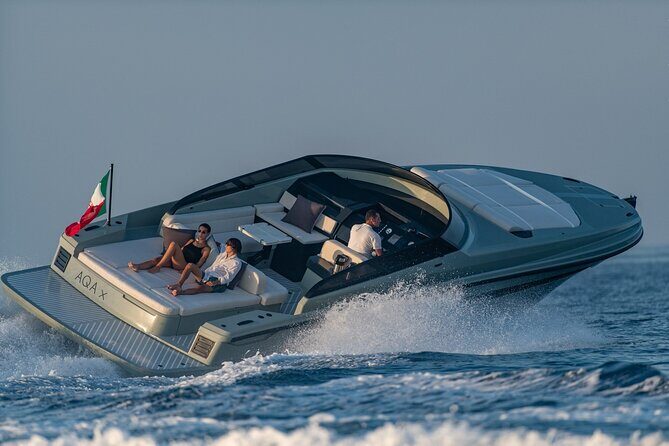
- Private group up to 8 with pickup offered and a mobile ticket
- Amalfi’s Valle dei Mulini viewpoints at a scale that’s easy to understand fast
- Fjord of Furore plus the Li Galli archipelago, known for private ownership
- Blue Grotto boat entry into a cavern with a tiny opening under 1 meter high
- Faraglioni + Marina Piccola backdrops for classic Capri photos
- Snorkeling equipment included, so you can actually use the water time
Amalfi Coast and Capri in One Day: Where the Value Comes From
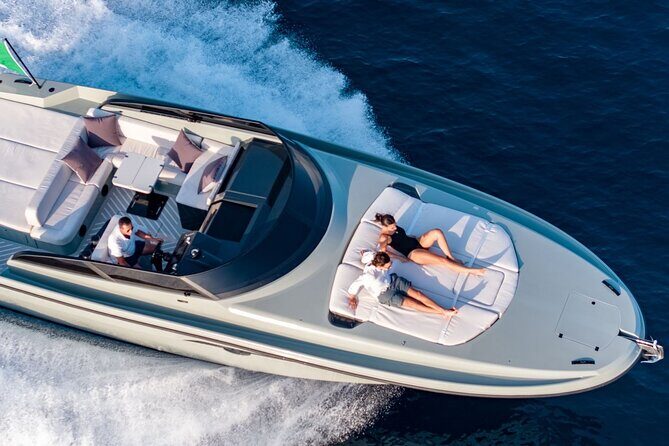
If you want Amalfi and Capri but you also want to sleep at night, a single full-day plan makes sense. You’re compressing two of the region’s biggest “must-sees” into about 7 hours, which is ideal when you only have a short stay on the coast.
The bigger value here isn’t just the checklist of famous sights. It’s the way the day mixes sweeping lookouts (Amalfi, Furore), postcard coastline (Positano), and then water-level landmarks on Capri (Marina Grande, Marina Piccola, the grotto system). That blend helps you get the feeling of the Amalfi Coast rather than just ticking boxes.
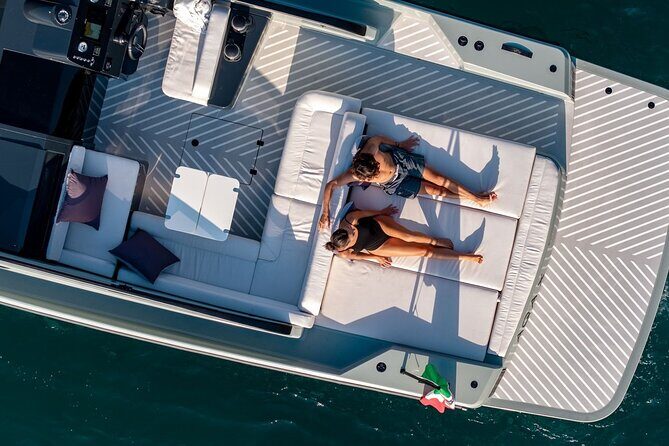
One more practical point: this is a private tour for your group (up to 8). That usually means fewer waits and less time getting shuffled around than on large shared tours, especially on a day that includes tight, low-profile experiences like grotto boat entries.
You can also read our reviews of more tours and experiences in Amalfi
Amalfi at Valle dei Mulini: The “Fan Toward the Sea” Town View
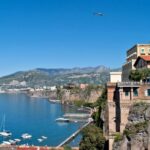
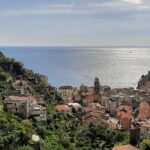
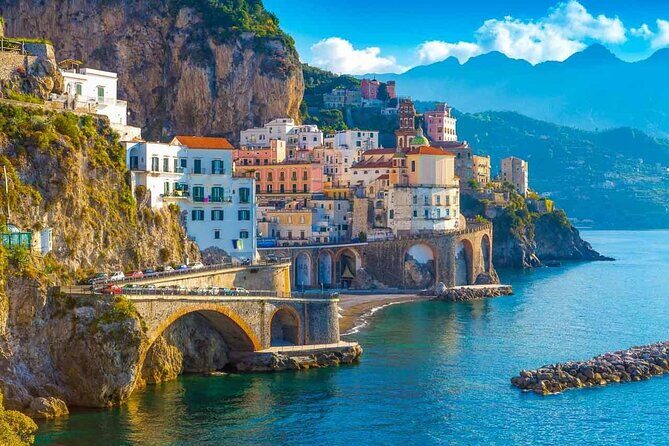
Amalfi is often described as dramatic, but the real reason it hits you is the shape. The town opens like a fan toward the sea, sheltered behind the steep slopes of the Monti Lattari. Your stop leans into that idea by placing you at the mouth of the Valle dei Mulini, where the coastline and the steep terrain feel like they were designed together.
Also, Amalfi isn’t just picturesque for photos. It’s tied to maritime identity; it’s known as Italy’s oldest maritime republic. That context helps you notice details you might otherwise overlook, like why so much of the town’s layout feels built around sea access and movement.
What to watch for: look for how quickly the scenery changes as you angle toward the water. Amalfi can feel compact, but the viewpoints reveal new layers fast. If you’re the type who likes to understand a place visually in 15 minutes, this stop fits you well.
Fjord of Furore: A Cliffside Beach View That Doesn’t Look Real
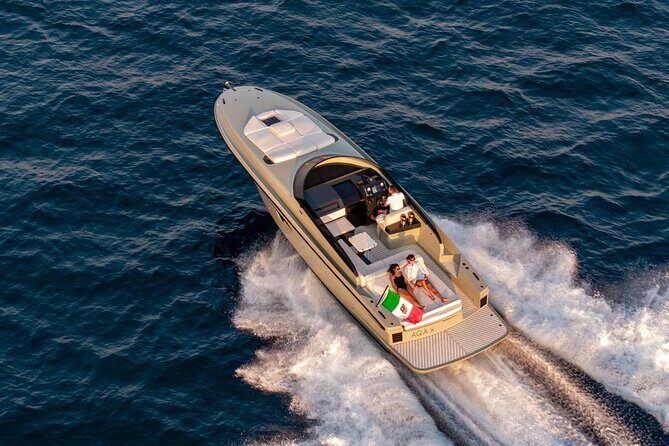
Next comes Furore, known for its fjord-like coastline. The Fjord of Furore is one of the most photographed beach areas on the Amalfi Coast, and you’ll see why: it’s a sheltered-looking cove framed by cliffs, which makes the sea feel both close and protected at the same time.
This is one of those spots where your camera might get more work than your legs. Even if you’re not chasing a long walk, the payoff is the perspective. You’re seeing a stretch of coast that feels cut into the rock rather than laid along a shoreline.
Potential drawback: because it’s so scenic, it tends to invite crowding on popular days. A private group helps here, because your time on the view can be managed better than if you were competing with a big pack.
Li Galli Islets Near Positano: Private Water, Public Wonder
Sitting opposite Positano are the Li Galli islets—Gallo Lungo, La Rotonda, and Isola Dei Briganti. Here’s the key detail that makes this stop special: today they’re privately owned, and they’re accessible only to invited guests.
So you’re not “visiting” the islands like a normal land stop. You’re getting the experience in the way the Amalfi Coast often does things: by showing you the view and letting the place’s exclusivity become part of the story. You’re seeing why this corner of the sea has been known for wild beauty and interest for millennia, without needing special entry permissions.
If you like geography as much as sights, this is a good moment to slow down mentally. Those three islets change the feel of the coastline. They break up the water visually and make the area look more layered than the usual straight-on shoreline view.
Positano: The Icon Village and the Coastal Split Screen
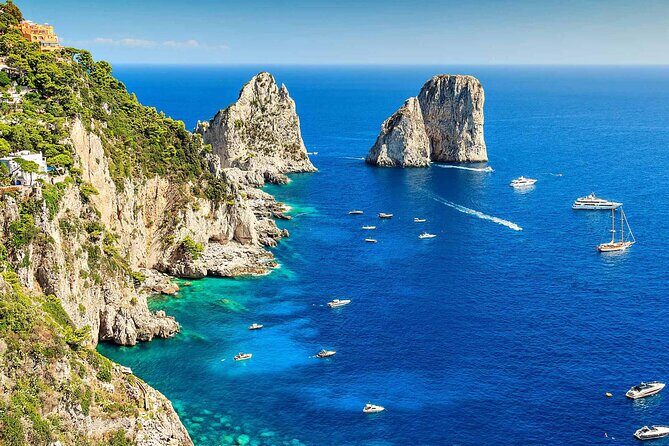
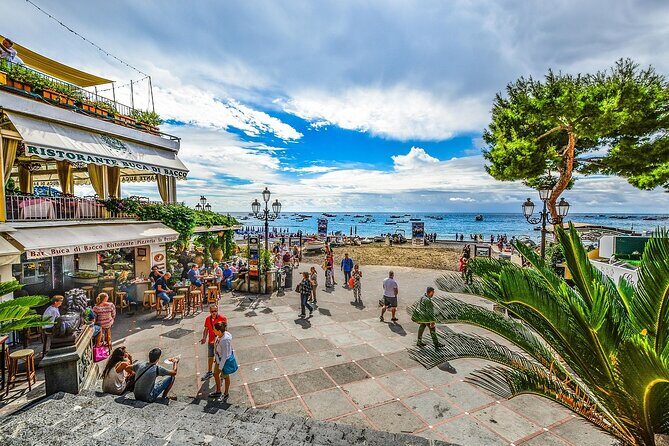
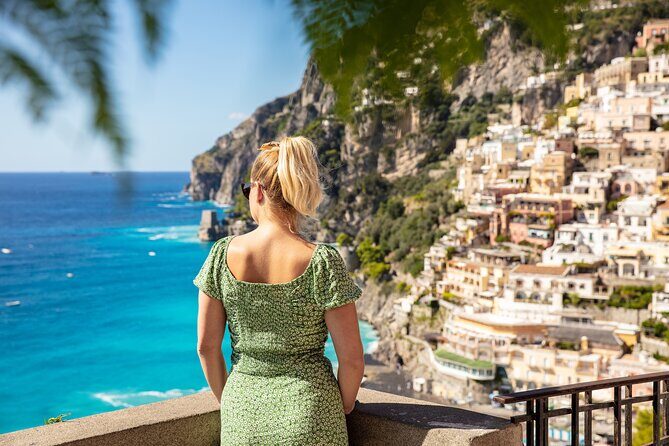
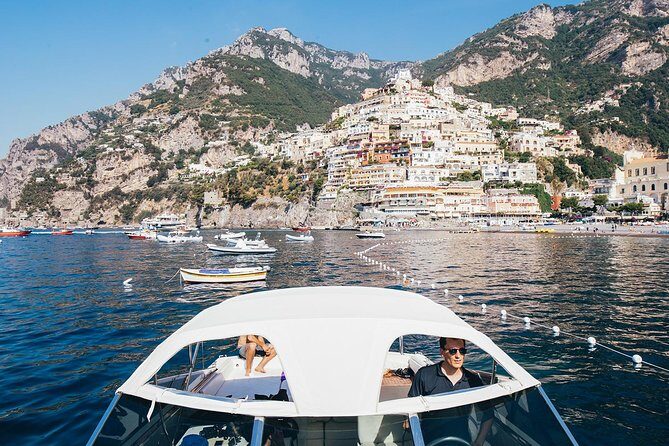
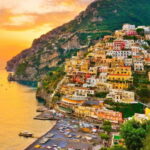
Positano is the Amalfi Coast’s flagship. The coastline here hits a familiar formula—turquoise-looking Mediterranean water on one side and the steep peaks of the Lattari Mountains on the other—but Positano does it in a way that feels iconic for a reason.
You’ll likely spend time looking at the village and then taking in the coastal shape from different angles. That matters because Positano can read “just pretty” if you only look at it once. When you see it from multiple lines, you notice how the town stacks up the hill like it’s clinging to the slope.
Small practical tip: if you tend to feel motion-sick on windy coasts, keep your attention on the horizon when you’re near open water. Positano’s coastline can create quick shifts in wind and spray depending on where you stand.




Capri Time Begins at Marina Grande: The Real Port Area First
Capri often gets reduced to a single postcard (usually Blue Grotto or Faraglioni). Your day starts differently, with Marina Grande as the entry point for ferries and hydrofoils from the mainland, plus the commercial port and marina for private ships.
That’s smart. Starting at the arrival hub helps you understand how people actually reach the island. It also gives you a sense of scale—Capri isn’t just a scenic stage; it’s an active port with real maritime traffic.
The Marina Grande stop is listed as 1 hour and admission ticket is free. If you want a moment to regroup, grab water, and get your bearings fast, this is that part of the day.
Blue Grotto: The Tiny Entrance That Creates the Magic
The Blue Grotto is the big name on Capri, and you’ll understand the obsession quickly. This natural cavern is about 25 meters wide and 60 meters long, and the famous detail is the entrance: it’s less than a meter high.
To get in, visitors lay back in wooden rowboats and glide through the low cave mouth. In other words, you’re not walking into a cavern. You’re passing through it in a careful, controlled way, which is why timing and boat conditions matter.
What I think makes it worth the effort: the grotto isn’t just a view from outside. You’re physically experiencing the scale shift from bright daylight to the cave interior atmosphere. Even if you’re not a grotto person, the entry mechanics make it feel special.
Practical consideration: because the entrance is so small, the experience can be tight for anyone who feels uncomfortable in cramped situations or wants lots of personal space. If that describes you, consider managing expectations before you go in.
Faraglioni Sea Stacks and Marina Piccola: The Classic Capri Photos With Real Context
Capri’s iconic sight is the Faraglioni—three towering rock formations jutting out just off the island’s coast. You’ll want at least one clear “background” photo here, because these rocks anchor the entire Capri look.
Then you’ll shift to Marina Piccola bay, described as the best beach spot if you want a dip against the backdrop of the Faraglioni. That line matters: Marina Piccola is where the rocks become the framing device for water time, not just a distant view.
If you’re bringing a swimsuit, this is a good reminder that you’ll likely want to be ready for short water moments. The tour includes use of snorkeling equipment, so you can treat these water-based stops as practical playtime, not just sightseeing.
Green Grotto and White Grotto: Light Tricks You Can Actually See
Capri’s grottoes are famous for one thing: light. You’ll see two more major variations after the Blue Grotto.
The Green Grotto is known for an intense emerald green color inside. The color comes from reflection of light among the rocks and the seabed. The effect is visual and immediate—when you see it in person, it’s not subtle.
Then comes the White Grotto. Access is through a steep staircase carved into the rock, directly from the sea. Inside, you get a surreal contrast between the brightness of the white limestone and the blue of the sea, plus dense stalactites and stalagmites.
Why these stops work as a pair: Blue, Green, and White each emphasize different parts of the same phenomenon—natural light shaped by cave geometry. Even if you don’t love geology, you’ll understand what you’re looking at faster because you’re seeing the concept repeated with different results.
Punta Carena and Migliera: Lighthouse Views With British-Era Defense Walls
Towards the southwestern coast, the Lighthouse of Punta Carena dominates the area. Behind the lighthouse is the precipice of the Migliera, lined with defense walls built by the British at the start of the 19th century to protect Capri from invasion.
This is a good “closing chapter” moment because it changes the mood from grotto wonder back to coastline history and hard edges. The lighthouse and the defense walls make you realize Capri’s beauty has always been tied to strategic visibility—who could see the island, who could approach, and how sea travel was protected.
It’s also a scenic payoff. Even if you only get a short time here, the viewpoint idea is clear: you’re watching how the land drops away to sea in a way that would matter for ships passing along the coast.
Included Food, Drinks, and Snorkeling Gear: What It Means for Your Day
This tour includes coffee and/or tea, snacks, bottled water, soda/pop, and alcoholic beverages. Translation for you: you’re not stuck hunting for refreshments at random points, and you can keep energy steady on a packed day.
Snorkeling equipment is also included (use of snorkeling equipment). That’s valuable because it lowers friction. You don’t have to rent gear, compare prices, or scramble at the last minute.
One more detail: when tours include alcohol, I suggest treating it as a pacing tool, not a plan. Use it if it fits your day, but keep some reserve for the time you’ll spend near water and rocky coast areas. Capri’s conditions can make people careless when they’re relaxed, so stay practical.
Price and Logistics: What $3,240.65 Per Group Really Covers
The price is $3,240.65 per group (up to 8), for about 7 hours. That’s not a cheap trip, but it can be good value depending on how you travel.
Here’s the math: if your group fills all 8 spots, you’d be looking at roughly $405 per person. If you book with fewer people, the per-person cost rises, since it’s a group rate.
So where does the money go? You’re paying for a private-format day with pickup offered, plus the included food and drinks (coffee/tea, snacks, bottled water, soda, and alcoholic beverages) and snorkeling gear use. On a day featuring multiple boat-in cave experiences and coastal viewpoints, “one organized plan” has real worth.
Also, this experience is privately run for your group only. That can matter a lot when time is tight and viewpoints are sensitive to crowd flow. The more your group wants flexibility, the more you benefit from the private setup.
Who This Tour Fits Best (and Who Might Want More Time)
This is a great match if you want a highlight package without doing the heavy planning yourself. It’s also a strong fit if you like variety: town views (Amalfi), cliffside scenery (Furore), icon village energy (Positano), and then Capri’s water-focused stops (Marina Grande, grottos, Faraglioni).
It also suits groups of up to 8 who want shared value. Split cost, keep the day coordinated, and enjoy the included snacks and drinks without constant “where are we stopping next” questions.
Who might hesitate: if you’re the type who dreams of long unhurried hours in Capri’s neighborhoods, a one-day schedule may feel too tight. This plan is built for seeing a lot, not for lingering.
Should You Book This Amalfi Coast and Capri Tour?
I’d book it if your priority is classic sights with a structured plan, and you want both Amalfi and Capri in a single day without juggling ferries, timing, and multiple separate bookings. The day’s emphasis on water experiences (Blue/Green/White Grotto experiences and snorkeling gear availability) makes it feel more than a scenic bus ride.
I’d think twice if you’re very sensitive to cramped spaces (the Blue Grotto entrance is less than a meter high) or if you hate paying extra once you arrive (the Marina Grande port fee in Capri is not included). For everyone else, this is a smart “big hits” day that keeps the coast feeling real, not staged.
FAQ
How long is the Amalfi Coast and Capri full-day tour?
The duration is about 7 hours.
What group size is this tour for?
It’s a private tour/activity, and the group size is up to 8 people.
What’s included during the tour?
Coffee and/or tea, snacks, alcoholic beverages, soda/pop, bottled water, and the use of snorkeling equipment are included.
Is the Marina Grande port fee in Capri included?
No. The port fee in Marina Grande in Capri is not included.
Is pickup offered, and do I get a mobile ticket?
Yes, pickup is offered and you’ll have a mobile ticket.
What is the cancellation policy?
You can cancel for free up to 24 hours in advance for a full refund. If you cancel less than 24 hours before the start time, the amount paid is not refunded.