REVIEW · SORRENTO
Guided Tour of Herculaneum with Lunch and Ticket Included
Book on Viator →Operated by Buyourtour di Amo Italy Travel · Bookable on Viator
Buried cities still feel real.
This guided day turns the dramatic story of Vesuvius into something you can actually walk through, starting in Sorrento and ending back where you began. I like that it’s built for time-poor visitors with mobile skip-the-line style entry and a clear plan from the ruins to lunch and a winery stop. One thing to keep in mind: group size can feel big on the ground, so you’ll want to be mentally ready for some waiting in peak hours.
Second, I really appreciate how much you get at Herculaneum itself. The site is exceptionally preserved, with guide-led time to see streets and houses rather than just “see it, snap a photo, move on.” My only caution is about pace: there’s plenty of walking and climbing across multiple house stops, so comfortable shoes aren’t optional.
In This Review
- Key Highlights to Know Before You Go
- Sorrento Start: Your Day Begins on the Sea-High Road
- The Big Picture: What This Day Trip Is Really About
- Herculaneum: Why This Place Hits Hard
- Casa dei Cervi: Deer Statues and the House Name
- Casa di Nettuno e Anfitrite: Mosaics You Can Actually Study
- Casa dello Scheletro: A Chilly Name With a Real Archaeology Story
- Sacello degli Augustali: Frescoes, Worship, and a Skeleton Story
- House of the Hotel: Big Size, Panoramic Views, and a Spa District
- Casa del Salone Nero: The Black Painted Hall
- Lunch in the Middle of the Day: Simple, Included, and Timed to Keep You Moving
- Sorrentino Winery: A Vesuvius-National-Park Wine Stop
- Transportation and Timing: The Part That Can Make or Break the Day
- What You’ll Actually Do at Each Stop (So You Can Plan Your Energy)
- Who This Tour Fits Best (And Who Should Think Twice)
- Small Practical Tips That Help a Lot
- Should You Book This Herculaneum + Lunch + Winery Tour?
- FAQ
- How long is the guided tour?
- Where does the tour start?
- Is lunch included?
- Are tickets included?
- Is the tour guided in English?
- Does the itinerary include Pompeii and Mount Vesuvius?
- What should I wear?
Key Highlights to Know Before You Go
- Fast, ticketed entry designed to cut down time at busy archaeological entrances
- Herculaneum with a guide for about 1.5 hours inside the archaeological area
- House-to-house viewing of famous villas and mosaics, including the Neptune and Amphitrite mosaic
- Lunch included with a simple, local menu and wine tasting
- Winery time in the Vesuvius zone with a structured tasting (Prosecco, red, white)
- Round-trip from Sorrento using a set meeting point at Bar Kontatto
Sorrento Start: Your Day Begins on the Sea-High Road
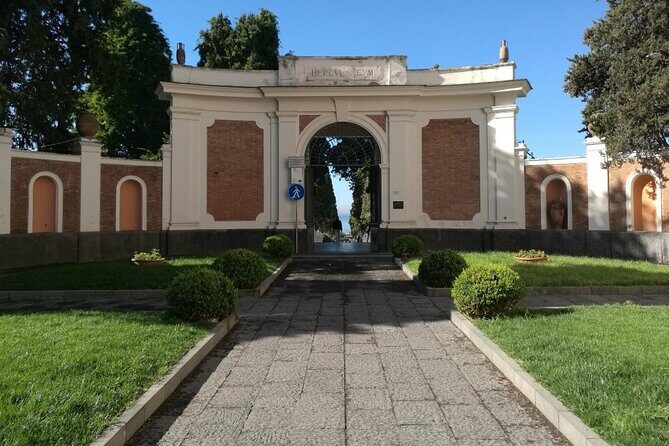
The tour meets at Bar Kontatto on Corso Italia 257 in Sorrento. If you’ve spent any time walking around Sorrento’s center, this meeting spot is convenient—easy to find, and it puts you right at the start of the day’s coastal energy.
Sorrento itself matters here, because it’s not just a launching pad. The city sits on a rock above the water, and the description of the landscape echoes the old myths the locals still tell—sirens, sailors, and danger in the distance. You don’t need a full mythology lecture to enjoy this part, but it does help set the tone: you’re going from modern seaside calm to a volcanic disaster zone that changed everything.
From the start, you’ll be traveling as a single group. The promise is simple: hassle-free transportation from Sorrento and a guided itinerary that takes most of the planning work off your plate.
You can also read our reviews of more tours and experiences in Sorrento

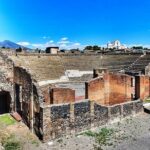

The Big Picture: What This Day Trip Is Really About
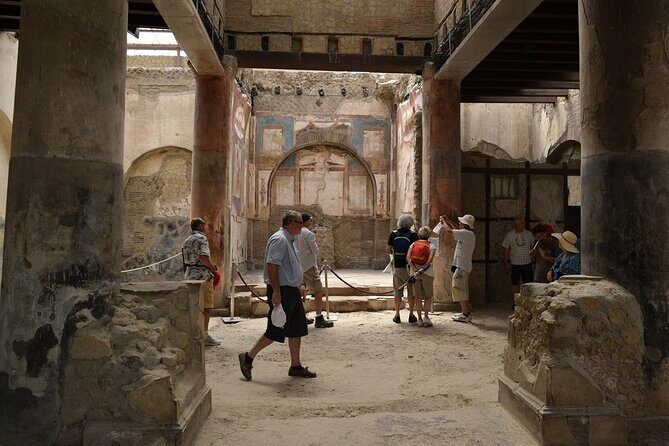
The marketing pitch says you’ll see Pompeii and Mount Vesuvius in the same day, and the day length fits that kind of route. At the same time, the detailed stop list you’re given focuses heavily on Herculaneum’s houses and villas, which is the star of the day for many visitors.
So here’s the practical way to look at it: you should expect the itinerary to center on Herculaneum’s preserved Roman city blocks, with additional volcanic-area components depending on the day’s flow and traffic. Since times can shift due to local conditions, the best mindset is flexible. If you want to guarantee Pompeii/Vesuvius time, check your exact day plan when you receive confirmation.
English guidance is available, and the experience is run by Buyourtour di Amo Italy Travel. The group size cap is listed at 100 travelers, which can matter a lot for your “feel” on the day. One review complained about a much larger-than-expected bus group and associated waiting time, so you should treat this as a popular, logistically complex route.
Herculaneum: Why This Place Hits Hard
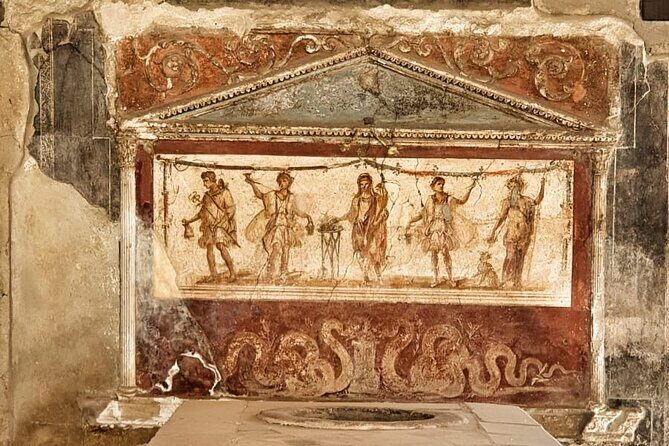
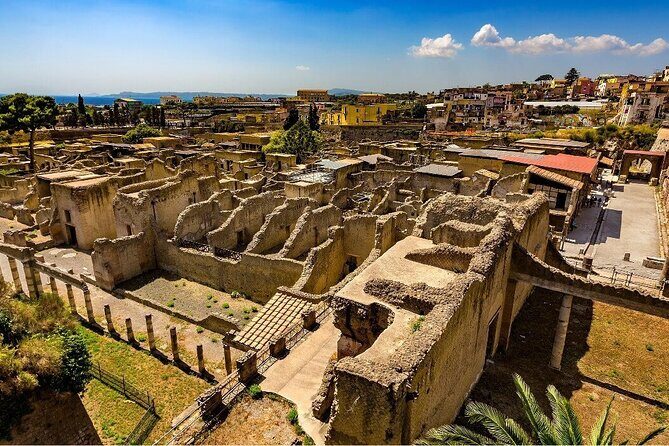
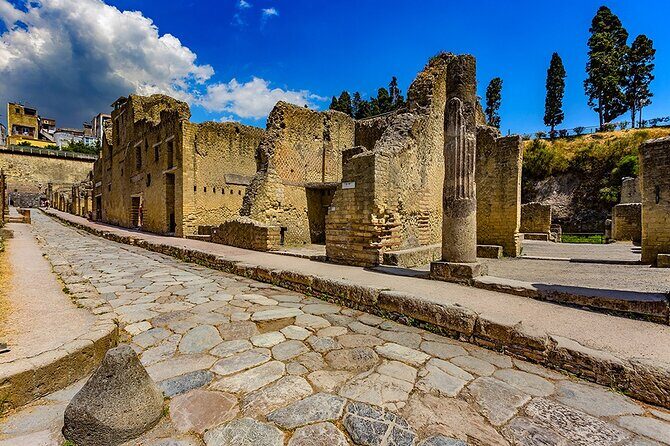
Herculaneum was buried by meters of ash and pumice after Vesuvius erupted in 79 A.D. The result is why people come: the ruins aren’t just foundations. You can see streets, houses, and villas in a way that feels shockingly complete for a site from nearly two thousand years ago.
The tour includes guided time across the archaeological area (about 1.5 hours with your guide), followed by short stops at notable houses. This format is good for most people. A full day of walking only works if you’re also told what you’re looking at. Here, the structure helps you connect the dots: household layout, mosaics, and the kind of wealth and everyday life that got locked in place.
Casa dei Cervi: Deer Statues and the House Name
This is one of those stops where a detail gives you instant context. Casa dei Cervi gets its name from statues of deer in the garden—deer that were attacked by a pack of dogs. The backstory included on the tour also connects the house to a freed slave: Q. Granius Verus was reportedly a slave freed shortly before Herculaneum’s destruction.
Even if you’re not a Roman-history person, this is the kind of stop that makes the site more human. It’s not only architecture—it’s decoration, status, and how a family wanted their outdoor space to look.
Casa di Nettuno e Anfitrite: Mosaics You Can Actually Study
If there’s a must-see moment on this tour, it’s the mosaics. Casa di Nettuno e Anfitrite is famous for mosaic work in glass paste—floral and hunting scenes—and for a central marine-image mosaic featuring Neptune and Amphitrite.
This stop works because it gives you a pause inside the day. You’re not just rushing past artwork. You’ll get enough time to look closely, and the guide can point out why the imagery mattered. Roman mosaics weren’t just decoration; they signaled education, taste, and comfort.
You can also read our reviews of more guided tours in Sorrento

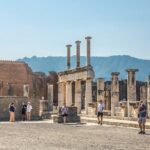



Casa dello Scheletro: A Chilly Name With a Real Archaeology Story
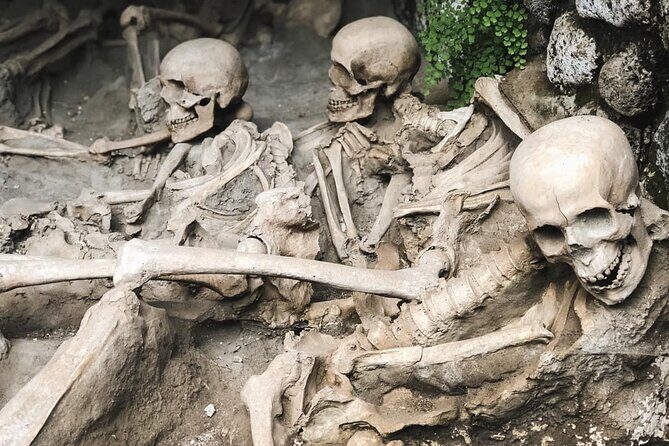
Casa dello Scheletro sounds spooky, but the name comes from a discovery. It’s tied to human remains found in 1831 in a second-floor room, which helped shape what the house was called.
This stop is a good reminder that archaeology is detective work. You’re seeing how later discoveries shaped interpretation. It’s also a helpful change of pace from “tourist highlights,” because it brings you back to the process of excavation and evidence.
Sacello degli Augustali: Frescoes, Worship, and a Skeleton Story
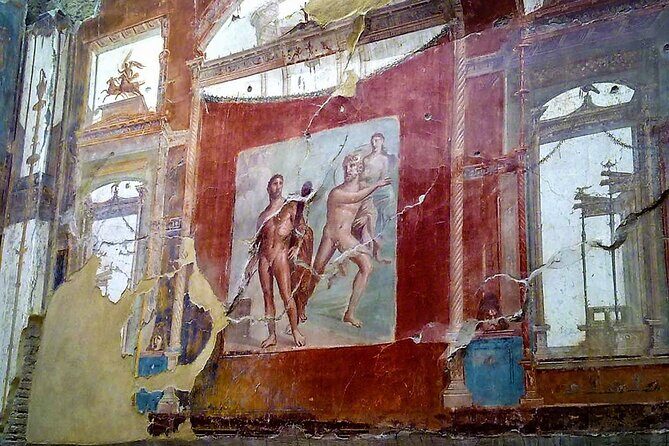
Near the forum area, you’ll visit Sacello degli Augustali. This building preserves frescoes showing Hercules entering Olympus alongside Jupiter, Juno, Minerva, and Hercules against Achelous. The stop description also mentions a janitor’s skeleton found in his room, lying on the bed.
That last detail can feel intense, but it’s part of why Herculaneum is so gripping. You’re not watching history from a distance. You’re seeing traces of real people and real spaces—places built to function as homes, work areas, and religious settings.
House of the Hotel: Big Size, Panoramic Views, and a Spa District
One of the most interesting stops is House of the Hotel, described as the largest house of Herculaneum discovered so far, at about 2,250 square meters. It’s also positioned on the edge of the hill in a panoramic location, and it’s described as the only part of the city with a spa district.
That combination—scale plus practical luxury—explains the name “hotel” that came first during early interpretations. Even if the “hotel” label isn’t literally accurate for Roman times, it signals something you’ll feel when you stand there: this wasn’t a tiny dwelling. This was an impressive, comfort-forward property.
Casa del Salone Nero: The Black Painted Hall
Casa del Salone Nero owes its name to a party hall painted black, with geometric patterns. The tour also mentions waxed tablets connected to L. Venidius Ennychus, touching on eligibility for an Augustale, the purchase of a slave, and the birth of a daughter.
This is one of those stops where the guide can help you read a scene. Black-painted rooms sound odd until you realize how bold that would have been for a private social setting.
Lunch in the Middle of the Day: Simple, Included, and Timed to Keep You Moving
Lunch is included, and you’ll get a set menu. The sample includes:
- Starter: bruschetta, cured meats, cheeses, seasonal vegetables, and wine
- Wine tasting: Prosecco, red, and white
- Main: pasta with Piennolo cherry tomatoes
- Dessert: traditional homemade dessert
This is the kind of meal plan that makes a group day trip work. Instead of hunting for food while tired, you sit down at the right time and refuel. The wine tasting also matters here: it keeps the experience tied to the region rather than feeling like an afterthought.
If you’re sensitive to heat and sun, plan to hydrate before lunch too. In summer, you’ll be outdoors in some form for much of the day.
Sorrentino Winery: A Vesuvius-National-Park Wine Stop
After the archaeological focus, the tour shifts to Sorrentino Vini, founded in 1990. The description highlights that the vineyards are within the Vesuvius National Park, and it lists the scale at 35 hectares of property.
The stop is about wine style and place. You’ll also hear about Lacryma Christi as the most famous wine produced on Vesuvius and noted as the only DOC product made on Vesuvius.
You’ll spend about 1 hour here with the included tasting (Prosecco, red, and white). This is a good slot to break up the walking-heavy part of the day and get a different kind of story—how people live with the volcano now, not just how the disaster shaped the past.
Transportation and Timing: The Part That Can Make or Break the Day
You start and end back at the meeting point in Sorrento. That’s a big practical win. A self-guided day means lots of decisions: buses, tickets, routes, and time buffers. With a guided itinerary, you trade control for efficiency.
Still, timing depends on real-world factors like traffic. The itinerary notes that duration and times may vary due to local conditions. In a day built around multiple sites, small delays stack up.
Also, group size can affect your experience. The tour has a max group size of 100 travelers, and one review specifically flagged issues with a bigger-than-expected bus and waiting time. So if you dislike crowds, plan your expectations: even with fast-track admission, you may spend some time herding yourself forward between stops.
What You’ll Actually Do at Each Stop (So You Can Plan Your Energy)
Here’s the rhythm you should expect:
- Sorrento meeting and bus transfer
- Herculaneum archaeological area with guide-led explanation (about 1.5 hours)
- Several short house/mosaic stops (each around 10 minutes in the provided schedule)
- Lunch included in the flow
- Winery with about an hour and a tasting
- Return to Sorrento
Because many of the house stops are brief, your “value” depends on how much the guide manages time and explains what’s in front of you. A strong guide makes even a 10-minute stop feel complete.
This is also where reviews hint at real differences. One guide named Roberta was praised for showing everything in the short time and being generous with practical suggestions for the day. Another guide named Emanuela was praised for being fluent and fun, plus for tips like where to use bathrooms and where to eat. Those kinds of details can turn a hurried day into a smoother one.
Who This Tour Fits Best (And Who Should Think Twice)
This is a strong match if you want:
- A guided, time-efficient way to see Herculaneum’s best-known houses and mosaics
- Lunch and tickets included, so you’re not constantly managing add-ons
- A day trip from Sorrento with less independent planning
It may be less ideal if:
- You hate crowds and long logistics days
- You want a slow, wandering archaeology experience rather than a structured route
- You’re booking for specific, must-hit timing (like exact Pompeii/Vesuvius minutes) and you don’t want any schedule drift
For many people, it lands in the sweet spot: a high-impact day without needing to become a local transportation expert.
Small Practical Tips That Help a Lot
This is the kind of day where “small things” become big. The tour info recommends comfortable shoes, sunglasses, and sunscreen in summer—and I agree with that fully. Plan to be outside in bright light, and plan to walk.
If you can, wear layers. Even in warm months, you can feel temperature shifts as you move between bus, shade, and archaeological areas.
Should You Book This Herculaneum + Lunch + Winery Tour?
If you want maximum payoff for a single day in the Naples-area region, I’d say yes—with one condition: go in ready for a structured route and be okay with the group experience.
Book it if you’ll appreciate the preserved nature of Herculaneum, you like guided interpretation, and you value that lunch plus tickets plus a winery tasting are already folded into the day.
Think twice if your top priority is a super-small group with zero waiting. One review raised concerns about group size and inefficiency, and with a max cap of 100, you should expect that day-to-day reality could lean busy.
If you’re flexible and you bring good shoes (seriously), this is a very solid way to see why Herculaneum remains so unforgettable—and finish the day with a real taste of Vesuvius wine culture.
FAQ
How long is the guided tour?
The duration is about 7 to 8 hours.
Where does the tour start?
It starts at Bar Kontatto, Corso Italia 257, Sorrento NA, Italy.
Is lunch included?
Yes. Lunch is included, with a sample menu featuring bruschetta, cured meats, cheeses, seasonal vegetables, pasta with Piennolo cherry tomatoes, dessert, and a tasting of wine.
Are tickets included?
Tickets are included for the archaeological site and the listed house stops in the Herculaneum portion. The tour also uses a mobile ticket.
Is the tour guided in English?
Yes. The tour is offered in English.
Does the itinerary include Pompeii and Mount Vesuvius?
The tour summary says Pompeii and Mount Vesuvius are included in the same day, but exact timing can vary due to local traffic and other conditions.
What should I wear?
Wear comfortable shoes, and in summer bring sunglasses and sunscreen.


More Tickets in Sorrento

More Tours in Sorrento



More Tour Reviews in Sorrento
- Sorrento Farm and Food Experience including Olive Oil, Limoncello, Wine tasting
★ 5.0 · 2,524 reviews