REVIEW · POSITANO
Positano: Old Town Walking Tour with Archaeologist Guide
Book on GetYourGuide →Operated by Tour Guide Naples SRL · Bookable on GetYourGuide
Stairs, sun, and Roman frescoes in one walk. This Positano Old Town Walking Tour mixes tight old-town lanes, beach views, and shopping streets with a proper archaeologist-led visit to an underground Roman villa. I especially like the small group feel (up to 10 people), and that you’re not just looking at the town, you’re getting explanations for what you’re seeing. The one real drawback: it’s a stair-heavy route with downhill sections, so comfortable shoes and a steady pace matter.
Guides like Lucianna and Emilia bring the place to life with clear storytelling and strong local context, from medieval spots to where Positano’s important sights sit on the hillside. You’ll still be doing a lot of walking in about two hours, but the route is paced so you get views and stops instead of nonstop trudging.
In This Review
- Key Points at a Glance
- Positano at Walking Speed: What This 2-Hour Loop Feels Like
- Leaving the Crowds Behind: Old Town Lanes, Fort Views, and Stair Plans
- Sun, Sea, and Local Habits: Central Views and Fornillo Beach
- Downtown Positano Shopping Streets and Spiaggia Maggiore
- Santa Maria Assunta and the 10th-Century Benedictine Thread
- The Underground Roman Villa: Frescoes You Can Actually See
- Price and Logistics: Is $112.15 Good Value?
- Who Should Book This Tour (and Who Should Skip It)
- Should You Book This Positano Old Town Walking Tour?
- FAQ
- How long is the Positano Old Town Walking Tour?
- Where do I meet the guide, and where does the tour end?
- What is included in the tour price?
- Does the tour run in rain or shine?
- What languages are available?
- Is the tour suitable for wheelchair users and are baby strollers allowed?
- Can I cancel for a full refund and do I need to pay right away?
Key Points at a Glance
- Underground Roman Villa with frescoes: Your visit is led by an archaeological guide, not a quick ticket-only stop.
- Fornillo Beach break: A chance to slow down at a quieter, more local beach area.
- Old Town + Downtown blend: You’ll see both the older lanes and the shopping/restaurant area.
- Panoramic stairs and narrow paths: Great for viewpoints, tiring if you’re not used to climbing.
- Crafters and shop streets: Ceramics, sandals, shoemakers, and local artists show up along the walk.
- Santa Maria Assunta connection: The stop links the church to Positano’s Benedictine monastery past.
Positano at Walking Speed: What This 2-Hour Loop Feels Like
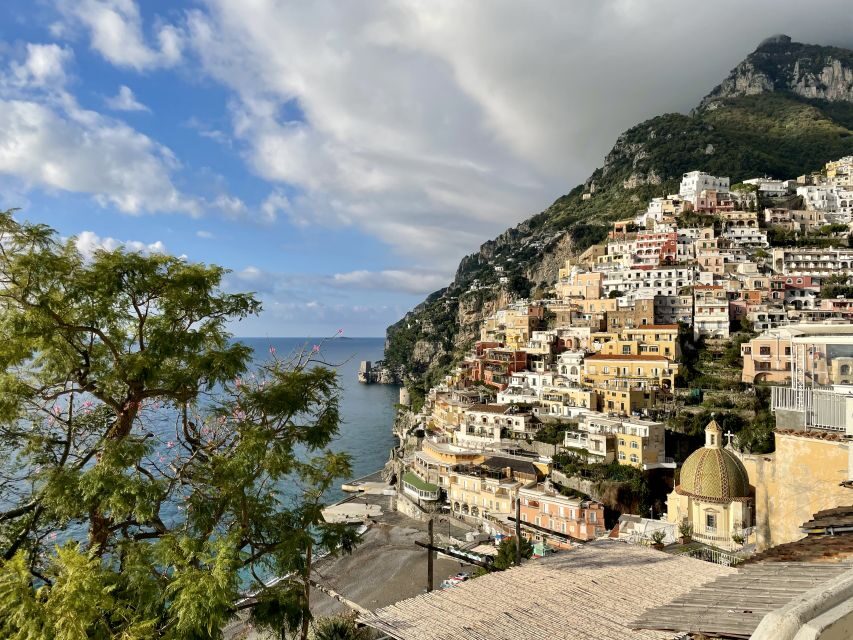
This tour is designed for people who want the best of central Positano without spending half a day on buses or trying to figure out the best stair route alone. You meet your guide in front of Art Hotel / Hotel Pasitea and then head out from the upper side of town, where you can slip away from the densest crowds and get into the smaller lanes and paths.
The headline schedule is simple: about two hours of walking, rain or shine. That means you should plan like the weather can change quickly on the Amalfi Coast—bring something for wet stone and keep your camera protected. The group is capped at 10 participants, and that matters because the route is narrow. In a smaller group, you don’t feel like you’re constantly stepping around strangers while trying to take in views.
One practical note: this isn’t a sit-and-stroll tour. The route includes stairs, including a notable downhill walk to the beach and later an uphill return. If you’re sensitive to stairs or have mobility limits, this may be hard work even if the tour feels short on paper.
You can also read our reviews of more walking tours in Positano



Leaving the Crowds Behind: Old Town Lanes, Fort Views, and Stair Plans
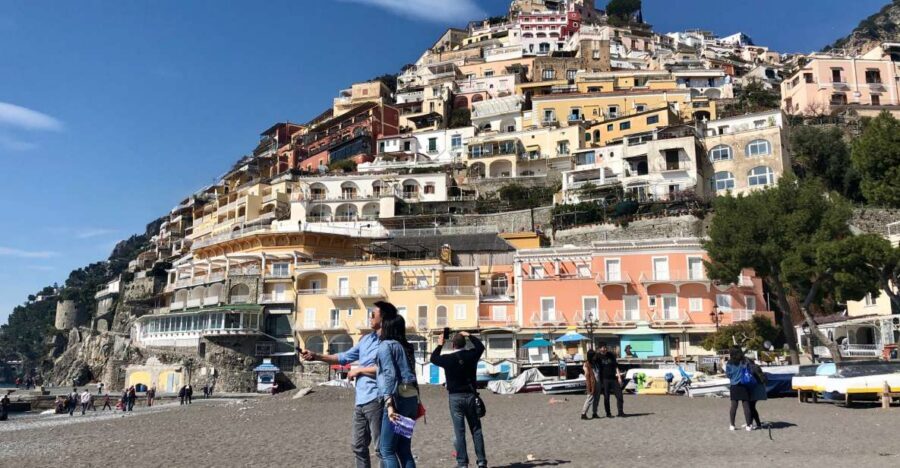
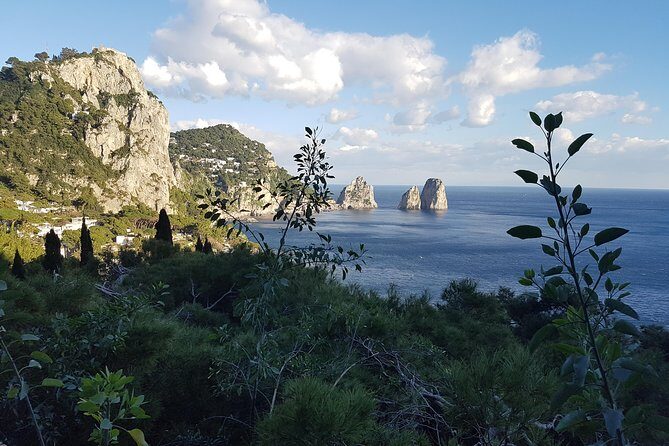
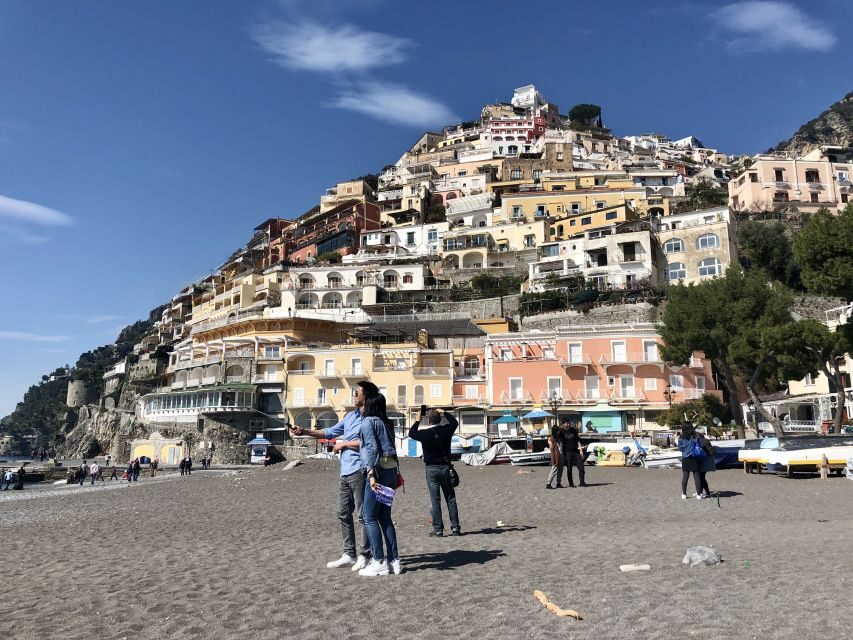
Old Town Positano is the kind of place where the street layout looks chaotic until you walk it once with a guide. On this tour, you follow a local route through hidden paths and panoramic staircases, which is the difference between seeing postcard angles and actually understanding how the town is stacked up the hillside.
You’ll also pass by a 13th-century fort from the medieval age. Even if you’re not hunting for architectural details, this stop helps you read the town’s logic: why certain overlooks exist where they do, and why fortifications mattered in a place built on steep slopes with limited access.
What I like about this approach is that it keeps the walk moving but still gives you short pockets of breathing room. The guide’s job is to get you from viewpoint to viewpoint while explaining what you’re looking at—so you don’t just take photos, you learn what each angle relates to in the town’s story.
For the best experience, I’d go in with a simple strategy: pack for walking, keep your pace steady, and treat the stairs as the main feature, not an inconvenience. Positano is famous for exactly this kind of vertical city life.
Sun, Sea, and Local Habits: Central Views and Fornillo Beach
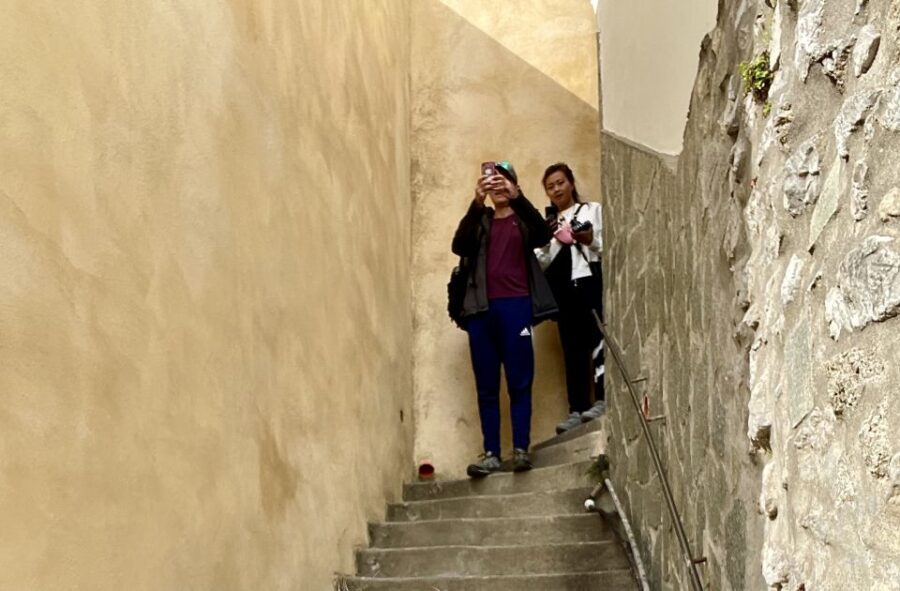
One of the smartest parts of the itinerary is how it uses beaches as both scenic breaks and cultural cues. You’ll catch spectacular views from the central beach area, then work your way toward Fornillo Beach, a spot locals go to for sunbathing.
Why this matters: in Positano, not all beach time feels the same. Some areas draw more through-traffic, while others feel like you’ve reached a place people actually return to. The Fornillo stop is valuable because it changes the vibe from sightseeing mode to simple coastal time—just enough to reset your legs and focus on the sea.
From there, the tour transitions back into walking. You’ll head toward the main beach area too, so even if you love the stillness of Fornillo, be ready for the next step: more stairs, more hillside movement, and a shift from beach calm to streets and shopping.
If you want a practical takeaway: bring sunscreen and plan to reapply if the sun is out, because you’ll be in exposed areas between viewpoints and beach sections.
Downtown Positano Shopping Streets and Spiaggia Maggiore
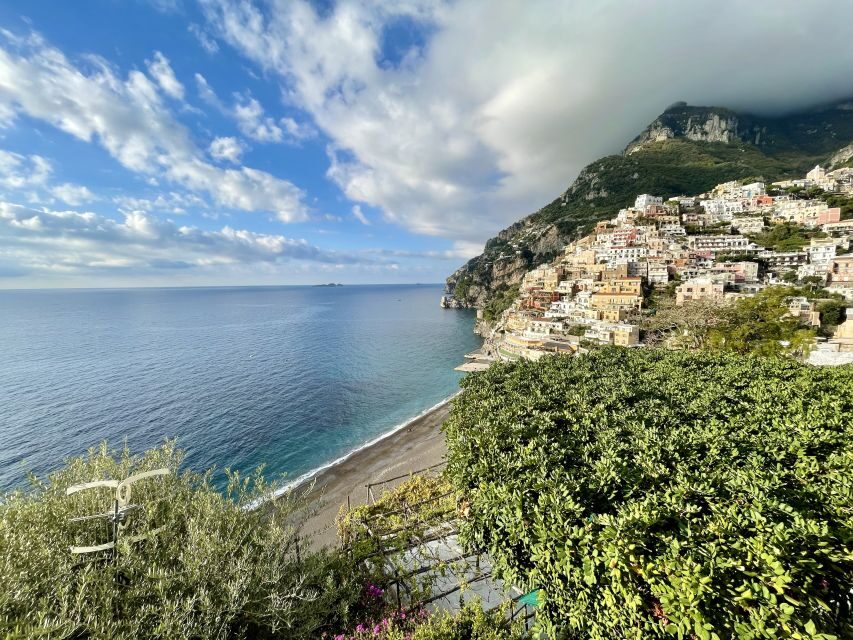
After time in the older lanes, you’ll move down into Downtown Positano, where you can browse fine shops and restaurants along the way. This isn’t a shopping tour that forces you to buy things, but it’s timed so you’ll still have context for what you’re seeing.
One of my favorite things about this portion is the mix of crafts and materials you pass on the uphill sections. You’ll walk up toward streets with ceramic shops, sandal makers, and shoemakers, plus galleries showing work by local artists. The point isn’t that you must stop at every storefront—it’s that the town’s economy is visible as you walk, not hidden behind a single museum-style attraction.
Then you reach the main beach area, Spiaggia Maggiore, which acts like an anchor for the entire walk. It’s the bigger, more central beach setting, and standing near it after climbing and descending helps you understand how Positano’s beauty is created by movement. You’re never stuck staring in one direction for too long. The town keeps changing your perspective.
Practical tip: if you’re taking photos, this is a great moment for wide shots and sea-level pictures. But don’t wait too long—once you start climbing back up, angles shift fast.
Santa Maria Assunta and the 10th-Century Benedictine Thread
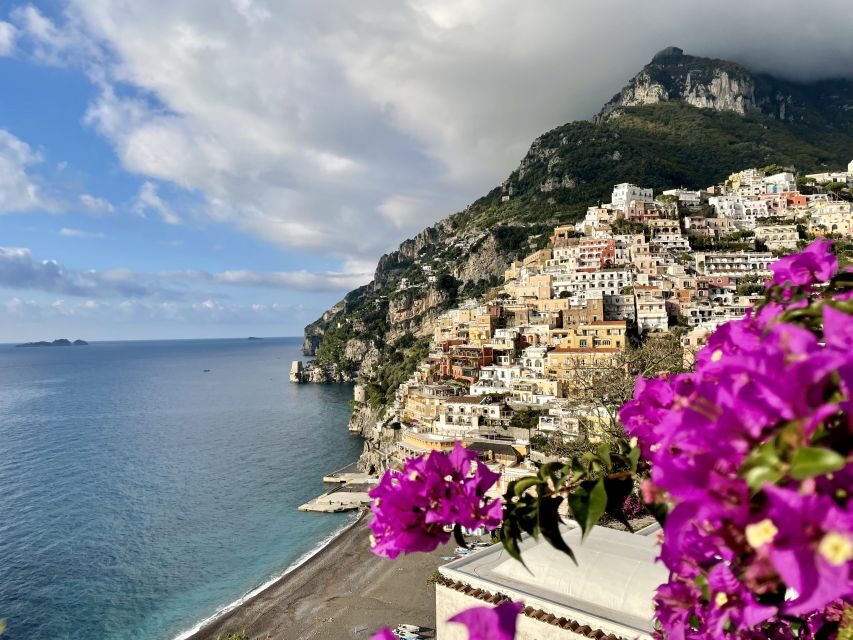
Positano’s religious and cultural landmarks are built right into the walking route, which is exactly what makes this tour work. As you approach the Church of Santa Maria Assunta, you’re also being pointed toward the site’s deeper roots: it was originally the abbey of Positano’s 10th-century Benedictine monastery.
This isn’t just trivia. Knowing that the church sits on an older monastic tradition changes how you look at the area. It makes the church feel less like a single stop on a checklist and more like the next layer in how Positano survived and organized itself across centuries.
Even if you only spend a short moment here, the guide’s explanation helps you spot the connection between what you see at street level and what the site once represented. It’s one of those pauses that turns the walk from scenery into understanding.
You can also read our reviews of more guided tours in Positano





The Underground Roman Villa: Frescoes You Can Actually See
The tour’s biggest wow moment is underground: the Roman villa visit, which is newly discovered and open to the public. You don’t just walk past it. You enter and experience it with a dedicated archaeological guide.
This is where the tour earns its name. An underground villa changes the whole feel of Positano because it contrasts the modern cliffside town with a hidden layer from Roman times. And since the villa is known for amazing frescoes, you’re going somewhere you can’t really fake with photos from the street.
What to expect: it’s an indoor, structured visit after you’ve been outside climbing and descending. That rhythm is a good thing. You get sun and sea views, then you get a cool, contained setting where the art and archaeology take center stage.
Value-wise, it’s also where the tour can beat DIY planning. If you’re exploring on your own, you might not find the best route to get there efficiently, and you definitely wouldn’t have an archaeologist guiding what you’re looking at.
If you like details, take your time. Frescoes reward slow looking, and the point of having an expert is that you can understand what you’re seeing instead of treating everything as decoration.
Price and Logistics: Is $112.15 Good Value?
At $112.15 per person for a 2-hour small-group walk, you’re not paying for hours of sightseeing by foot. You’re paying for three key things working together:
- A local licensed guide who can route you through tight lanes, stairs, viewpoints, and beach sections without you getting lost.
- An archaeologist/archaeological guide for the Roman villa visit, plus an entrance ticket to that underground site.
- A small group cap (10 people), which matters on narrow streets and stair routes where crowding can ruin the experience.
If you tried to do this yourself, you’d still likely spend time working out the best order for the sights, and you’d still face the challenge of understanding what you’re seeing at each stop. The villa portion alone is often the hardest to plan well without help.
So does the price feel fair? In my view, yes—especially if you care about the underground frescoes and want more than a basic walking overview. If you’re mainly after beaches and quick views, you may find less expensive options. But if you want Positano plus a real archaeology payoff, this price looks more like a shortcut to quality.
Who Should Book This Tour (and Who Should Skip It)
This tour fits best if you:
- Like walking and don’t mind stairs being part of the experience.
- Want a mix of Old Town + Downtown plus a serious stop underground.
- Appreciate a guide who can explain how Positano’s layers connect, from medieval elements to a Roman villa with frescoes.
It may not fit if you:
- Need a wheelchair-friendly route. It’s not suitable for wheelchair users.
- Rely on strollers. Baby strollers are not allowed.
- Have trouble with steep downhill sections. The route down to the beach includes walking down stairs, and that’s not optional on this itinerary.
For sound and group comfort, I also like that this tour can be very small in practice. One guest even noted that a male guide spoke loud enough for someone wearing hearing aides, and that the small group made it easier to catch every word. If you’re the type who hates missing details, the small group structure is a genuine plus.
Should You Book This Positano Old Town Walking Tour?
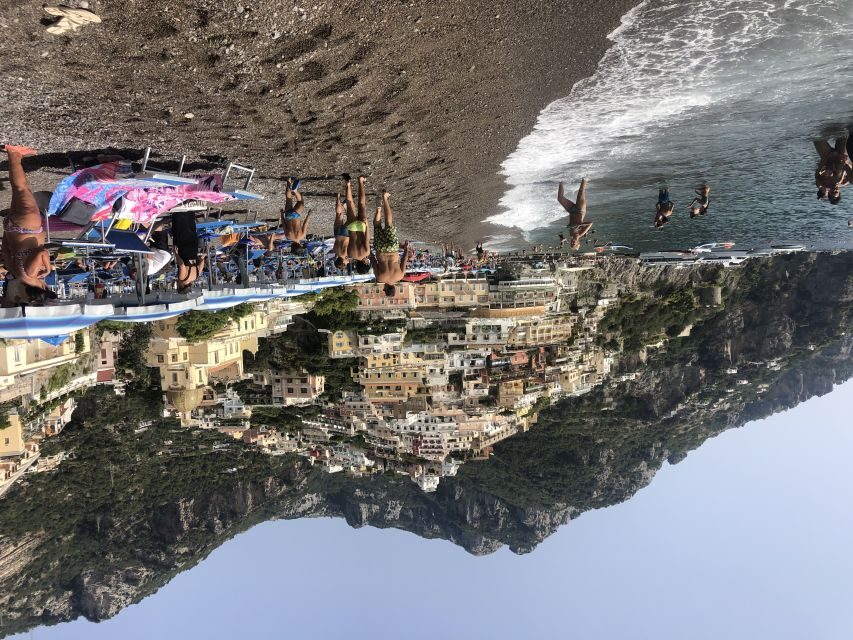
Book it if you want the smart version of Positano: a short walking tour that hits the main beats (views, beaches, church area, craft streets) while giving you a real reason to care at the Roman villa. The archaeologist-led visit is the standout payoff, and the small-group size helps keep the walk enjoyable instead of chaotic.
Skip it if your priority is a relaxed beach day with minimal walking. This isn’t that. It’s a compact walking experience with stairs, and the schedule is built around movement and viewpoint changes.
My practical recommendation: if you’re staying in or near the Hotel Pasitea area and you’re comfortable with uphill/downhill walking, this is a strong way to spend two hours. It gives you context, saves time, and adds an underground fresco stop that most Positano sightseeing doesn’t include.
FAQ
How long is the Positano Old Town Walking Tour?
The tour lasts 2 hours.
Where do I meet the guide, and where does the tour end?
Meet your guide in front of the main entrance of Art Hotel / Hotel Pasitea. The tour ends in the Piazza dei Mulini area.
What is included in the tour price?
You get a local licensed guide, the Roman villa entrance ticket, and an archaeological guide.
Does the tour run in rain or shine?
Yes. The tour takes place rain or shine.
What languages are available?
The live guide is available in English, Italian, German, and Spanish.
Is the tour suitable for wheelchair users and are baby strollers allowed?
No. The tour is not suitable for wheelchair users, and baby strollers are not allowed.
Can I cancel for a full refund and do I need to pay right away?
You can cancel up to 24 hours in advance for a full refund. You can also reserve now and pay later to keep your plans flexible.
If you’d like, tell me your walking comfort level and whether you’re visiting in peak season, and I’ll suggest the best time of day to aim for.