REVIEW · SORRENTO
Private Pompeii Tour with Guide & Transfer included from Sorrento
Book on Viator →Operated by IAMME IA! - Gray Line Amalfi Coast · Bookable on Viator
Pompeii feels huge. This private tour keeps it organized and logical from your Sorrento hotel. You get round-trip transport, priority access at the entrance, and a local guide so you don’t waste time wandering with no clue where you are.
What I like most is the combination of smooth logistics and smart sightseeing. First, the private driver + hotel pickup/drop-off means you’re not timing buses or hunting meeting points. Second, the walking plan is built around the Pompeii highlights you actually want to see, with an official guide handling the story so you can focus on the ruins.
The one consideration is pickup logistics: some hotels in the Sorrento area aren’t reachable due traffic limits and pedestrian-only zones. You’ll need to confirm the exact pickup location at least 24 hours before departure.
In This Review
- Key things that make this Pompeii day work
- Hotel Pickup in Sorrento: Getting to Pompeii Without the Stress
- Priority Access at Pompeii: What Fast-Track Actually Buys You
- An Official Guide You Can Follow: How the Tour Keeps You From Getting Lost
- Walking Through Roman Pompeii: From the City After the Eruption
- Stop 1: Archaeological Park of Pompeii (the 2-hour guided core)
- Stop 2: Foro de Pompeya (the public center)
- Stop 3: Tempio di Giove Capitolino (Jupiter with Vesuvius in view)
- Stop 4: Macellum (a market with religious angles)
- Stop 5: Via dell’Abbondanza (the main street of Pompeii)
- Stop 6: Stabian Baths (Terme Stabiane)
- Outside-the-Walls Context: Via delle Ville and the Villa of the Mysteries Area
- From a Luxury House to the Theater: Closing in on Daily Life and Entertainment
- Stop 7: Casa del Fauno (a top-tier private home)
- Stop 8: Teatro Grande (Greco-Roman theater on a slope)
- Stop 9: Basilica (business and justice under one roof)
- How the 4–5 Hours Fits: Timing, Tickets, and a Realistic Pace
- What to Bring (and When to Go): Pompeii Can Get Unforgiving
- Price and Value: Is $504.67 per Person Worth It?
- Who This Private Pompeii Tour Is Best For
- Should You Book This Private Pompeii Tour?
- FAQ
- Where does the pickup happen for the Pompeii tour?
- How long is the tour from Sorrento?
- Is fast-track entry included?
- Is this tour private?
- Does the tour include an official guide and live commentary?
- What language is the tour offered in?
- Are admission tickets included?
- Is food or drinks included?
- Do I need to print tickets?
- Can I cancel for a full refund?
Key things that make this Pompeii day work
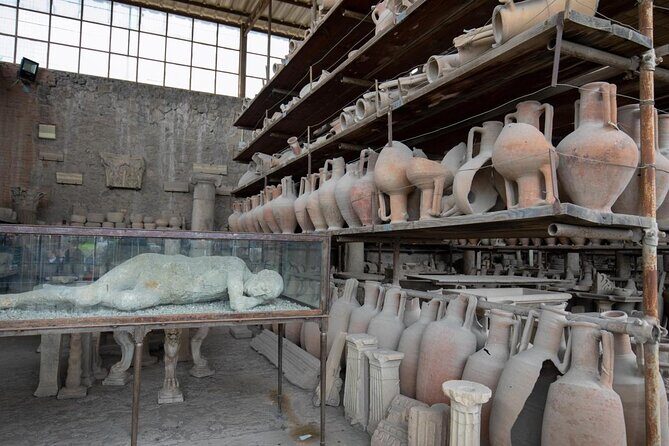
- Hotel-to-Pompeii transfer included so your time stays on-site, not in transit
- Priority access helps you bypass the line at the ticket window
- Official English-speaking guide means you’ll understand what you’re looking at (and where to go next)
- A private group experience means you can ask questions and keep a pace that fits you
- Tickets are included for the Pompeii admission and the listed site visits
- Heat-aware timing is possible—and it matters in summer
Hotel Pickup in Sorrento: Getting to Pompeii Without the Stress
This tour starts where most Pompeii days start to fall apart: at your hotel. You’ll have a pickup in the Sorrento area, then travel by private vehicle to Pompeii with an English-speaking driver. It’s the kind of arrangement that saves mental energy. You show up, you get on the ride, and you’re done.
One practical thing to know: some Sorrento hotels may not be reachable because of traffic restrictions and pedestrian areas. The tour provider notes you must confirm the exact pickup spot at least 24 hours in advance. That’s not just admin detail. It can be the difference between a smooth start and a stressful 10-minute scramble.
Also, because you’re dealing with a private transfer, the day stays tight. The overall time frame is about 4 to 5 hours, so you’re not losing half the day to commuting.
You can also read our reviews of more guided tours in Sorrento

Priority Access at Pompeii: What Fast-Track Actually Buys You
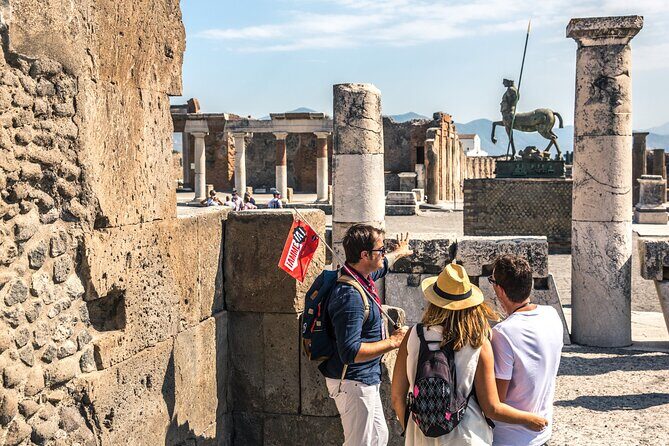
Pompeii’s entrance can turn into a bottleneck. That’s where the priority access comes in. It’s designed to help you skip the line at the ticket window, so you get into the Archaeological Park faster.
Why that matters: Pompeii is large and dense. Every minute you spend queuing is a minute you lose under the sun, or you lose the chance to see a section with better timing and fewer distractions. With priority entry, you can start your walk closer to the part of the morning where the ruins feel more manageable.
This also sets the tone. You arrive, you enter, and then your guide takes over. The day becomes sightseeing instead of logistics.
An Official Guide You Can Follow: How the Tour Keeps You From Getting Lost
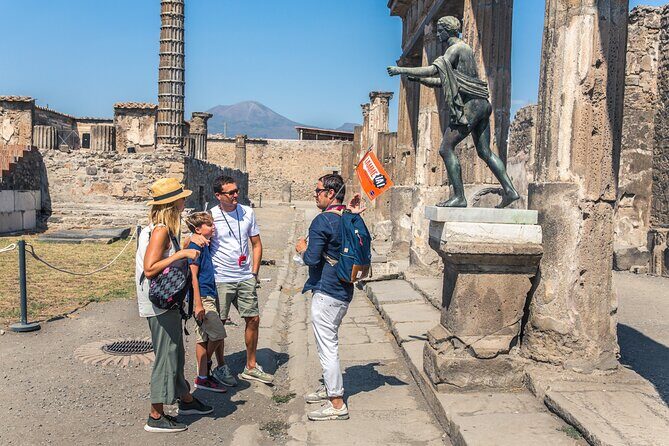
Pompeii isn’t laid out like a museum exhibit. It’s an open-air city where streets, buildings, and spaces blend together. A guide changes everything. You don’t just look. You understand.
The tour is led by an expert local guide with live commentary. In the small set of excellent experiences from Vincenzo and others, the consistent theme is how friendly and knowledgeable the guides are—and how well they orient you. Vincenzo is specifically called out as both approachable and smart, and that matters because Pompeii questions don’t always come from facts. They come from what you notice in the ruins.
A private format helps too. You’re not stuck following a fast-moving crowd while trying to hear over foot traffic. If you want to slow down at a forum floor detail or ask about how spaces worked before the eruption, you can.
Walking Through Roman Pompeii: From the City After the Eruption
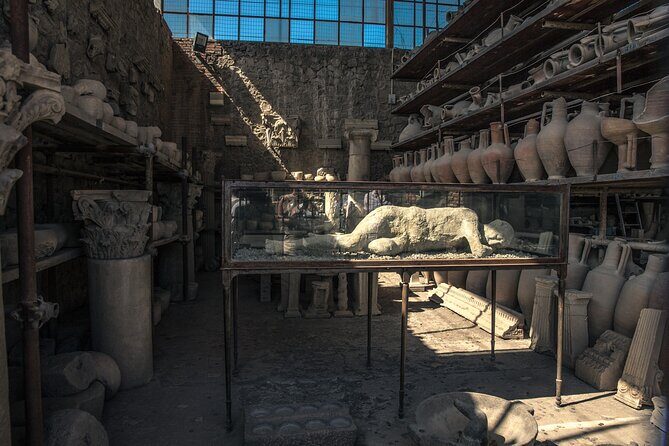
Your Pompeii visit centers on a guided walking tour of about 2 hours inside the Archaeological Park, plus shorter stop-ins around key areas. Admission tickets are included for the Pompeii site itself and for the listed stops. That’s a big value point because you’re paying for the full experience, not piecemeal add-ons.
Here’s what the route is really doing for you: it moves from the public heart of Pompeii (administration, worship, markets) toward private and entertainment spaces (houses and theater). That storyline helps Pompeii make sense.
Stop 1: Archaeological Park of Pompeii (the 2-hour guided core)
After Mount Vesuvius erupted in 79 AD, the city was covered by lapilli and lava, preserving structures that would otherwise have vanished. The guide’s job is to turn those preserved walls into a clear picture of daily life and Roman-era priorities.
This is the foundation of your whole visit. You’ll get orientation on how Pompeii is organized and what each zone signaled in Roman society. If you only go to Pompeii once, this is where you want the most guided time.
You can also read our reviews of more private tours in Sorrento





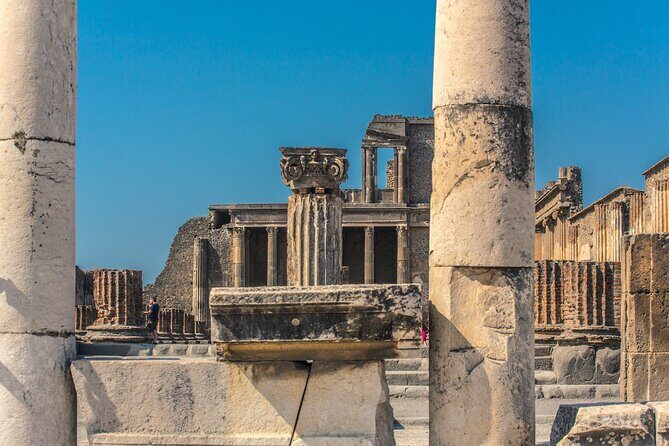
Stop 2: Foro de Pompeya (the public center)
The Forum—Foro de Pompeya—is the core of daily life in the city. It’s where the public buildings for administration and justice gathered, where business and trade activities flowed, and where worship happened.
In practical terms, this stop is your “read the city” moment. Once you understand the Forum’s role, the buildings you see later won’t feel random.
Stop 3: Tempio di Giove Capitolino (Jupiter with Vesuvius in view)
On the north side of the Forum sits the Temple of Jupiter (Tempio di Giove Capitolino). The setting is dramatic: you get Mount Vesuvius rising behind, which makes it easier to picture how the landscape dominated the city.
When the colony was founded, the temple was renovated and became a real Capitolium. It included cult statues associated with Jupiter, Juno, and Minerva, placed on a high base for visibility across the Forum.
If you like “why is this here” explanations, ask the guide about how Roman religious space tied into public life.
Stop 4: Macellum (a market with religious angles)
The Macellum was a market, but not in the modern, purely commercial sense. It includes worship elements and civic-religious symbolism. You’ll see how niches held statues and how the space connected to imperial cult ideas.
There’s also a sense of structure: the layout isn’t just random ruins. It’s built to support the flow of people buying, gathering, and moving.
Stop 5: Via dell’Abbondanza (the main street of Pompeii)
Via dell’Abbondanza was the main street (a decumanus maximus), running across the city from the Forum area toward Porta Sarno. It’s where shops, workshops (officinae), cafés, snack-bars, and places to eat would have lined up.
Even in ruins, this street gives you a strong feel for the city’s rhythm. It’s a great point to look at entrances and shop-like spaces and ask what a typical day would have looked like.
Stop 6: Stabian Baths (Terme Stabiane)
Next is the Stabian Baths, located behind the Temple of Jupiter. They date to shortly after the colony of veterans was founded. The layout included separate entrances for women and men.
The ruins here are especially useful if you want to understand how Romans spent leisure time. You’ll be shown areas such as the dressing room (apodyterium), then spaces tied to different temperatures like tepid and cold and hot baths. These baths also suffered damage in the earthquake of 62 AD, so you’re seeing a city affected by more than one disaster.
This stop gives you a break from the heat of walking streets and a change of pace in what you’re looking at—architecture that was part public service, part social life.
Outside-the-Walls Context: Via delle Ville and the Villa of the Mysteries Area
Between major stops, the route includes Via delle Ville—a scenic road outside Pompeii’s city walls. It leads away from the Porto Ercolano gate and passes through a necropolis lined with impressive tombs.
This is a helpful contrast to the dense street life inside the city. If you want the “why are there tombs here and what does that mean” context, this part helps.
You’ll also see the connection to the Villa of the Mysteries, known for its frescoes depicting Dionysian rites. The tour data doesn’t specify a separate time block for entering that villa itself, so think of this segment as building context and atmosphere around that famous estate rather than promising a long museum-style interior visit.
From a Luxury House to the Theater: Closing in on Daily Life and Entertainment
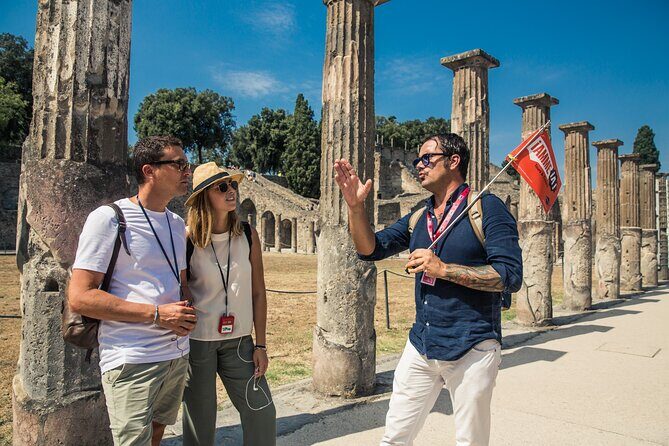
After the civic and leisure parts of Pompeii, the route shifts toward home life and public entertainment. These stops are shorter—around 10 minutes each for the listed highlights—but they’re well chosen so you end your visit with big visual payoffs.
Stop 7: Casa del Fauno (a top-tier private home)
The House of the Faun (Casa del Fauno) is one of the largest and most impressive private residences in Pompeii, built during the 2nd century BC. It was a luxury home for the Roman Republic era, and it’s known for significant art pieces.
This stop is where Pompeii becomes personal. The scale and layout help you grasp how wealth shaped space—how private life looked compared to the public forum and market zones you saw earlier.
Stop 8: Teatro Grande (Greco-Roman theater on a slope)
The Large Theater (Teatro Grande) was built by Romans on a hillside slope. The natural depression helped create a grand auditorium divided into five sectors.
Theater wasn’t casual entertainment. You’d have seen Greco-Roman tragedy performances here on stage.
When I’m walking through ruins, I love theater stops because the spaces make sense even if you don’t know Roman play schedules. The shape is the story.
Stop 9: Basilica (business and justice under one roof)
The Basilica is described as the most sumptuous building of the Forum, with an area around 1,500 square meters. It was used for business and administration of justice.
If you’ve been paying attention to how the Forum functioned, this stop ties it together. It’s the “how they organized civic life” building.
How the 4–5 Hours Fits: Timing, Tickets, and a Realistic Pace
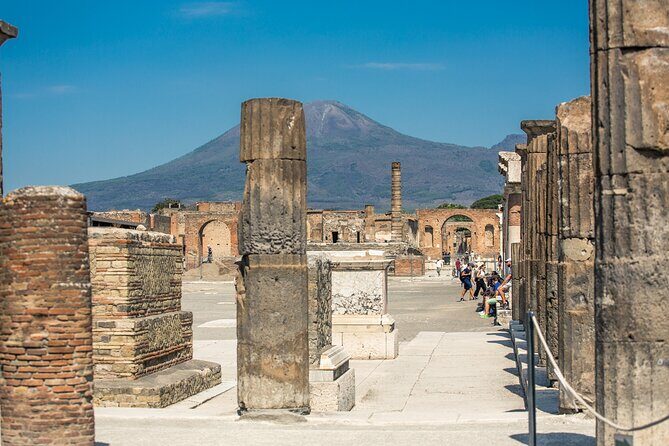
The stated duration is 4 to 5 hours, and the tour structure supports that. There’s a longer guided block at the start (about 2 hours for Pompeii), then shorter targeted stops (often 10 minutes each) for specific highlight structures like the Forum buildings, market spaces, baths, and major houses and public entertainment sites.
That balance is worth considering. If you love deep, stop-and-stare archaeology, you might want more time in fewer areas. But if you want a strong, well-guided overview without guessing what matters most, this plan makes sense.
A private tour format also means the guide can adjust your pace within reason. Ask questions as you go. The best moments in Pompeii often happen when you’re paying attention to what’s next, not when you’re trying to figure it out mid-walk.
What to Bring (and When to Go): Pompeii Can Get Unforgiving
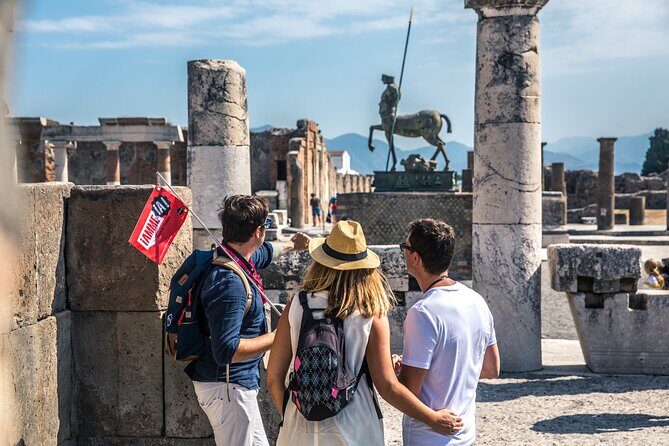
Pompeii in summer can be hot. The tour guidance explicitly recommends sunscreen and comfortable shoes, which is exactly what I’d tell a friend.
Wear shoes you can walk on for stretches of uneven stone and uneven ground. If your feet hate you halfway through, you’ll rush the experience. If your feet feel okay, you’ll notice more.
Timing helps too. One of the standout review points notes that in July, the heat is intense—but early morning timing was arranged. If you’re booking for warm months, treat early start times as part of the plan, not a nice-to-have.
Price and Value: Is $504.67 per Person Worth It?
At $504.67 per person, this isn’t a budget Pompeii add-on. It’s priced for a private format with real extras: round-trip private transportation from your Sorrento hotel area, an English-speaking driver, and an official local guide plus priority access and admission tickets included for the Pompeii parts of the route.
So what are you paying for, in plain terms?
- You’re paying to lose fewer hours to logistics (pickup, entry, navigation).
- You’re paying to understand what you’re seeing (guided live commentary).
- You’re paying for time management (priority entry and a tight 4–5 hour plan).
If you tried to do Pompeii on your own, you’d need to handle transport, ticket timing, and wayfinding through a large site. The value isn’t just the ruins. It’s the smoother day around the ruins.
Also, the guide quality shows up clearly in the strongest feedback—Vincenzo is singled out for being friendly and knowledgeable, and the experience includes getting into Pompeii quickly and being guided through the site effectively.
Who This Private Pompeii Tour Is Best For
This tour makes the most sense if you:
- Want hotel pickup and drop-off in Sorrento without stress
- Prefer a private, question-friendly experience over group pacing
- Like having a guide to explain Forum life, temples, markets, baths, houses, and theater instead of guessing
- Are traveling with enough people that private transport costs don’t feel wasted
It also suits couples, families, and small groups that want a clear itinerary and don’t want to negotiate the site alone.
Should You Book This Private Pompeii Tour?
I’d book it if you want Pompeii with structure. Priority entry plus hotel transfer is the kind of combination that turns a potentially exhausting day into a focused one. The official guide route through the Forum, key temples, baths, and major highlights gives you a clear story arc, not just a list of ruins.
Skip this one only if you want to wander unplanned for most of the day or you’re chasing a very slow, ultra-detailed archaeology pace. With a 4–5 hour private plan, you’ll see a lot, but you won’t get endless linger time in every corner.
If you’re visiting from Sorrento and you care about time, comfort, and clarity, this is a strong value way to do Pompeii.
FAQ
Where does the pickup happen for the Pompeii tour?
Pickup is offered directly from your hotel in the Sorrento area. Some hotels may not be reachable due to traffic restrictions and pedestrian areas, so you need to confirm the exact pickup location with the local provider at least 24 hours prior.
How long is the tour from Sorrento?
The tour duration is about 4 to 5 hours.
Is fast-track entry included?
Yes. The tour includes priority access to the Pompeii Archaeological Site to bypass the line at the ticket window.
Is this tour private?
Yes. It’s a private tour/activity, so only your group participates.
Does the tour include an official guide and live commentary?
Yes. You’ll have an expert local guide with live commentary.
What language is the tour offered in?
It’s offered in English.
Are admission tickets included?
Yes. Admission tickets are included for Pompeii Archaeological Site, and the listed stops include admission ticket coverage as well.
Is food or drinks included?
No. Food and beverages are not included.
Do I need to print tickets?
The tour offers a mobile ticket.
Can I cancel for a full refund?
Yes. You can cancel up to 24 hours in advance for a full refund. If you cancel less than 24 hours before the start time, the amount paid is not refunded.




More Guided Tours in Sorrento



More Tours in Sorrento






More Tour Reviews in Sorrento
- Sorrento Farm and Food Experience including Olive Oil, Limoncello, Wine tasting
★ 5.0 · 2,524 reviews