REVIEW · POSITANO
Private Skip-the-Line Pompeii & Mt. Vesuvius Tour from Positano
Book on Viator →Operated by IAMME IA! - Gray Line Amalfi Coast · Bookable on Viator
Pompeii plus Vesuvius in one long day. I love the skip-the-line access that keeps you moving, and I love that you get up to the crater edge for Gulf-of-Naples views. The trade-off is simple: it’s a full, hot day with real walking and an uphill climb on Vesuvius.
From the start, this feels built for the practical stuff. Door-to-door pickup in Positano (when your hotel is reachable by vehicle) means you waste less time than if you’re figuring out trains or shuttles, and you arrive ready for Pompeii’s “how did they live like this?” details. You’ll also get a licensed guide for Pompeii, and the difference shows fast when someone points out what matters—like how the Forum, Baths, and Casa del Fauno connect into one city story.
In This Review
- Key moments that make this tour click
- Getting out of Positano fast: private transport that saves energy
- Priority Pompeii entry: how skip-the-line helps you see more
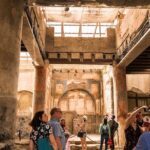
- Pompeii in highlights: Forum to Baths to elite houses
- Foro de Pompeya: the city’s center of commerce and power
- Tempio di Giove Capitolino: statues that anchored public space
- Macellum and Via dell’Abbondanza: market rhythms and the main street
- Stabian Baths (Terme Stabiane): how people washed, relaxed, and socialized
- The “wow” side of Pompeii: Casa del Fauno, the brothel, and theaters
- Lupanar of Pompeii: a stark look at private vice
- Casa del Fauno: Alexander Mosaic and the city’s elite
- Teatro Grande and Basilica: spectacle and administration
- Vesuvius National Park: the crater edge at about 1,280 m
- The uphill part: what to expect on the Vesuvius climb
- Pace, comfort, and what to pack for this 8-hour push
- Guides and driving: why the human touch matters
- Price and value: what $750.91 buys on this route
- Should you book this private Pompeii and Vesuvius day trip?
- FAQ
- How long is the Pompeii and Vesuvius tour from Positano?
- Does this tour include pickup from my hotel in Positano?
- What’s included in the tour price?
- Is lunch included?
- Are Pompeii and Vesuvius admission tickets included?
- What happens if Mount Vesuvius is closed due to bad weather?
Key moments that make this tour click
- Private door-to-door pickup from Positano to reduce hassle on the Amalfi Coast
- Priority access for Pompeii and Vesuvius plus admission included for both sites
- A tight Pompeii highlight route with multiple stops like the Forum and Stabian Baths
- Big-scene Pompeii stops in short bursts (Alexander Mosaic at Casa del Fauno, Teatro Grande, Basilica)
- Crater-edge timing on Vesuvius with an uneven path and panoramic payoff
- Vesuvius weather backup: entrance-fee refund if the volcano is closed
Getting out of Positano fast: private transport that saves energy
Positano traffic and narrow streets can turn a simple day trip into a timing puzzle. This tour’s main advantage is the private round-trip vehicle with an English-speaking driver, plus pickup options that work from your hotel when it’s accessible.
You start either from your accommodation or from a nearby meeting point (Parking Garage Mandara on Viale Pasitea). Either way, the idea is the same: you start early, you get to Pompeii with fewer steps, and you don’t burn vacation energy on logistics.
Expect a day that’s mostly scheduled. The itinerary can shift a bit due to traffic and weather, but it’s designed to still hit Pompeii and then the volcano on the same outing.
You can also read our reviews of more private tours in Positano


Priority Pompeii entry: how skip-the-line helps you see more
Pompeii is one of those places where the waiting line can steal hours from your actual sightseeing time. Here, you get priority access to the Pompeii Archaeological Site, and you also have a mobile ticket, which cuts down on back-and-forth at the gates.
In practice, that means you arrive and start seeing instead of losing momentum. The tour then guides you through a sequence of major areas, so you get orientation early and don’t spend your time wandering with no sense of what you’re looking at.
And since Pompeii is huge, “best of” routing matters. With only about two hours in the archaeological park, the tour focuses on the highest-impact stops and a few “wow” interiors and structures rather than trying to cover the entire city.
Pompeii in highlights: Forum to Baths to elite houses
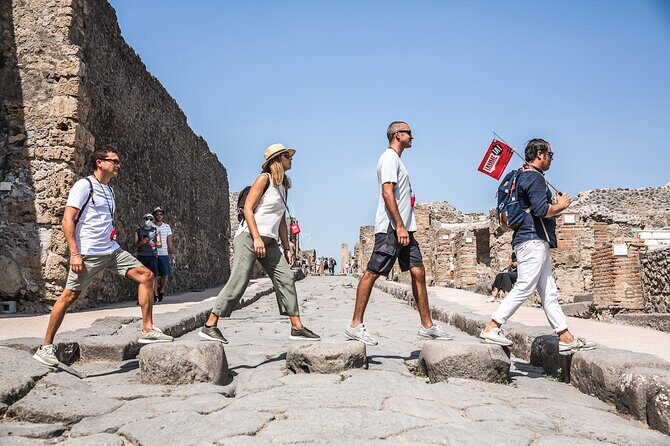
Pompeii wasn’t just ruins—it was a living Roman city. The tour’s pace reflects that you need a plan to make sense of the space, especially if this is your first time there.
Foro de Pompeya: the city’s center of commerce and power
You’ll start with the Forum area, Pompeii’s core for trade and politics. This short stop matters because it gives you the “center of gravity” of the city. Once you understand where the power and market life happened, the rest of the route makes more sense.
Even in a 10-minute window, the guide helps connect the dots between what you see on the ground and what those functions meant for everyday people—bargaining, public life, and civic display.
Tempio di Giove Capitolino: statues that anchored public space
Next comes the Temple of Jupiter (Tempio di Giove Capitolino). The key detail here is visibility: the statues of Jupiter, Juno, and Minerva were positioned so people passing through the Forum could see them. That’s a classic Roman move—make the gods part of daily movement.
This stop is brief, but it’s a good example of why you don’t want to just “walk randomly.” A guide’s job is to show you why something was placed where it was.
You can also read our reviews of more tours and experiences in Positano
Macellum and Via dell’Abbondanza: market rhythms and the main street
You’ll also hit the Macellum (a provision market on the Forum) and the Via dell’Abbondanza, the main east-west street. This is where Pompeii shifts from big monuments to practical life: trade, food, shops, and foot traffic.
The Via dell’Abbondanza stop is designed to help you imagine the noise and crowding. Today it’s quiet stone, but it’s still the same street logic—shops along the corridor, movement toward gates, and public life happening in the open.
Stabian Baths (Terme Stabiane): how people washed, relaxed, and socialized
The Stabian Baths are behind the Temple of Jupiter and date to the early years after Sulla’s colony of veteran soldiers. What makes this stop memorable is the structure of bathing life: men and women had separate entrances, and the men’s area included spaces like the apodyterium (dressing room), tepidarium, frigidarium, and calidarium.
You’re not touring a museum here—you’re reading a city plan with your eyes. One of the best benefits of a guided route is that you don’t just see rooms; you understand what temperatures and routines were supposed to do.
Even if time is short, this is one stop where Pompeii’s “real life” energy comes through. The baths were damaged by the earthquake of 62 CE, which is another reminder that catastrophe wasn’t a one-time event here—Pompeii had already been through serious shock before 79 A.D.
The “wow” side of Pompeii: Casa del Fauno, the brothel, and theaters
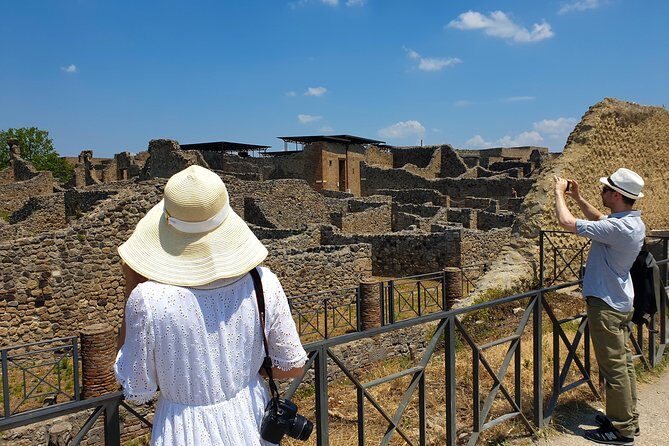
After the civic and daily-life stops, the tour shifts toward the dramatic sides of Pompeii—wealth, scandal, and public entertainment.
Lupanar of Pompeii: a stark look at private vice
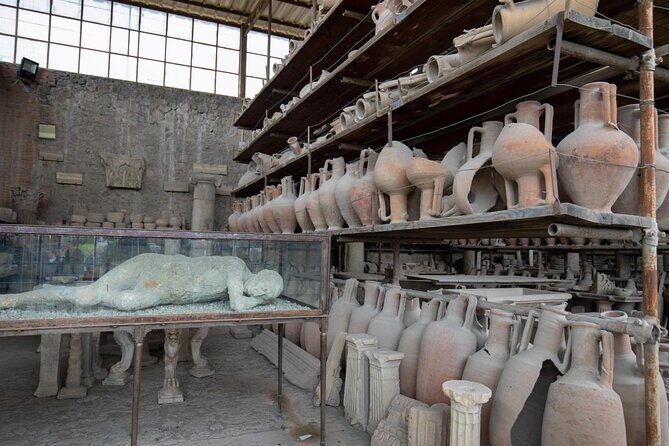
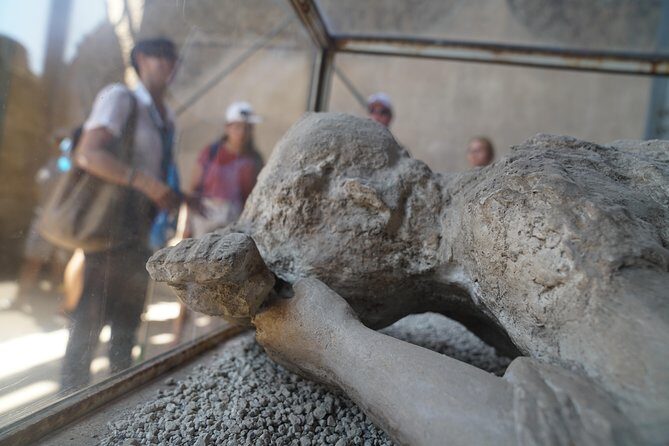
The Lupanar is famous as Pompeii’s well-known brothel, and it’s especially associated with the erotic paintings on its walls. Even if you’re not into the subject matter, it hits you how complete the picture is. Pompeii didn’t preserve only temples and mansions; it preserved the ordinary (and sometimes uncomfortable) realities too.
This is also one stop that benefits from a guide setting tone. It helps you process what you’re seeing without turning the moment into something silly or shallow.
Casa del Fauno: Alexander Mosaic and the city’s elite
Then comes Casa del Fauno, one of Pompeii’s largest private residences, taking up an entire city block. This is the house named for the bronze statue of a dancing faun found in the main atrium.
The real star is the Alexander Mosaic, showing Alexander the Great’s battle against Darius III of Persia. The stop is short, but the mosaic is such a famous piece that it often becomes your “anchor memory” for Pompeii—proof that this society had tastes, connections, and resources far beyond what you might assume.
The tour also ties the architecture together: the house had two peristyle gardens and intricate floor mosaics, and it belonged to Quintus Poppaeus Sabinus of the Poppei family, related to Empress Poppea Sabina, Nero’s second wife.
Teatro Grande and Basilica: spectacle and administration
Next you’ll see the Teatro Grande, built into a hillside and shaped into an auditorium split into five sectors. It’s linked to public performances, with tragedies tied to Greco-Roman traditions.
You’ll finish this Pompeii run with the Basilica, the most sumptuous Forum building. It was used for business and for administration of justice. So you’re closing the loop: commerce, law, and performance all in one concentrated city center.
If Pompeii makes your brain want more, that’s normal. The tour gives you the strongest nodes, not every street. You can feel the city’s size when you stop and realize how much more exists beyond the highlight line.
Vesuvius National Park: the crater edge at about 1,280 m
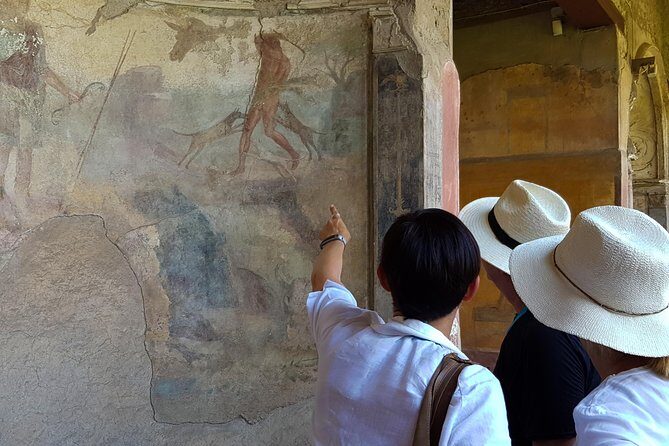
After Pompeii, the day pivots from archaeology to geology. The tour reaches the crater edge at about 1,280 meters, where you get big panoramas over the Gulf of Naples.
The path to this viewpoint is uneven, and that’s where good footwear matters. Even if you’re not a big hiker, you’ll want sturdy shoes and a plan for the climb’s rhythm.
One detail worth taking seriously: the crater area can feel cooler than you’d expect from sea level. Bring a light jacket or layer if you run warm or if you’re going in shoulder season.
The uphill part: what to expect on the Vesuvius climb
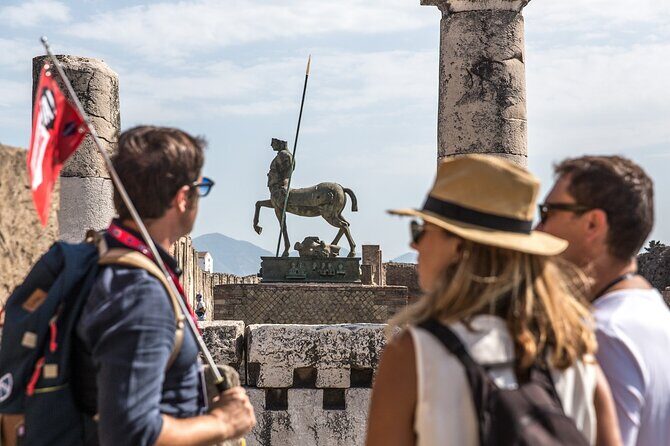
You’ll see Vesuvius isn’t just one peak—it’s a somma-stratovolcano with Monte Somma attached to it. The tour also connects the eruption story to the present landscape: the 79 A.D. eruption destroyed Pompeii and Herculaneum.
There’s also a reality-check on risk. Vulcan is the Roman god tied to fire and metal work, and the tour notes that the next eruption is considered overdue, with scientists monitoring activity 24/7. Whether you’re a science person or not, this part tends to make the crater feel more than a viewpoint.
Time-wise, Vesuvius is about an hour total in the park, and your route includes the crater-edge segment plus a drop-off around 1,000 meters. Plan for a full commitment: one more climb, a little more uneven walking, and time to look around once you’re up.
Pace, comfort, and what to pack for this 8-hour push
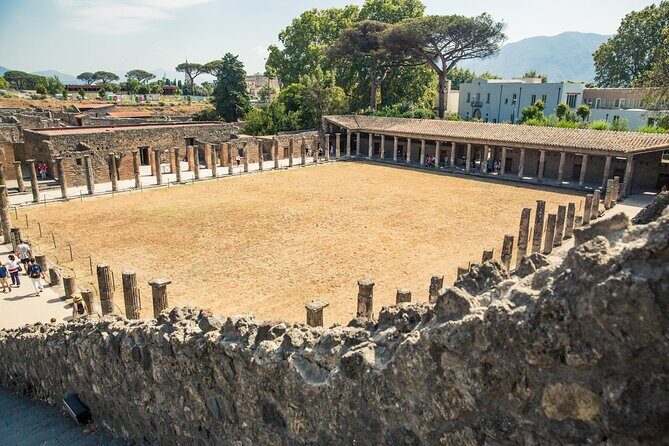
This is a long day. Pompeii alone takes about two hours inside the site, with quick stops at key points. Then you add the crater-side hike, which multiple people describe as more challenging than they expected.
Here’s what I’d pack and plan around:
- Walking shoes for uneven, rocky ground in Pompeii and the Vesuvius path
- Water and sun protection, since Pompeii has limited shade
- A jacket or layer for cooler air near the crater
- Patience for timing, since weather and traffic can shift details
If you hate rushed tours, this can still work because the stops are chosen to show the essentials. Still, I’d treat this as a highlights day, not a slow museum day.
Guides and driving: why the human touch matters
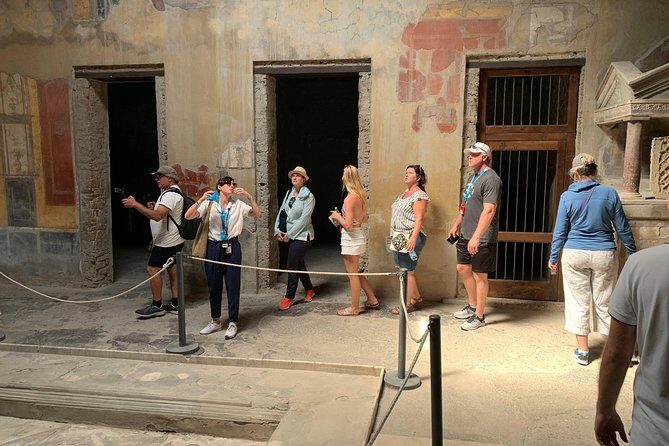
The best part of any private tour is that you can match the pace and ask questions. This one pairs a licensed private guide for Pompeii with a driver for transport.
In the field, guides can change everything. I’ve seen Pompeii tours where people are left to wander after a quick briefing, and the day feels like wasted potential. Here, the strongest experiences tend to happen when the guide is actively explaining what you’re seeing and why it matters—examples include guides like Monica, Carmine, Roberta, and Ornella.
On the driving side, the driver can also make your day smoother. People often mention friendly, attentive drivers such as Luigi, Salvatore, Fabio, Carlo, and Carmine (in different roles across the experiences), especially when they handle the tricky Positano logistics and keep arrivals on time.
One caution: guide behavior can vary by day and by how the tour is structured. If a climb with the guide is important to you, ask what the plan is for who joins you at the crater segment.
Price and value: what $750.91 buys on this route
At $750.91 per person, this isn’t a bargain. But it’s also not just a ticket day. You’re paying for:
- Private round-trip transport from Positano
- Licensed guide time for Pompeii
- Priority access to Pompeii and Vesuvius areas
- Admission tickets for Pompeii and Vesuvius National Park
If you split the cost among family members or a small group, the value tends to feel stronger because you’re not paying separately for shuttles, long waits, or guide time. If you’re traveling solo, it’s worth comparing how much you’d spend on transport plus individual tickets plus a guide—then decide if the time saved is worth the premium.
Also remember what’s not included. Lunch isn’t included, so you’ll need to budget for food during the day. Some people end up buying pizza or meals at stops along the route, and opinions on those places vary. Plan to bring snacks or money so you’re not stuck hungry when choices feel limited.
Should you book this private Pompeii and Vesuvius day trip?
Book it if you want a well-run, time-saving day that hits Pompeii’s main “story points” and then gives you crater-edge views from Vesuvius. I especially like this option when you’re short on time on the Amalfi Coast and you want priority access instead of playing the waiting-game at ticket lines.
Skip or switch plans if you need a slow, unhurried Pompeii visit, because the schedule is built around highlights and quick orientation. You should also think twice if climbing isn’t your thing; the Vesuvius part is real hiking, with uneven footing and an uphill route.
FAQ
How long is the Pompeii and Vesuvius tour from Positano?
The tour lasts about 8 hours.
Does this tour include pickup from my hotel in Positano?
Yes, pickup is offered door-to-door if your accommodation is reachable by vehicle. If not, you’ll meet at the closest meeting point.
What’s included in the tour price?
It includes private round-trip transportation with an English-speaking driver, a licensed private guide for Pompeii, priority access to Pompeii and Mount Vesuvius National Park, and Mount Vesuvius entrance tickets.
Is lunch included?
No. Lunch is not included.
Are Pompeii and Vesuvius admission tickets included?
Yes. Admission to Pompeii and Vesuvius National Park is included, and Vesuvius entrance tickets are included as part of the tour.
What happens if Mount Vesuvius is closed due to bad weather?
If Vesuvius is closed due to bad weather, you’ll receive a refund of the entrance fees for the volcano.