REVIEW · AMALFI
Amalfi Organic Lemon Tour & Wine Tasting + Dinner or Lunch
Book on GetYourGuide →Operated by Amalfi Historical Garden · Bookable on GetYourGuide
Lemons, wine, and real farming know-how in Amalfi. I love the 100% organic approach explained on-site, and I love how the tour ends with a proper tasting: four local wines plus lemon cake and limoncello. One possible drawback to plan for is the hilly, stairy walking—this isn’t a good match if you have mobility limits, heart problems, or respiratory issues.
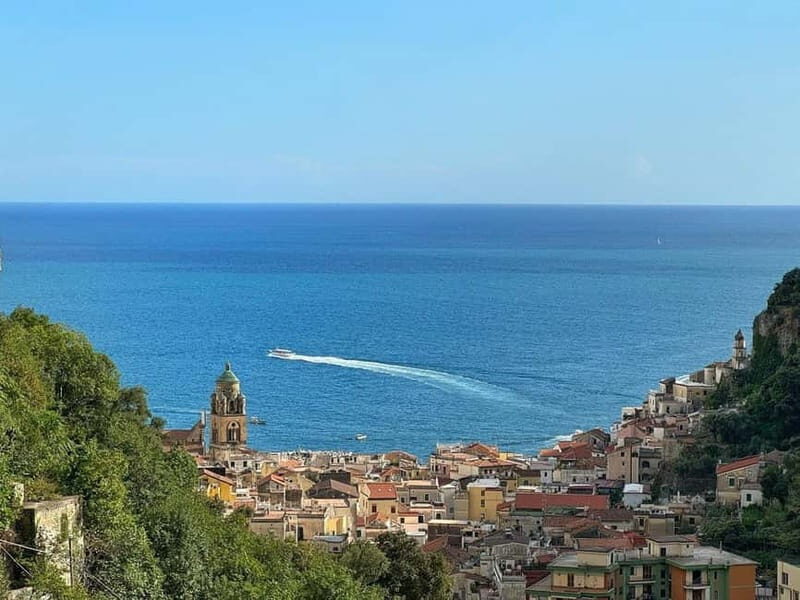
Guides keep it practical, not stuffy, and the experience often feels personal thanks to hosts like Joana. You meet in central Amalfi outside Ristorante Il Mulino (Via delle Cartiere 36), then you head into the Amalfi Historical Garden for terrace-farming history, tastings, and those views that make you slow down without trying.
In This Review
- Key Things You’ll Love on This Amalfi Lemon Tour
- Entering the Amalfi Historical Garden: terrace farming with a purpose
- The 3-hour lemon tour flow: what happens from Via delle Cartiere to the tasting table
- What you learn on the lemon walk: Sfusato lemons and the reuse mindset
- Wines and Amalfitan dishes: how the pairing is set up
- Lemon cake, lemonades, and Limoncello: the tasting lineup
- The role of history and documents: why it isn’t just a farming walk
- Shopping your way out: special prices on typical products
- Price and value check: is $243.56 per person fair here?
- Who this tour suits best (and who should skip it)
- Should you book this Amalfi Organic Lemon Tour & Wine Tasting + Dinner or Lunch?
- FAQ
- How long is the Amalfi Organic Lemon Tour & Wine Tasting?
- Where is the meeting point in Amalfi?
- What language is the live tour guide?
- What’s included with the lemon tour?
- Do I get to taste limoncello and lemon cake?
- Can the tour accommodate food allergies or intolerances?
- Is pickup or drop-off from accommodation included?
- Is the tour suitable for everyone, and are pets allowed?
Key Things You’ll Love on This Amalfi Lemon Tour
- Amalfi Historical Garden setting: terraces, pergolas, and water systems built to survive on the coast’s terrain
- Organic lemons, no chemicals: the farming story is part science, part family tradition
- Sfusato and other lemon varieties: you learn what makes the fruit special before you taste it
- A real food-and-wine moment: four wines paired with typical Amalfitan dishes, plus lemon sodas and desserts
- Limoncello, lemon cake, and more: you get multiple lemon products in one sitting
- Special pricing on typical products: you can shop local favorites at the Historical Garden
Entering the Amalfi Historical Garden: terrace farming with a purpose
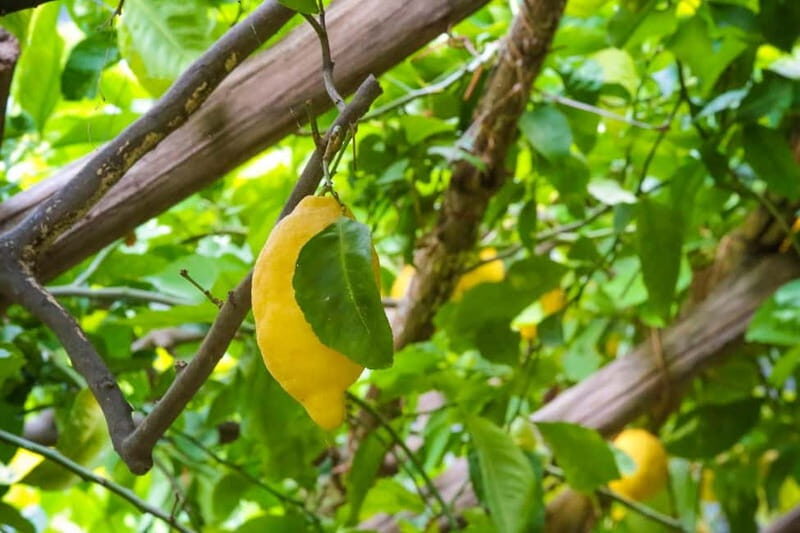
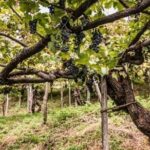
The Amalfi Historical Garden isn’t your typical flat park. The whole place is built around terrace farming—vertical in feel, with stone walls, hand-built steps, and pergolas that shape how sunlight hits the groves. When you’re there, you notice how engineering and farming were forced to become one skill.
A big part of the experience is how the garden’s design helps make water accessible. You’ll see references to ancient cisterns and water channels fed from high springs. That’s not trivia for trivia’s sake; it explains why lemons could thrive where you’d think farming would be too hard.
You also get historical material during the tour. The guide uses historical documents to connect today’s organic practice to the value of preserving this kind of land. It’s a reminder that agriculture here isn’t just production—it’s culture and survival.
You can also read our reviews of more food & drink experiences in Amalfi



The 3-hour lemon tour flow: what happens from Via delle Cartiere to the tasting table
Your day starts back in Amalfi’s center. The meeting point is outside Ristorante Il Mulino on Via delle Cartiere 36, and the tour runs about three hours in a shared group with an English-speaking guide. You’ll also want to wear shoes that handle uneven ground and steps.
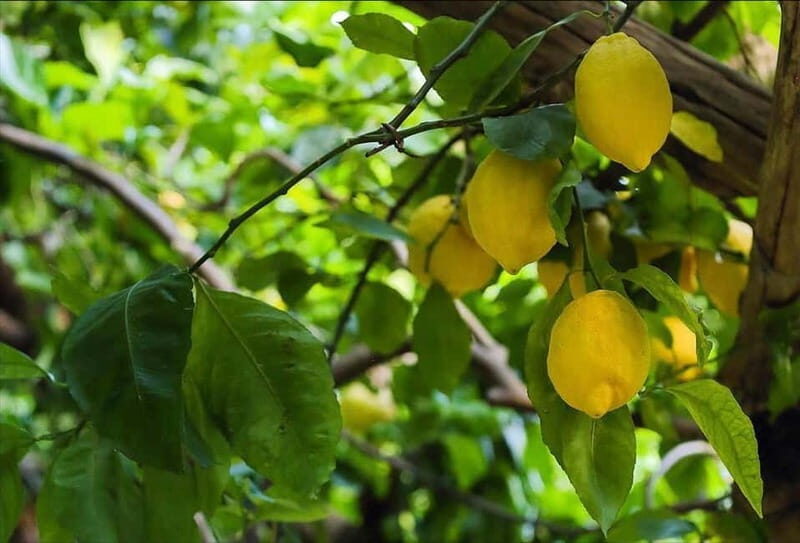
From there, you move into the Amalfi Historical Garden for the guided lemon portion. Think of it as a sequence: you walk through the groves, learn how the terraces and farming systems work, and connect that to the lemons you’ll taste later. The sun filtering through the branches and the smell in the air are part of the experience, not an afterthought.
At the end, you sit down for the tasting and meal. The tour includes local fine wines, a lemon-focused dessert stop, and Limoncello. Then you return to the same meeting point in Amalfi.
If you’re hoping this will be stroller-friendly or chair-friendly, you should look elsewhere. The activity is clearly described as not suitable for people with mobility impairments, and the setting is built on hills and terraces.
What you learn on the lemon walk: Sfusato lemons and the reuse mindset
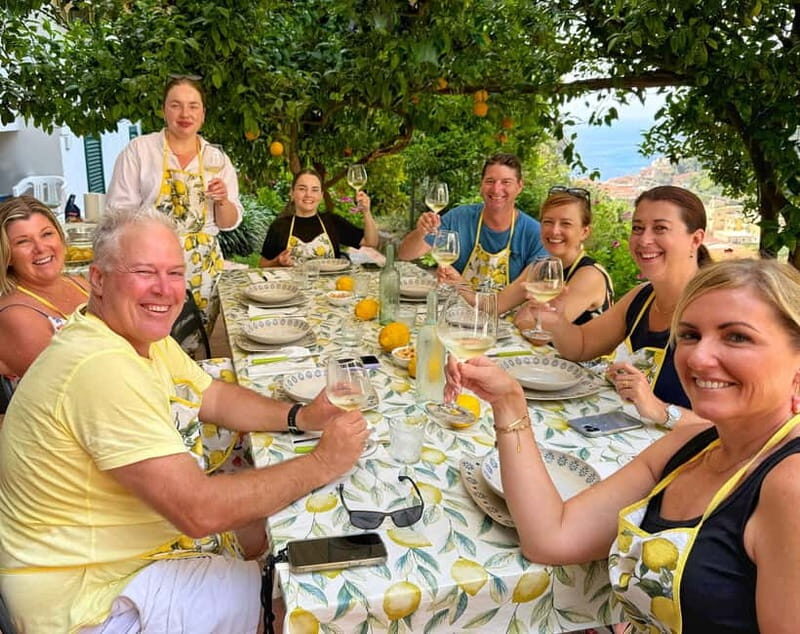
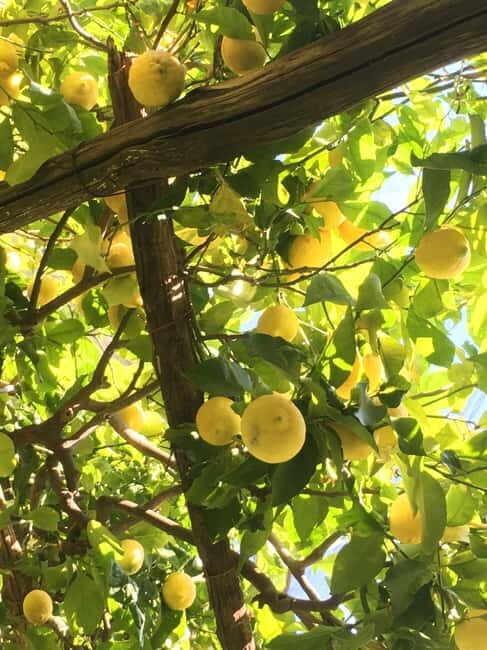
Lemon growing on the Amalfi Coast has a signature fruit: Sfusato lemons. During the tour, you’ll learn about Sfusato and other lemon varieties in the garden. That matters because the tasting makes more sense when you understand what you’re looking for in the fruit.
You’ll also hear how terrace farming is supported by local materials and older infrastructure. Chestnut wood from local forests is used for the pergolas, and the terraces rely on stone walls (including macerine-style walls) that hold soil and shape the land. When you picture it this way, the garden stops being scenery and becomes a working system.
The guide also leans into philosophy, but it stays grounded. The big theme is balance—how peasant farming reused what it could, preserved biodiversity, and aimed for sustainability without excess. You don’t just hear a feel-good message; you connect it to how the land is engineered and cared for.
One of the most useful angles is that your guide explains why “simple and genuine” matters in practice. You’re not being asked to become a monk. You’re being nudged to see that organic quality and careful handling show up in flavor and texture, not just in marketing.
Wines and Amalfitan dishes: how the pairing is set up
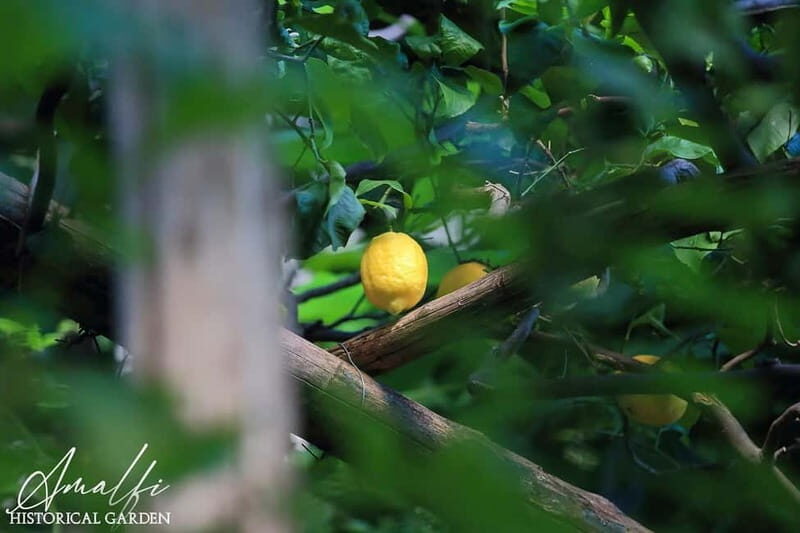
This is not a random wine sip-and-go. Your tasting includes four different wines, and the guide provides information on food pairings as you taste. That’s the difference between drinking and learning why you like something.
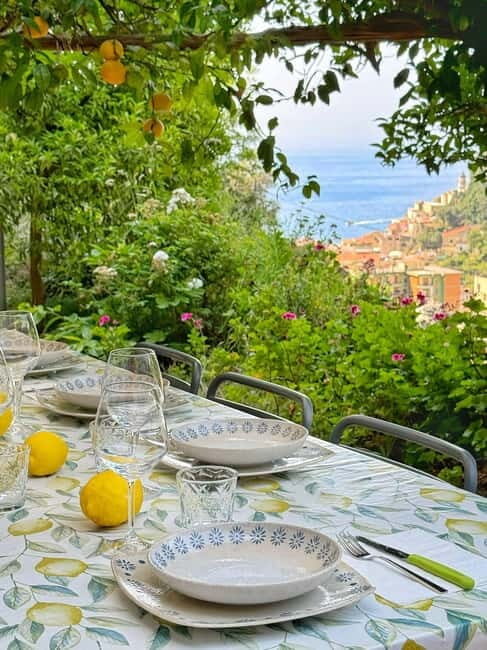
The meal is typical Amalfitan cuisine, and it’s designed to adjust to ingredient seasonality. So you’re not locked into a single menu idea no matter what month you visit. If you care about seasonal cooking, this kind of flexibility tends to make meals feel more current and less like a scripted performance.
A practical tip: go into the meal expecting you’ll be tasting across multiple lemon products and multiple wines. Pace yourself. The point is to enjoy the progression—lemon lemonade, lemon cake, then Limoncello—while the wine pairings give you a shifting flavor map of the evening.
If you’re the type who likes to understand the “why,” you’ll likely appreciate the food-and-wine coaching. If you just want to drink, you can still enjoy it, but you’ll miss some of the best value: the guide turning tastes into takeaways.
Lemon cake, lemonades, and Limoncello: the tasting lineup
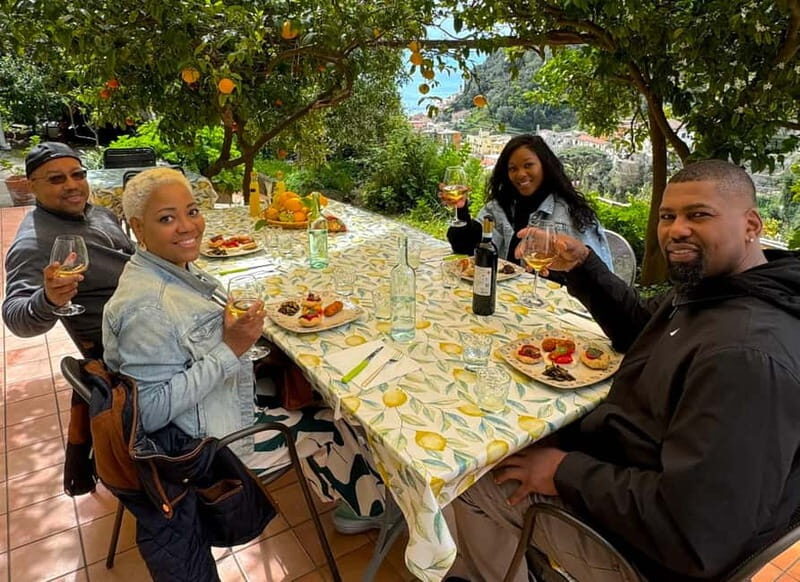
Lemons show up everywhere here, and that’s the point. During the experience, you’ll taste things like lemonades and lemon cake, plus you’ll get Limoncello. Many lemon tours in Italy stop at one product; this one builds a sequence.
You can also expect lemon soda as part of the tasting lineup. It’s a simple item, but it works well early because it refreshes your palate before desserts and liqueurs.
The Limoncello portion is usually the emotional finish. You don’t just take a sip—you get context for why Amalfi’s lemon liqueur has its reputation. And when you taste it after walking among the trees and learning about varieties like Sfusato, it feels less like a souvenir and more like a concentrated result of the day’s learning.
Also, lemon cake is included in the tasting. It’s a good “bridge” flavor because it’s sweet, citrus-forward, and easy to compare against the wines you’ve been tasting. If you’re deciding what to buy after, this is often the flavor reference that sticks with you.
You can also read our reviews of more wine tours in Amalfi




The role of history and documents: why it isn’t just a farming walk
The tour’s historical component isn’t delivered like a lecture. Historical documents and garden history are woven into what you see and taste. You learn why preserving the land matters, and you connect that to the way the terraces were built and maintained over time.
This is also where the tour’s values show up clearly: respect, gratitude, wonder, and the human ability to live simply and make good use of organic quality. You’ll hear this in plain language. It’s not about turning farming into a spiritual exercise—it’s about linking everyday work to long-term survival.
One small but important point: the setting is described as a unique scenario in terrace farming, and it’s presented as vertical farming that is difficult to preserve. That framing is useful, because it explains why the care you see in the garden isn’t casual. It’s necessary.
Shopping your way out: special prices on typical products
At the Historical Garden, you get access to special pricing on local typical products. This matters because Amalfi’s souvenir scene can get pricey fast, and this is a chance to trade “market souvenir” for “direct local product.”
The tour already gives you several lemon-based items to taste. That makes shopping easier because you can compare what you tasted with what you want to take home. If you’re a foodie, this is a practical close to the day: you leave with flavors you understand.
If you have a sweet tooth, plan to bring some cash. Cash is listed as something you should bring, and it usually means on-site purchasing is part of the experience.
Price and value check: is $243.56 per person fair here?
At $243.56 per person, this isn’t a budget add-on. You’re paying for a full 3-hour, guided, shared experience with multiple layers of value.
Here’s what’s included: the guided lemon tour through the groves, historical information with consultation of historical documents, lemon cake and limoncello tasting, plus a wine tasting with four wines and a typical Amalfitan dinner (or lunch, depending on what’s scheduled). You’re also getting the meal plus lemon products, not just drinks.
That combination can make the price feel reasonable if you’re the type who wants a guided tasting with context. You’re not just paying for flavor—you’re paying for explanations, pairing guidance, and a setting that’s actively working farmland rather than a generic viewpoint.
If you only want a quick photo stop and one drink, this might feel heavy. But if you want the farm story and a sit-down meal with multiple tastings, this is closer to a full experience than a single attraction.
Who this tour suits best (and who should skip it)
This tour is best for people who like food and farming together. If you enjoy learning how ingredients are grown, and you want wine pairings explained in a straightforward way, you’ll likely appreciate the way the guide ties everything together.
It also fits well if you’re traveling with an appetite for variety. You’ll taste lemon lemonade, lemon cake, lemon soda, and Limoncello, plus multiple wines. That’s a lot of flavor in one sitting, so it helps if you enjoy structured tasting.
Who should be careful: the tour is not suitable for people with mobility impairments, people with heart problems, or people with respiratory issues. The garden setting is built on terraces and steps, and you should expect uneven ground. If any of that is a concern, it’s worth choosing a different Amalfi activity.
What to bring is also part of making the experience comfortable: comfortable shoes, sun hat, comfortable clothes, cash, and any personal medication you need. No pets are allowed.
Should you book this Amalfi Organic Lemon Tour & Wine Tasting + Dinner or Lunch?
Book it if you want an Amalfi experience that’s grounded in how the lemons are grown, not just how they’re served. The organic farming focus, the terrace farming setting, and the wine-and-food pairing make it feel like a real local “system,” from tree to table.
Skip it if you want a light walk, if stairs and hilly terrain won’t work for you, or if you’d rather spend your time on viewpoints without a meal-and-tasting structure.
If you do book, show up with comfortable shoes and a calm pace. This is the kind of tour where taking your time pays off—especially once you taste the lemons and understand why Amalfi’s citrus culture is more than a postcard.
FAQ
How long is the Amalfi Organic Lemon Tour & Wine Tasting?
The tour lasts about 3 hours.
Where is the meeting point in Amalfi?
You meet outside Ristorante Il Mulino on Via delle Cartiere 36, Amalfi.
What language is the live tour guide?
The tour is guided in English.
What’s included with the lemon tour?
It includes a shared lemon tour, wine tasting with dinner (or lunch, depending on your time slot), limoncello tasting, lemon cake tasting, a tour through lemon groves, historical information, and consultation of historical documents.
Do I get to taste limoncello and lemon cake?
Yes. Limoncello tasting and lemon cake tasting are included.
Can the tour accommodate food allergies or intolerances?
Yes. You should inform the team about any food allergies or intolerances when confirming your reservation.
Is pickup or drop-off from accommodation included?
No. Accommodation pickup and drop-off are not included, and you’re asked to reserve in advance if needed.
Is the tour suitable for everyone, and are pets allowed?
The tour is not suitable for people with mobility impairments, heart problems, or respiratory issues. Pets are also not allowed.