REVIEW · POSITANO
Positano Private Walking Tour
Book on GetYourGuide →Operated by Travmonde OÜ · Bookable on GetYourGuide
Positano makes history look effortless. This private walking tour connects the Byzantine church on Via Marina Grande with Positano’s first-century-BC roots, and you’ll also pick up the meaning behind the ceramic shops and handmade sandals. My one heads-up: Positano is steep, so plan on stairs and short uphill stretches during the 1.5 hours.
I like that your guide stays with your group only, not a mixed crowd. If you’re curious about a specific street, view, or detail, you can ask for on-the-spot tweaks. One guide you may encounter, Floriana, is known for patient pacing and clear explanations, even when timing goes sideways.
You’ll meet at the Church of Saint Mary of the Assumption and end right back where you started—easy, tidy, and low-stress.
In This Review
- Key things to know before you go
- Positano in 90 Minutes: What This Private Walking Tour Really Covers
- Starting at the Church of Saint Mary of the Assumption on Via Marina Grande
- Beachfront, Moorish-Style Streets, and the Feel of the Amalfi Coast
- First-Century-BC Origins and the Villa di Positano Connection
- How Positano Became a Wealthy Market Port
- Amalfi Republic Influence You Can See in the Town’s Layout
- Ceramics, Handmade Sandals, and Local Artists on the Shopping Lanes
- Price and Value: $283.21 for a Private Group
- What to Wear and How to Time Your Day
- Who This Tour Suits Best
- Should You Book the Positano Private Walking Tour?
- FAQ
- Where does the tour start, and where does it end?
- How long is the private walking tour?
- Is there an entrance fee included?
- What languages is the live guide available in?
- Is this tour a private group?
- What’s the cancellation and payment flexibility?
Key things to know before you go
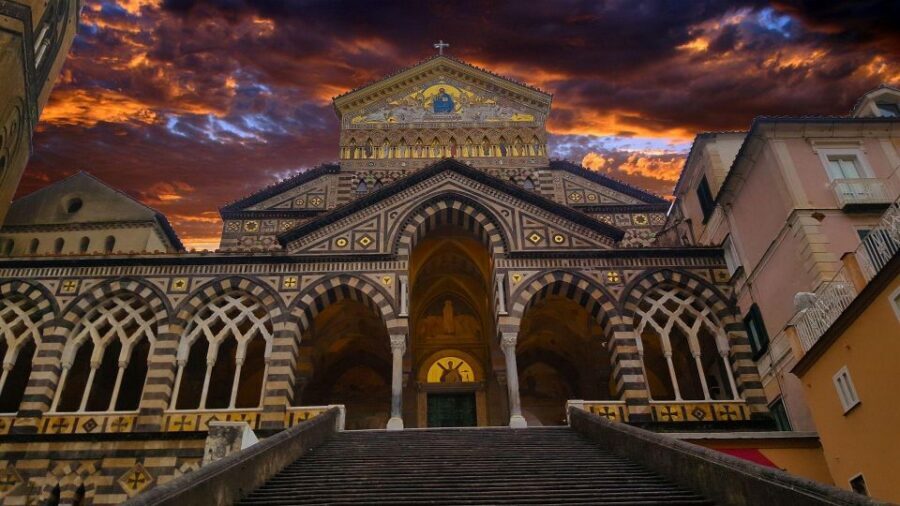
- Start at the Church of Saint Mary of the Assumption on Via Marina Grande, with a 13th-century Byzantine icon at the center of the story
- Positano’s ancient timeline comes through—from first-century BC origins to later importance under the Amalfi Republic
- Villa di Positano fits the puzzle, showing why this spot mattered beyond beach photos
- Moorish-style architecture and the waterfront feel help you understand why the town grew the way it did
- Local crafts are part of the walk, especially ceramics and handmade shoe and sandal culture
- A real local guide drives the pace, with English or Italian and room for on-the-spot customization
Positano in 90 Minutes: What This Private Walking Tour Really Covers
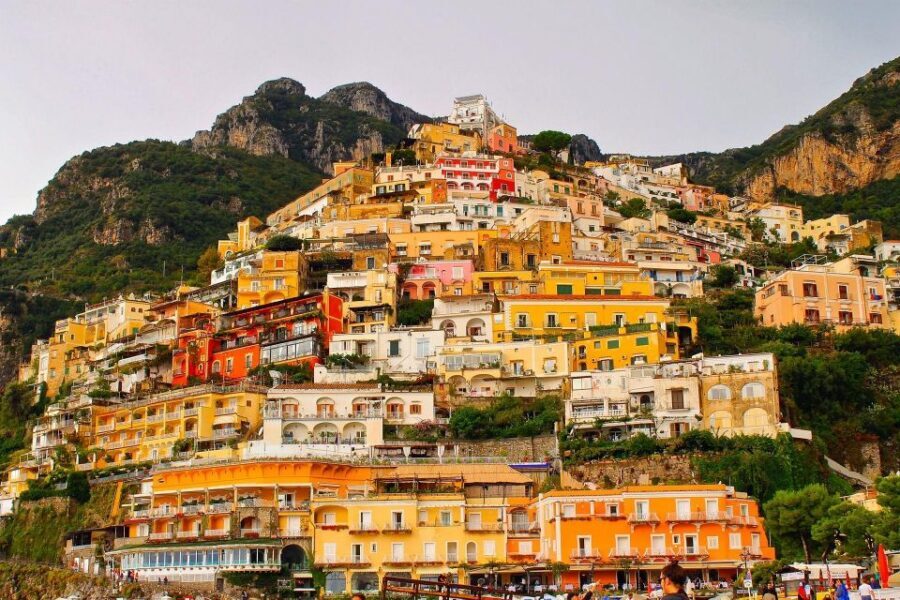
Positano works best when you understand what you’re looking at. This 1.5-hour private walk does that fast. Instead of treating the town like a backdrop, you get a sequence: church to streets, streets to crafts, and then the big-picture “why this place mattered” story tying it all together.
You’ll cover the kind of spots that make Positano feel like more than a postcard. The highlights you can expect are a beachfront moment, the Byzantine 13th-century icon at the Church of Saint Mary of the Assumption, and narrow lanes lined with local art and handmade goods. And because it’s private, you control the tempo. Want more time on a view or a shop window? Your guide can adjust on the spot.
The other part that matters for value: this tour is designed for understanding, not checklist rushing. For the price, you’re paying for a live professional local guide with your group only—plus a story that turns architecture, markets, and religion into something you can actually picture while you’re walking.
You can also read our reviews of more walking tours in Positano



Starting at the Church of Saint Mary of the Assumption on Via Marina Grande
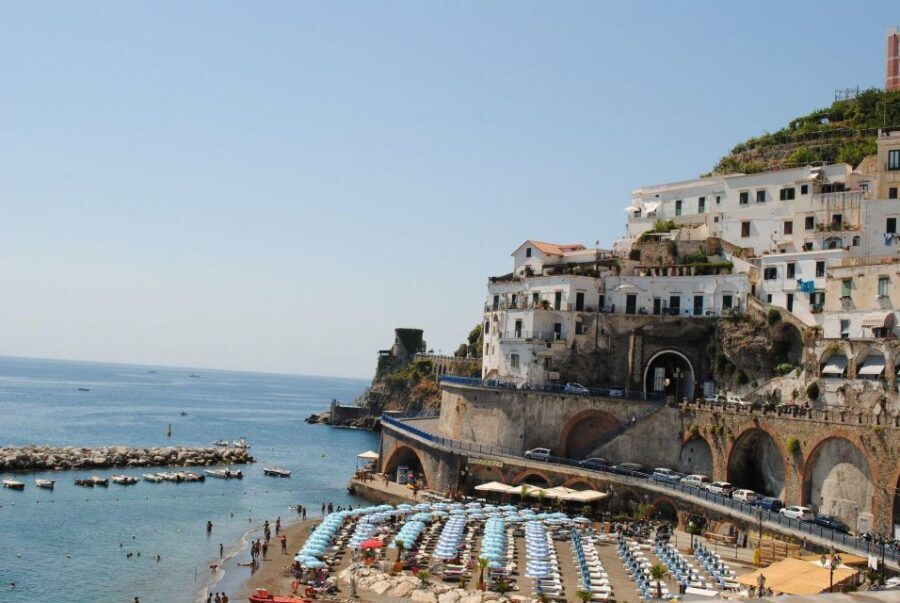
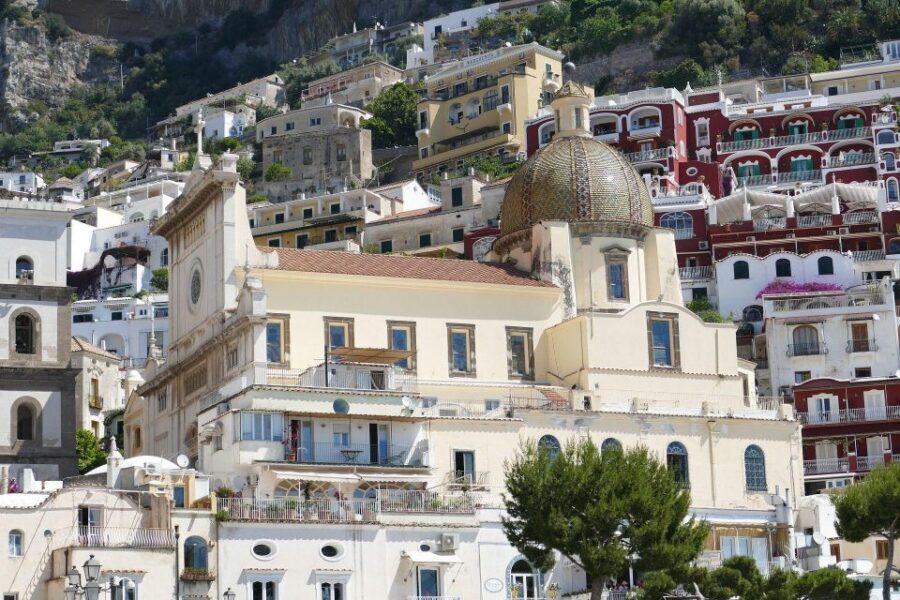
Your tour begins at the Church of Saint Mary of the Assumption, Via Marina Grande, 84017 Positano SA, Italy. This is a smart start because the church is both practical and symbolic. Practically, it anchors you at the heart of the action near the waterfront. Symbolically, it’s where you meet Positano’s older identity, the one that doesn’t rely on tourism seasons.
Inside the focus is the 13th-century Byzantine icon of the Virgin Mary. This matters because it sets a tone. You’re not just looking at pretty religious art—you’re learning how Byzantine influence showed up here, long before today’s cafes and boutiques. When you understand that layer, the rest of Positano reads differently: the town’s architecture choices, the way streets cluster, even the “look” of certain design elements you’ll notice along the way.
And because the guide is live and with your group only, you can ask follow-ups in English or Italian. If you want the background explained in plain language, that’s the whole point.
Beachfront, Moorish-Style Streets, and the Feel of the Amalfi Coast
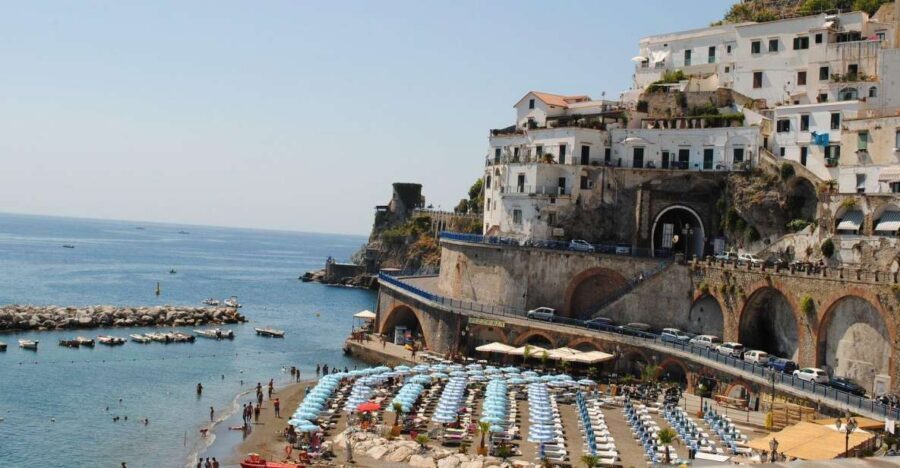
Positano is a sloped coastal village with pebbled shoreline and Moorish-style architecture. That combination can feel like chaos from a distance—pretty chaos, sure—but on foot it becomes understandable. You’ll get that “how does this place work” feeling quickly: where people would have gathered, how buildings relate to the terrain, and why walking lanes end up doing what they do.
The beachfront stop and waterfront connections help you ground the story. When you hear about Positano as a port and market, the coast stops being scenery. You can see the logic of movement and trade: boats need places to land; traders need pathways; wealth needs spaces to show itself. Your guide’s job is to connect those dots while you’re still seeing the physical town.
One small practical note: even if you’re not doing a long walk, this is still Positano. Expect short, steep sections and stone steps. Wear shoes you’d be happy to walk in for an extra half hour, just in case your group lingers at a view.
First-Century-BC Origins and the Villa di Positano Connection
One of the tour’s best strengths is that it doesn’t treat “ancient” like a vague word. The walk is set up to uncover Positano’s ancient origins dating back to the first century BC. That’s the kind of timeframe that can feel abstract—until you connect it to specific places and roles in the town’s development.
A key thread here is Villa di Positano and its historical significance. Even if you don’t know anything before you arrive, your guide helps you understand why a villa matters. Think less “palace fantasy” and more “a sign of sustained importance.” Villas tend to show up where there’s a stable reason to be there—resources, safety, status, access to trade, or all of the above.
When you hear how the town’s early identity developed, you’ll start noticing patterns. Why certain routes feel direct. Why certain viewpoints feel like natural gathering spots. Why architecture in a hill town often reflects both weather and social life.
This is also where the guide quality really shows. If your guide explains clearly, you leave with a mental map—not just images. That’s the difference between seeing Positano and understanding Positano.
How Positano Became a Wealthy Market Port
Positano wasn’t only a beautiful coast. At one point, it was a thriving market port with wealth. That detail changes your entire perspective when you’re standing in a street full of shops.
A market port story is about networks. You can almost picture goods moving in and out, people traveling through, money circulating, and wealth making itself visible. Your guide should help you understand how a port-driven economy shapes a town: it brings variety, it rewards convenient routes, and it influences what kinds of buildings and public spaces make sense on a slope.
This is also where I like the pacing of the tour. Rather than jumping straight from the church to a shopping street, you get context first. Then when you reach the lanes lined with crafts and ceramics, it’s easier to see them as continuity—not just souvenirs.
If you want a Positano experience that feels more than surface-level, this portion is one of the reasons the tour earns strong ratings. The information doesn’t sit in the air. It lands right where you’re standing.
You can also read our reviews of more private tours in Positano





Amalfi Republic Influence You Can See in the Town’s Layout
Another major theme is Positano’s role in the Amalfi Republic. This matters because the Amalfi Republic wasn’t just local drama—it was a powerful maritime influence in the region. When you connect that to Positano as a port and market, the town’s story becomes regional, not isolated.
Here’s the practical value: understanding the Amalfi Republic gives you a reason for how the town developed its identity. Trade centers tend to absorb influence. Ports live with movement—new ideas, art, architecture, and power shifts. Your guide helps you connect that regional role to what you can see locally: street structure, architectural cues, and the way the town’s layout supports circulation between waterfront and inland lanes.
This is a great moment to ask questions. If you like politics, trade, or art history, tell your guide. If you’re more of a “show me what I can see” person, that works too. The tour is private, and the guide can customize on the spot.
Ceramics, Handmade Sandals, and Local Artists on the Shopping Lanes
Let’s talk about what your eyes will actually enjoy along the walk. Positano’s lanes are lined with cafes and boutiques, and there are lots of ceramic shops. You’ll also see handmade shoes and sandals—craft culture on full display. Add galleries with local artists’ work, and the whole town starts to feel like a living workshop, not a theme park.
I like how this part fits naturally into the historical story. When your guide has already explained the market port angle and the idea of wealth moving through town, the crafts stop being random. Ceramics, footwear, and handmade goods make sense in a place where trade and local identity have been intertwined for centuries.
A tip for your visit: if you want to buy something without stress, plan it for later in the day too. During the tour, your time is partly about learning and partly about walking. Browse if you want, but don’t assume you’ll have long decision time. If you do want to purchase, keep it simple and focus on a couple of items you truly want to take home.
Price and Value: $283.21 for a Private Group
The price is $283.21 per group, and the tour is up to 15 people. That’s the biggest value question: is this expensive, or is it smart?
Here’s the plain take. You’re paying for a private, English- or Italian-speaking local guide who stays with your group only. That means you’re not splitting guide time across strangers. If you’re traveling with family or friends and you have at least a few people, this price can feel fair fast, because you’re effectively converting guide cost into shared time.
If you’re traveling solo or as a couple, it may feel like a bigger splurge—because the cost is not per person, but it still needs enough people to average out. In that case, I’d decide based on your priorities. If you want deep context for the main stops—church, town history, architecture, and crafts—this can be worth it. If you’re happy just wandering, you could do that on your own. But this tour is designed to give you the “why,” quickly.
Also, entrance fees are not included. If your plan includes ticketed sites beyond what your guide discusses, budget extra.
What to Wear and How to Time Your Day
This tour is only 1.5 hours, so small details matter. Positano is sloped, and the streets are narrow. Wear comfortable shoes with grip. If you’re sensitive to crowds, go easy on peak hours, because the town is a popular destination.
Because the tour begins and ends at the same meeting point, you can build it into your day without scrambling for transportation. And since starting times depend on availability, pick a slot that matches your energy. If you’re arriving from elsewhere that day, build in buffer time so you don’t feel rushed at the start.
One more practical point: bring a small water bottle if you tend to get warm during walks. The tour length is short, but coastal sun and uphill lanes can add up.
Who This Tour Suits Best
This experience is a strong match for you if:
- You want a guided walk that explains Positano’s ancient origins, Villa di Positano, and the Amalfi Republic without drowning you in long lectures
- You care about crafts and local culture—ceramics, handmade sandals, and art galleries—more than big-ticket attractions
- You prefer private pacing, with your guide tailoring the walk on the spot
- You like a guide who can handle real-life hiccups calmly
That last point isn’t theoretical. In at least one real instance, the guide Floriana waited patiently when the group arrived late due to transport getting lost. Even with that disruption, the focus stayed on making the most of the walk—showing key viewpoints and explaining Positano in a way that clicks. That’s the kind of guide you want on a short tour: flexible, clear, and not thrown off by minor chaos.
Should You Book the Positano Private Walking Tour?
If you want an efficient, high-context Positano experience, I think you should seriously consider booking. The mix is smart: a landmark church and icon to set the tone, then streets and crafts, then the big historical threads that explain why Positano developed the way it did.
Skip it only if your goal is purely scenic wandering with no history. Also skip it if you know steep walking will be a problem for you. The tour is short, but it’s still Positano’s terrain.
For most people, the decision comes down to this: do you want to understand the town while you’re there? If yes, this private walk is a strong value way to do it.
FAQ
Where does the tour start, and where does it end?
It starts at the Church of Saint Mary of the Assumption, Via Marina Grande, 84017 Positano SA, Italy. The activity ends back at the meeting point.
How long is the private walking tour?
The duration is 1.5 hours. Starting times depend on availability.
Is there an entrance fee included?
No. Entrance fees are not included.
What languages is the live guide available in?
The live tour guide speaks English and Italian.
Is this tour a private group?
Yes. It’s listed as a private group, with your local professional guide staying with your group only.
What’s the cancellation and payment flexibility?
Free cancellation is available up to 24 hours in advance for a full refund. You can also reserve now and pay later to keep plans flexible.