REVIEW · SORRENTO
Skip the line Ticket Herculaneum Guided Tour 4 hrs
Book on Viator →Operated by Buyourtour di Amo Italy Travel · Bookable on Viator
Ruins that still feel painfully real. This skip-the-line Herculaneum tour pairs guided explanations in English with a focused route through houses and fresco-filled spaces preserved after Vesuvius in 79 A.D. I love that the pacing is built around seeing the site without wrestling with tickets or crowd chaos, and with headsets that help you catch every key detail.
Two things really win here. First, the authorized English-speaking guide gives you the kind of context that turns stone walls into a lived-in Roman city, including what the eruption did and why Herculaneum looks so intact. Second, the comfort factor matters: you’re traveling by a 30-seater bus with pick-up from Sorrento or Naples, and the whole flow is designed to start early enough to dodge the worst of the heat and crush.
One possible drawback: the main guided time in the archaeological area is about 1.5 hours, and the rest of the stops are quick hits of roughly 10 minutes each. If you want long, slow wandering without time pressure, this route may feel a bit fast.
In This Review
- Key highlights you should know before you go
- Why Herculaneum hits different than other Roman sites
- Getting to Herculaneum: Sorrento or Naples, then straight to the site
- Skip-the-line ticket and the value of not starting frustrated
- The real engine of the day: Parco Acheologico Di Ercolano
- Stop-by-stop walkthrough: houses, frescoes, mosaics, and one skeleton
- House of the Hotel: the biggest house people found so far
- Sacello degli Augustali: frescoes and the human detail
- Casa dei Cervi: deer statues and a name that sticks
- Casa del Salone Nero: a black hall and waxed tablets
- Casa dello Scheletro: the skeleton house story from 1831
- Casa di Nettuno e Anfitrite: glass-paste mosaics and sea gods
- Comfort that actually matters: headsets, timing, and group flow
- How much time you really get at each highlight
- What to bring so the 4-hour plan feels good
- Who should book this tour, and who might not
- Should you book the Skip-the-line Herculaneum Guided Tour?
- FAQ
- How long is the Herculaneum guided tour?
- Is admission to Herculaneum included?
- Are headsets provided?
- What language is the tour guide?
- Where does the pickup happen?
- How long do you spend with the guide at the main archaeological park?
- How long are the additional stops?
- Is lunch included?
- Is there a limit on group size?
- What if weather is poor?
Key highlights you should know before you go
- Skip-the-line entry plus a mobile ticket to help your visit start smoothly
- Authorized English guide for 1.5 hours at Parco Acheologico Di Ercolano
- Headsets included, so you hear the guide clearly even with a group
- A tight series of famous houses and shrines including Neptune and Amphitrite mosaics
- 30-seater bus from Sorrento or Naples, capped at a max group size of 100
Why Herculaneum hits different than other Roman sites
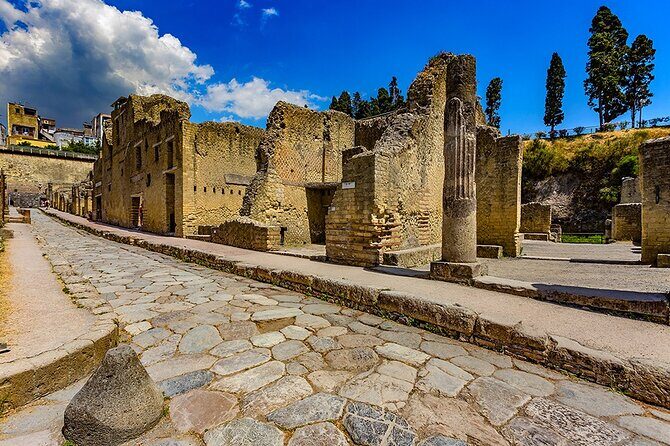
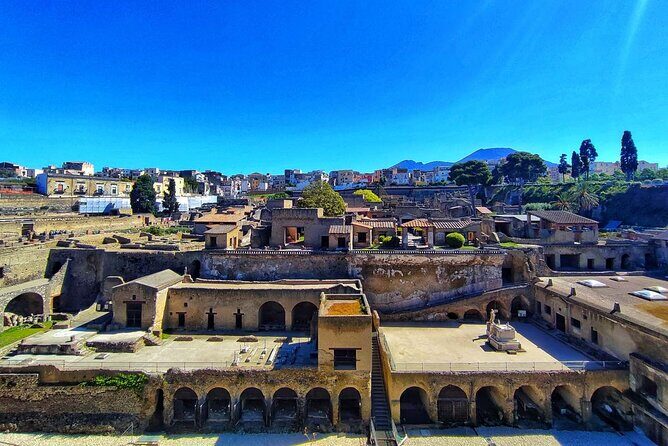
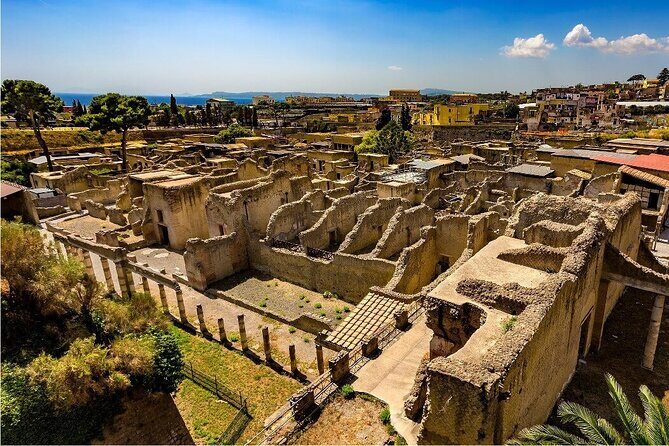
Herculaneum is one of those places where your brain keeps correcting itself. You look at collapsed stone and ash-covered corners, and then you realize you’re seeing everyday parts of a Roman town with startling clarity—streets, houses, villas, and artworks that survived because the eruption smothered the city under meters of ash and pumice.
That preservation is the reason this tour works so well. Your time is short by design, but the guide’s job is to give you the big picture fast. You’re not just looking at ruins—you’re learning what you’re looking at. And because it’s explained in English, you won’t get stuck translating the story yourself while the group keeps moving.
Another thing that makes the experience feel grounded is the variety of stop types. You’ll bounce from residential spaces to religious or ceremonial buildings, then to art and mosaics that show how people decorated their homes and displayed status.
You can also read our reviews of more tours and experiences in Sorrento


Getting to Herculaneum: Sorrento or Naples, then straight to the site
This is a half-day format built around efficient transport. You get pick-up at the meeting point in Sorrento or Naples, then ride in a 30-seater bus. For most people, that matters more than it sounds. Roman ruins are spread out, and a guided visit without the hassle of self-coordinating transport lets you spend mental energy on the archaeology instead of logistics.
One practical benefit: the bus size feels manageable. You’re not stuck in a huge crowd the whole time, and that can make it easier to hear your guide when you’re moving between stops—especially since headsets are included.
Also, the itinerary can vary a bit based on guide discretion. That usually means you’ll get the best use of time depending on how the group is moving and what the guide thinks will land best given your questions or the day’s conditions.
Skip-the-line ticket and the value of not starting frustrated
The selling point here isn’t just speed—it’s peace of mind. A skip-the-line approach plus a mobile ticket means you’re less likely to spend your limited visit time figuring out where to stand, where to scan, and what line actually belongs to your group.
At $90.31 per person, you’re paying for more than admission. The price also covers:
- Entrance ticket to Herculaneum
- Authorized guide time (including 1.5 hours inside the main archaeological area)
- Headsets, so you can hear clearly
- Round-trip style transport by bus from Sorrento or Naples (as provided for this tour)
If you were to build a DIY day trip, you’d usually end up paying for transit plus ticket plus the time cost of figuring everything out. Here, the tour compresses that decision fatigue into a single plan, and that’s often where the real value sits.
The real engine of the day: Parco Acheologico Di Ercolano
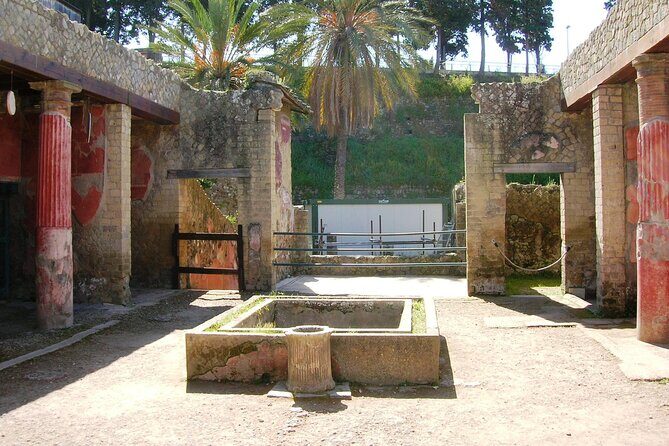
Stop 1 is the core: Parco Acheologico Di Ercolano. You get about 1 hour 30 minutes with an authorized guide, and the focus is an archaeological walk through Herculaneum as a small, sophisticated Roman city that was buried after the catastrophic Vesuvius eruption in 79 A.D.
This is the part of the tour where you’ll feel the difference between seeing ruins and understanding them. The guide’s explanations help you connect what you see—streets, house layouts, and the way buildings were arranged—to Roman daily life. It’s also the moment when the eruption story becomes more than a date in a textbook. You start to grasp how ash and pumice can freeze a moment in time while still leaving visible traces of collapse and water-borne change.
If you’re worried about hearing the guide, headsets included are a big help. You can look around without turning your head every few seconds to catch words. That makes a short visit feel more complete, because you aren’t losing time to misunderstandings.
A quick timing reality check, though: 1.5 hours is enough for a solid overview, not enough for full wandering. The later stops are brief on purpose.
Stop-by-stop walkthrough: houses, frescoes, mosaics, and one skeleton
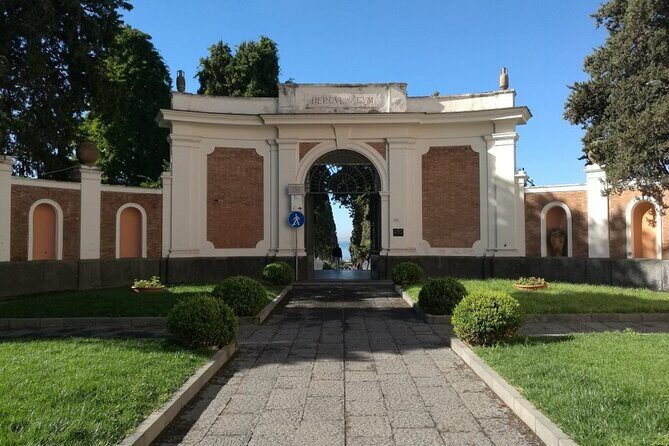
After the main guided stretch, the remaining stops are short—about 10 minutes each. Think of this as a highlight reel. You’ll see several of the site’s best-known areas, with just enough time to notice what makes them distinctive.
You can also read our reviews of more guided tours in Sorrento




House of the Hotel: the biggest house people found so far
The House of the Hotel is a large Roman residence, reported here as about 2,250 square meters, and it sits on a panoramic edge of the hill. It’s also described as having been the largest house of Herculaneum discovered so far, and uniquely, it includes a spa district. That feature is part of why the house was once considered like a hotel in earlier interpretations.
What I like about this stop is the way it forces you to think about status. This isn’t a simple home. The layout and spa space hint that comfort, visitors, and display likely mattered.
Sacello degli Augustali: frescoes and the human detail
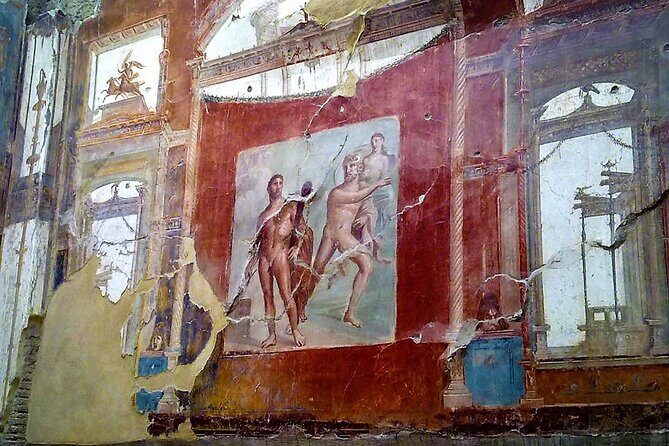
Next is the Sacello degli Augustali, built near the forum when Emperor Augustus was still alive and in power. This is where art and religion meet. You’re shown preserved frescoes, including a scene of Hercules entering Olympus alongside Jupiter, Juno, Minerva, and Hercules confronting Achelous.
Then there’s the darker, more human detail: a janitor’s skeleton was found in his room, described as lying on the bed. That kind of moment can be emotionally heavy, but it also reminds you that Herculaneum wasn’t staged. People lived, worked, and died here.
Casa dei Cervi: deer statues and a name that sticks
The Casa dei Cervi is named for two deer statues in the garden, attacked by a pack of dogs. It’s tied to a figure mentioned here: Q. Granius Verus, a slave freed shortly before the destruction of Herculaneum, which adds an interesting layer to the story of social movement through Roman times.
The key payoff in this stop is visual. You should take a few seconds to locate the deer motif and let it explain the house name. It’s one of those tours where the label actually helps you notice what’s important.
Casa del Salone Nero: a black hall and waxed tablets
The Casa del Salone Nero owes its name to its party hall painted in black with geometric patterns. You can expect this to feel unusual even among Roman décor. One reason it matters is the contrast: you’re not just learning architecture—you’re seeing a style choice that says something about taste and identity.
Inside, there were waxed tablets linked here to L. Venidius Ennychus. These tablets are described as speaking about eligibility for the Augustale role, the purchase of a slave, and the birth of a daughter. That’s a lot to fit into a short stop, but it shows how archaeology can connect artwork to paperwork—status and family life written down for the people involved.
Casa dello Scheletro: the skeleton house story from 1831
The Casa dello Scheletro gets its name from human remains discovered in 1831, described as found in a second-floor room. The information provided here suggests the structure is probably the result of connecting smaller buildings.
Even when the stay is brief, this stop gives you a useful lesson: archaeology often builds meaning from later discoveries. A house isn’t always understood as a single unit until someone finds remains, artifacts, and evidence tying parts together.
Casa di Nettuno e Anfitrite: glass-paste mosaics and sea gods
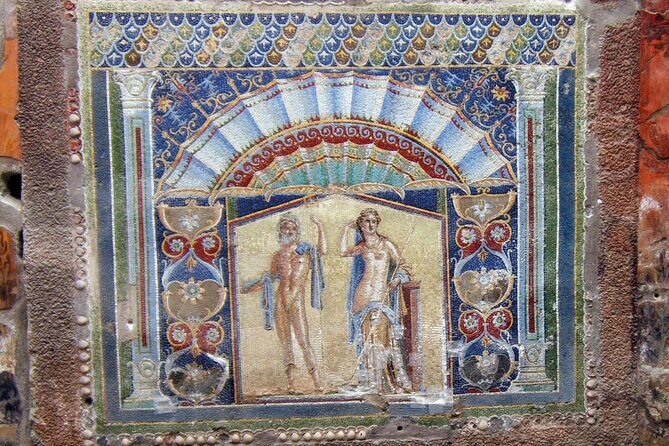
The last named stop is Casa di Nettuno e Anfitrite, and it’s a visual payoff. You’ll be pointed to mosaics made with glass paste, described as expensive for the time, with floral and hunting scenes. The centerpiece is a central mosaic featuring Neptune and Amphitrite.
This is the kind of stop where you can slow down, even within the time limit. Take a moment to look for the main central pair, then scan outward to the surrounding scenes. It helps you understand how a floor wasn’t just decoration—it was storytelling under your feet.
Comfort that actually matters: headsets, timing, and group flow
The tour includes headsets, and that’s one of the smartest inclusions for ruins. At Herculaneum, your attention is always shifting: you look down at mosaics, across at fresco fragments, then up at building lines. Without headsets, you’d miss half the explanation while trying to position yourself.
Also, this is designed as a morning-early style experience to help with crowds and heat. Even when the tour doesn’t promise a specific departure time, the idea is clear: start early when conditions are more comfortable and visibility is better.
There’s also a real-world comfort angle to the bus. A 30-seater means you’re likely to stay in a compact group, which makes it easier to keep up when boarding and returning to the bus.
How much time you really get at each highlight
You’re looking at about 4 hours total (approx.). The schedule is built around one longer component—1.5 hours with the guide at Parco Acheologico Di Ercolano—then a series of quick stops.
That structure is ideal if you want:
- A guided framework for the main site
- A fast tour of several key houses and art locations
- Less decision-making time and fewer logistical headaches
It’s not ideal if you want:
- To linger in one house for a long time
- To re-check details without the pressure of moving on
- A fully unhurried pace across many structures
The good news is that most people find the short stops work because they’re tied to clear themes—religious art, wealthy domestic design, mosaics, and the human traces left in rooms.
What to bring so the 4-hour plan feels good
No official packing list is provided, so I’ll stick to practical advice that fits ruins. Wear comfortable shoes with good grip, since you’ll be walking around uneven surfaces. Bring sun protection, because starting early helps but the site can still feel exposed. A small water bottle is usually a wise move, since there’s no lunch included.
Since this is a guided experience with headsets, keep your phone use limited. You’ll learn faster if you let your eyes stay on the space the guide is describing.
Who should book this tour, and who might not
I think this tour suits you if you want your Herculaneum visit to be:
- Guided in English with real explanations
- Efficient enough for a short day
- Focused on standout areas rather than endless walking
It’s also a strong fit if you prefer hearing someone else connect the dots—Roman daily life, the eruption story, and what the houses reveal about status.
You might want a different option if your top priority is spending lots of time alone in the ruins. This tour is structured like a highlight circuit. You get a lot in a short window, which is great—just know what kind of visit it is.
Should you book the Skip-the-line Herculaneum Guided Tour?
Book it if you value a clear plan, skip-the-line simplicity, and an English guide who helps you understand what you’re seeing in Herculaneum. The combination of headsets, a comfortable bus, and a focused route through major houses is exactly how to make a half-day feel worthwhile.
Skip it (or consider another format) if you’re the type who wants to park yourself and study one area for a long stretch. The tour’s best at giving you a smart overview plus multiple highlights, not at replacing a slow, self-paced visit.
If you want history you can actually follow while you’re looking at the stones, this one is a good bet.
FAQ
How long is the Herculaneum guided tour?
The tour lasts about 4 hours (approx.).
Is admission to Herculaneum included?
Yes. Entrance ticket to Herculaneum is included.
Are headsets provided?
Yes. Headsets are included so you can hear the guide clearly.
What language is the tour guide?
The guide is authorized and speaks English.
Where does the pickup happen?
Pickup is available at the meeting point in Sorrento or Naples.
How long do you spend with the guide at the main archaeological park?
You spend about 1 hour 30 minutes guided at Parco Acheologico Di Ercolano.
How long are the additional stops?
After the main stop, the other listed stops are about 10 minutes each.
Is lunch included?
No, lunch is not included.
Is there a limit on group size?
Yes. This tour/activity has a maximum of 100 travelers.
What if weather is poor?
This experience requires good weather. If it’s canceled due to poor weather, you’ll be offered a different date or a full refund.

More Tickets in Sorrento

More Tours in Sorrento






More Tour Reviews in Sorrento
- Sorrento Farm and Food Experience including Olive Oil, Limoncello, Wine tasting
★ 5.0 · 2,524 reviews