REVIEW · SORRENTO
Pompeii Guided Walking Tour with Ticket
Book on Viator →Operated by JOE BANANA LIMOS & TRAVEL S.R.L. · Bookable on Viator
Pompeii feels close when a guide maps it. I really like that this tour includes skip-the-line Pompeii admission and an official licensed guide who keeps the site readable, not just vast. I also love the small-group pace (15 people or fewer), so your questions actually get answered instead of getting lost in the shuffle. The only real trade-off: you’ll cover a lot of uneven walking in about 2.5 hours, so plan for some standing and bring good shoes.
You start at Ristorante Bar Sgambati on Via Villa dei Misteri in Pompei (meeting at 10:30am), and you return to the same spot at the end. The walk focuses on Pompeii’s “daily life” highlights: forum spaces, a major theatre, the Forum granary collection, the Stabian Baths, the main-road shops, and—if timing allows—the Lupanar brothel.
In This Review
- Key highlights you’ll care about
- Entering Pompeii without the waiting line
- The “main street brain” of Pompeii: Forum and theatre
- Foro de Pompeya: where power and commerce met
- Teatro Grande: performance as a shared social habit
- The Forum Granary: when 9,000+ finds teach you ordinary life
- Potential limitation
- Stabian Baths: Roman bathing as a real community routine
- A note on expectations
- Macellum on the main road: food shopping in walkable form
- The Lupanar brothel: erotic wall art, and timing matters
- What to do if it’s skipped
- Small group size: why 15 people or fewer changes the whole visit
- Timing: how 2 hours 30 minutes usually feels in Pompeii
- Price and value: what $112.35 buys you (and what it doesn’t)
- Practical tips before you go from Sorrento
- Who this tour is best for
- Should you book this Pompeii guided walking tour?
- FAQ
- How long is the Pompeii guided walking tour?
- Is the Pompeii entrance ticket included?
- What group size should I expect?
- Where does the tour meet, and when does it start?
- Are food and drinks included?
- Is the tour physically demanding?
Key highlights you’ll care about
- Skip-the-line ticket included: less waiting, more ruins time.
- Licensed guide with humor and answers: guides like Paulo or Pierpaolo are known for keeping things fun and clear.
- Forum-focused routing: you see the political, commercial, and religious heart in a logical order.
- Forum Granary artifact stop: you get context around thousands of finds, not just big monuments.
- Stabian Baths viewpoint: Roman bath life comes to life at one of the earlier bath complexes.
- Lupanar stop when time permits: erotic wall art is still visible, but it’s not guaranteed.
Entering Pompeii without the waiting line

Pompeii is popular. That’s great—until you’re stuck watching crowds move like a slow conveyor belt. This tour solves the biggest pain point by bundling skip-the-line admission into the experience. In practical terms, you spend more time looking at what you paid for and less time buffering at the entrance.
What I like about this setup is how it helps you keep momentum right from the first minute. Pompeii is a place where tiny details matter, and a good guide can start teaching immediately: how the city was laid out, what different public buildings were for, and why certain areas were central to daily routines.
You can also read our reviews of more tours and experiences in Sorrento


The “main street brain” of Pompeii: Forum and theatre
A lot of Pompeii tours scatter you across the site. Here, the route leans into the city’s public core—starting with the Forum area and then moving toward the theatre.
Foro de Pompeya: where power and commerce met
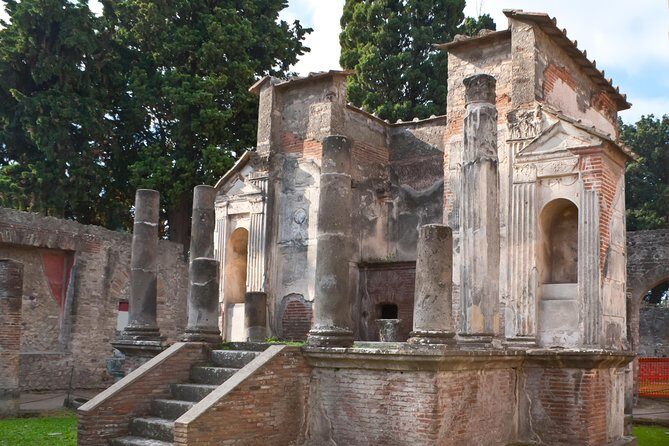
At the Pompeii Forum, you’re standing in the main square of a Roman town: the commercial, political, and religious center. Even if you’ve seen Roman forums in other cities, Pompeii’s value is that it’s connected to real storefront behavior and real public life that froze in time.
The practical benefit: once you grasp how the Forum functioned, other stops make more sense. Markets, public buildings, and civic spaces stop being random ruins and start acting like a map.
Teatro Grande: performance as a shared social habit
Next comes the Teatro Grande, Pompeii’s main theatre. This is where plays from the Greek-Roman tradition would’ve been staged—so it’s not just architecture. It’s a reminder that people gathered for entertainment, not only politics and commerce.
Drawback to keep in mind: a theatre can feel abstract if you don’t have context. The guide’s job here is to connect what you’re seeing (space, design, setting) to what would’ve happened there.
The Forum Granary: when 9,000+ finds teach you ordinary life
One of the most interesting stops is the Granai del Foro. It used to function as a fruit and vegetable market, which is exactly why it’s so useful on a walking tour: you’re not only seeing elite spaces. You’re seeing the places that supported meals, cooking, and daily transactions.
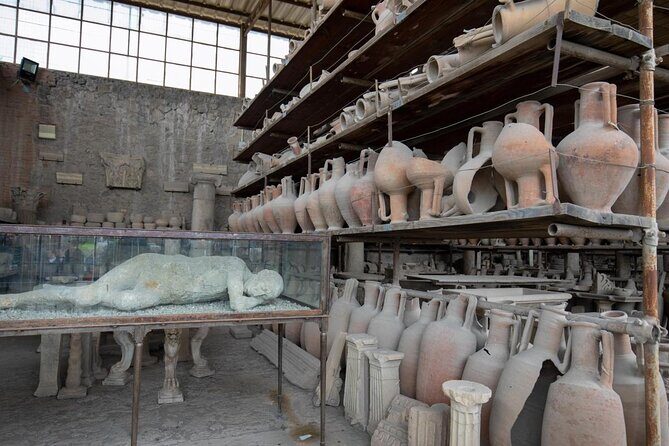
Today, these granary spaces house more than 9,000 artefacts—things like pots and pans for cooking, jugs and bottles, marble tables, and even baths for fountains that adorned entrances of houses. That’s a big deal because it shifts your visit from scenery to evidence. You get to understand what people actually used, stored, and served.
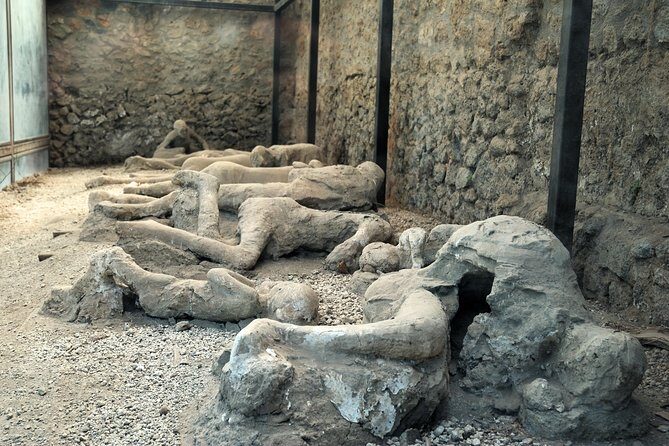
This stop also includes casts of victims of the eruption, plus casts connected to a dog and a tree. If you want Pompeii to feel human, this is where it happens.
You can also read our reviews of more walking tours in Sorrento






Potential limitation
The granary and artifact area can be visually intense. If you’re the type who likes lingering, you may find the timing tight. Still, for most people, it’s a strong use of your 2 hours 30 minutes: you come away with specific “how life worked” details.
Stabian Baths: Roman bathing as a real community routine
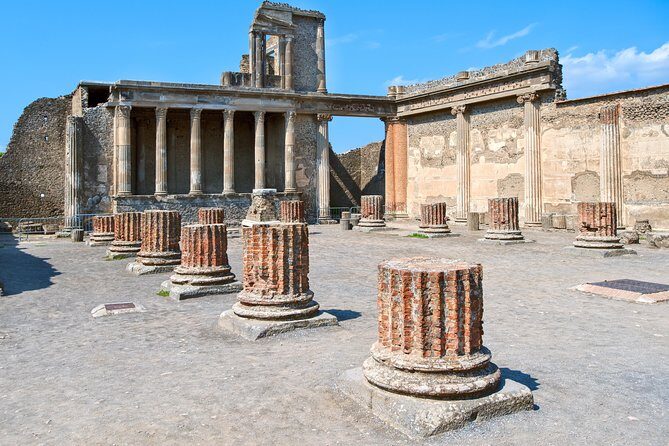
Then it’s on to the Stabian Baths (Terme Stabiane). These are among the oldest Roman baths we know in the Roman world, so you’re not just looking at an impressive building—you’re seeing a system early enough that it tells a bigger story about Roman public life.
Why I think this stop works well on a guided walk: baths weren’t only for cleaning. They were also social space, a place to talk, relax, and move through daily rituals. Pompeii’s preserved layout helps you picture how people used the space, even in ruins.
A note on expectations
Bath complexes can be spread out and full of details. The guide’s pacing matters. In a small group, you’re more likely to hear the explanation that turns “stones” into “routine.”
Macellum on the main road: food shopping in walkable form
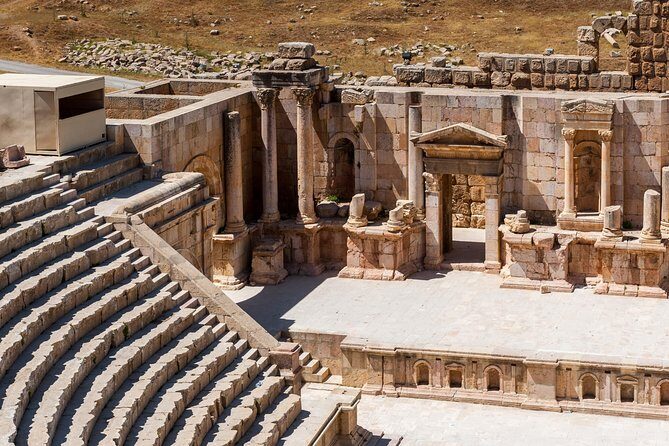
Next is the Macellum, described as the shops located on the main road. This is where Pompeii becomes practical in a different way: you start connecting architecture to consumption.
A macellum is basically a food market system. It’s where you’d imagine regular purchases, quick meals, and everyday commercial activity. On a walking tour, this stop is most valuable when your guide ties it back to the Forum and Granary—because together they sketch the full cycle: market storage, food preparation, and selling.
Time here is short, so if food and daily routine are your main interests, you’ll want your guide to point out the key features rather than let the stop drift. This is also where a witty, question-friendly guide can make a big difference.
The Lupanar brothel: erotic wall art, and timing matters
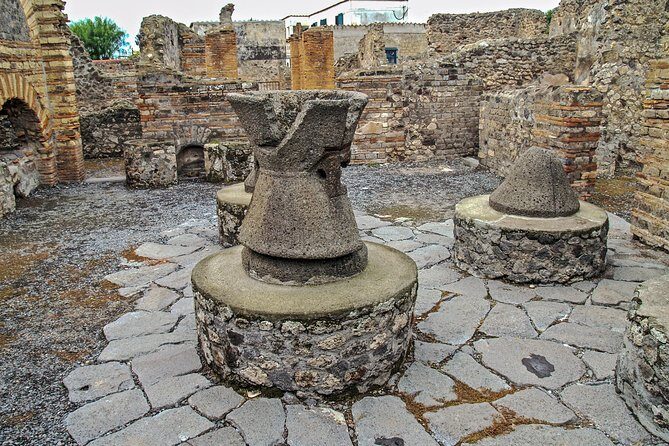
The Lupanar is the stop that often makes Pompeii feel instantly more personal. This ancient brothel had erotic paintings on the walls advertising services, and some of that wall art is still visible.
The key detail is right in the plan: it’s time permitting. So you shouldn’t build your entire experience around it. Still, if you get there, it adds a side of Pompeii that most people don’t think about until they see it. It also gives you a broader view of the city—people’s desires, commerce, and the way even “private” services were integrated into urban life.
What to do if it’s skipped
If your schedule runs tight, you’ll still get plenty of Pompeii without it. But if this specific stop matters to you, plan to arrive ready to move at a steady pace from the start time.
Small group size: why 15 people or fewer changes the whole visit
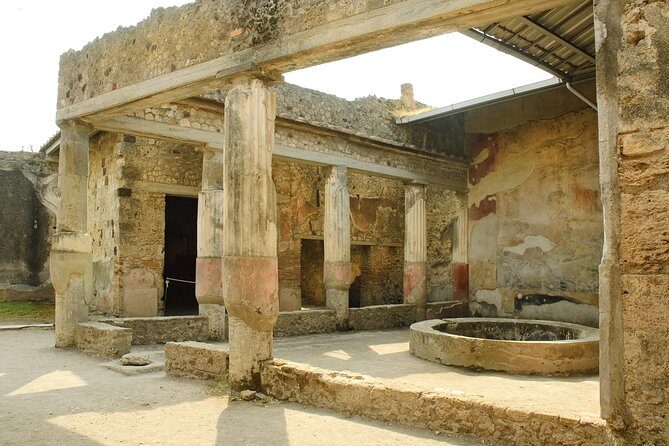
This tour caps the group at 15 travelers or fewer, which is more than a marketing number. In Pompeii, the ground can be uneven, the pathways can pinch, and the crowds can bottleneck. Smaller groups help keep the walk human.
You also get better interaction with the guide. The tour descriptions and guide notes point to guides like Paulo or Pierpaolo who handle questions and keep the tone fun—so you’re not just reading plaques. You’re getting “why this mattered” explanations in the moment.
If you like taking photos, there’s often room to stop and compose. A good guide will also tell you where to stand so you don’t miss the connection between one section and the next.
Timing: how 2 hours 30 minutes usually feels in Pompeii
The duration is about 2 hours 30 minutes. That’s enough time to hit major areas without turning it into a marathon, but it won’t be enough for long, independent wandering.
Here’s what I’d plan around:
- Expect regular walking between stops.
- Expect a few shorter pauses (some are listed around 10–15 minutes).
- Expect at least one “bigger moment” (Forum Granary and Stabian Baths are usually the payoff blocks).
- Remember the Lupanar is conditional.
If you’re the type who likes to take your time in every corner, you may want to add additional self-guided time after the tour. If you want a strong structure to start with, this length is a good fit.
Price and value: what $112.35 buys you (and what it doesn’t)
At $112.35 per person, you’re paying for a guided walk plus entry. The value piece here is that the Pompeii admission tickets are included, along with an official tour guide and a small group.
What’s not included is food and drinks. That means you should bring bottled water (recommended) and think through snacks if you’ll still be in the area after the tour. Pompeii can run hot, and the walk adds up.
Is it expensive? It’s not cheap. But it’s also not just paying for a stroll. You’re paying to save time at the entrance and to get someone licensed explaining how the city works—Forum to theatre to baths to markets—so you leave with more than a photo set.
Practical tips before you go from Sorrento
Even though the meeting point is in Pompei, the tour is positioned as part of the Sorrento-area experience. So you’ll want to treat it like a morning commitment.
My best advice:
- Wear comfortable shoes with grip. Pompeii paths aren’t always friendly.
- Bring bottled water.
- Dress for sun and wind shifts—ruins can feel hotter than you expect.
- Keep an eye on timing so you don’t miss the “time permitting” parts.
Also, the meeting point is near public transportation, which helps if your day is already packed with train schedules or local hopping.
Who this tour is best for
This guided route is a strong match if:
- You want structure more than wandering.
- You like Roman city planning and daily-life details (markets, shops, baths).
- You prefer small-group pacing with time to ask questions.
- You’d rather see the right highlights in one go than build your own puzzle.
It’s not the best match if you want long, quiet solo exploration or you’re not comfortable with moderate walking on uneven ground.
Should you book this Pompeii guided walking tour?
I’d book it if your priority is learning as you walk and you want the most important Pompeii zones covered efficiently, with skip-the-line entry and a licensed guide leading the story. The small-group cap is a real quality lever here, and the stop choices are practical: Forum and theatre for civic life, Granary for evidence of everyday goods, baths for routine, and markets for food flow.
Skip it (or plan to add time) if you’re hoping for a slow museum-style visit with lots of lingering, or if you can’t commit to steady walking for about 2.5 hours.
FAQ
How long is the Pompeii guided walking tour?
It’s about 2 hours 30 minutes.
Is the Pompeii entrance ticket included?
Yes. Skip-the-line Pompeii entrance tickets are included.
What group size should I expect?
The group is capped at a maximum of 15 travelers.
Where does the tour meet, and when does it start?
You meet at Ristorante Bar Sgambati, Via Villa dei Misteri, 1, 80045 Pompei NA, Italy, and the start time is 10:30am.
Are food and drinks included?
No. Food and drinks are not included.
Is the tour physically demanding?
The tour recommends a moderate physical fitness level, and you should wear comfortable walking shoes and bring bottled water.
If you tell me your travel month and whether you’re starting from Sorrento or Naples, I can suggest a simple timing plan so you don’t feel rushed on arrival.


More Tickets in Sorrento

More Tours in Sorrento






More Tour Reviews in Sorrento
- Sorrento Farm and Food Experience including Olive Oil, Limoncello, Wine tasting
★ 5.0 · 2,524 reviews